Safely Engage Park Mode In Your Golf Cart | Step By Step Guide
To safely put your golf cart in park, bring it to a complete stop, press and hold the brake pedal, move the shifter into the Park position until it clicks, engage the parking brake, turn the key off and remove it, then give the cart a gentle push to confirm it stays put. This simple sequence locks the wheels mechanically and prevents rollaways on almost every model, whether you have a 36V, 48V, or lithium electric cart or a gas model.
The quickest and safest way to put your golf cart in park is to stop completely, hold the brake, shift to P, set the parking brake, turn the key off, and double-check that the cart does not move. Always do this on level ground when possible. On slopes add wheel chocks for extra security. Remove the key every time you walk away. This routine works on Club Car, EZGO, Yamaha and most other brands and keeps both people and batteries safe.
How to Put Your Golf Cart in Park – Step by Step
Follow these steps every single time for reliable results. The order matters because it protects the transmission and prevents the cart from moving while you shift.
Step 1: Bring the cart to a full stop on level ground whenever possible. Never try to shift while the cart is still rolling.
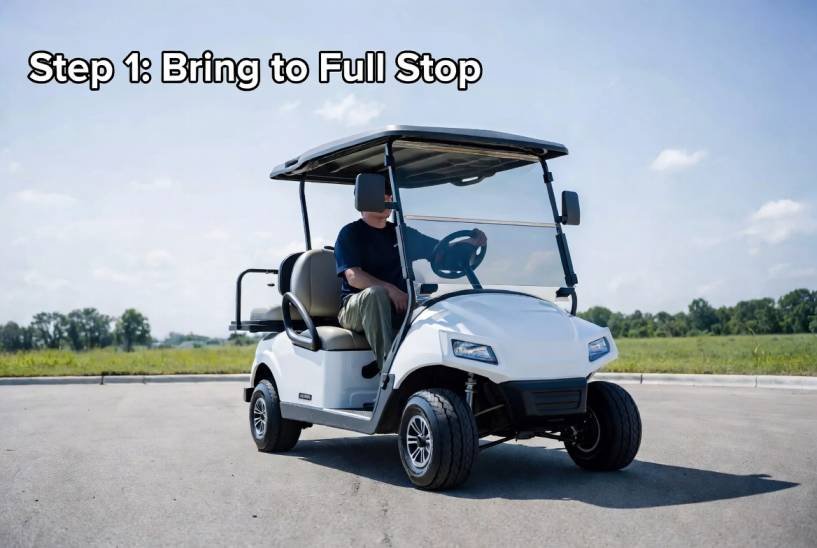
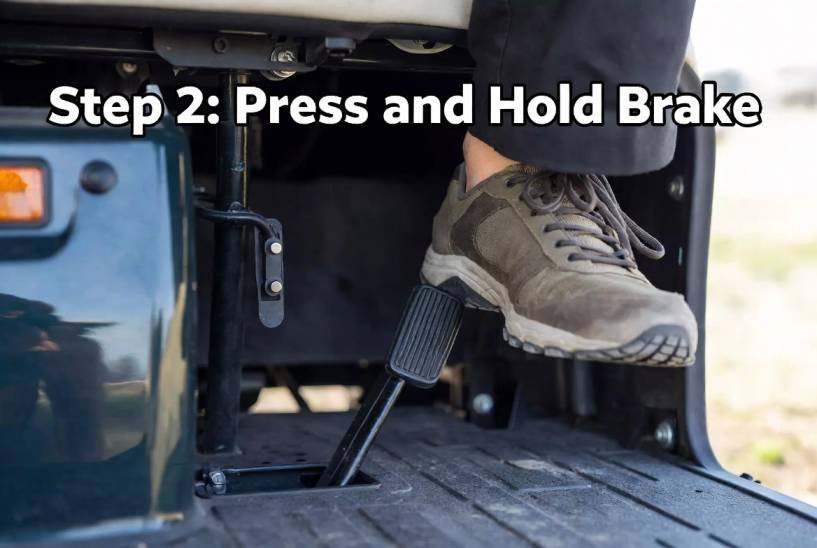
Step 2: Press and hold the brake pedal firmly. Most carts have a safety interlock that requires the brake to be pressed before park will engage.
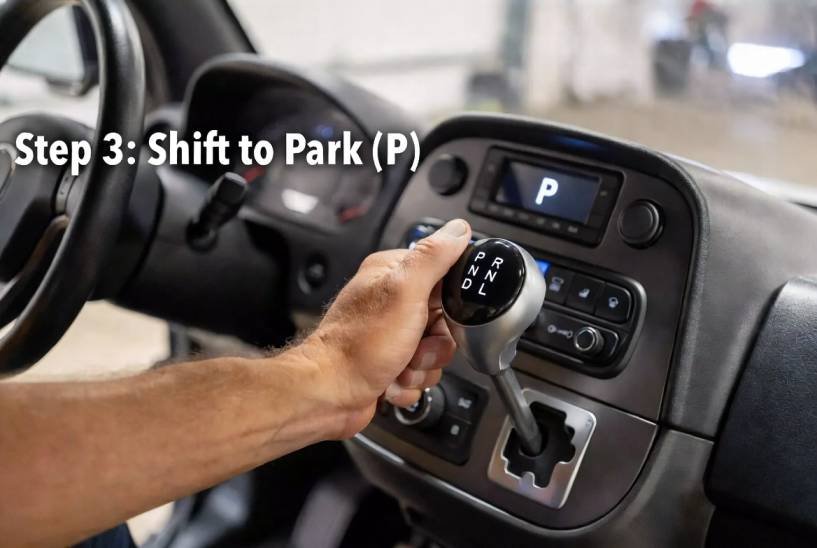
Step 3: Move the gear selector smoothly into the Park (P) position. You should feel or hear a solid click as the park pawl locks the drive wheels.
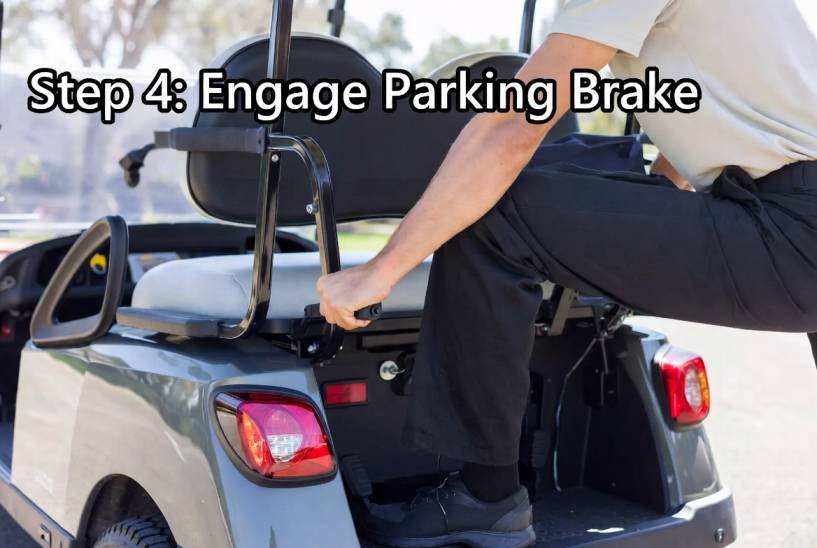
Step 4: Engage the parking brake (hand lever or foot pedal). This gives you a second layer of holding power.
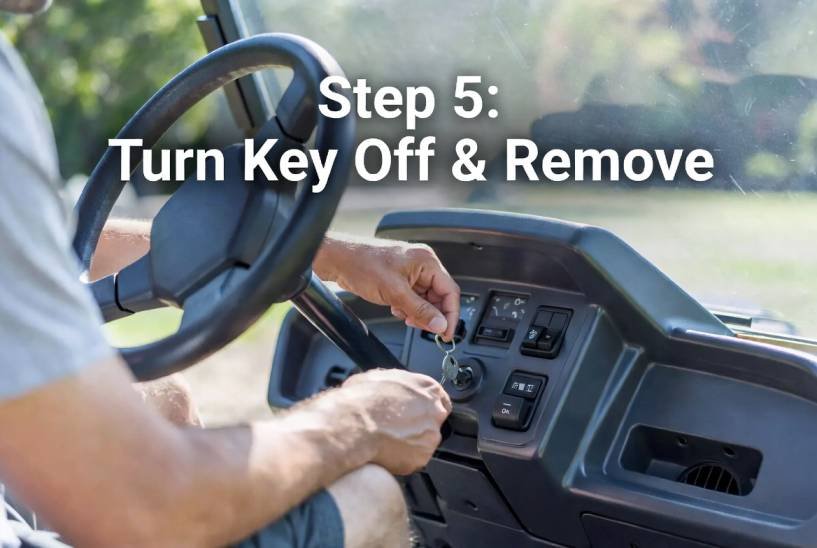
Step 5: Turn the key to Off and remove it. This cuts power to the system and prevents accidental startup.
Step 6: Give the cart a gentle push or rock to confirm it does not move. Check the dash indicator light if your model has one.
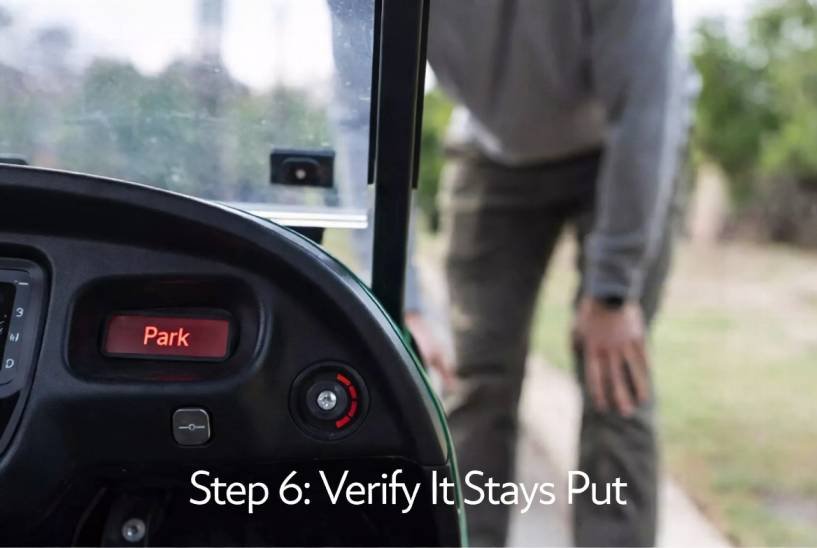
This exact sequence works on almost every electric and gas golf cart. On older models you may need to rock the cart slightly while holding the brake to help the gears line up. Never force the shifter. If it feels stuck, stop and check battery charge or linkage instead. Proper parking like this also reduces stress on your batteries because it minimizes unnecessary electrical draw.
Parking on Slopes and Uneven Ground
Level ground is always best, but when you must park on a hill use wheel chocks in front of and behind the tires. Turn the front wheels slightly toward the uphill side. Combine the park position, parking brake, and chocks for triple security. Anything steeper than a gentle slope needs extra caution. After rain or on soft grass the tires can sink, making it harder to move later rock the cart gently when you return to free the mechanism. Keep a pair of lightweight chocks in the basket. They take almost no space and give real peace of mind.
Common Problems Shifting Into Park and How to Fix Them
If the shifter feels stiff or will not go into park, start with the simplest checks.
Battery Charge or Electrical Issues
Low voltage on electric carts often prevents smooth shifting. Charge the batteries fully and clean any corroded terminals. This single step fixes many “won’t go into park” complaints. Weak batteries or dirty connections can make the solenoid or controller act up when you try to shift.
Mechanical or Linkage Problems
Worn shift cables, bent linkage, or a sticking park pawl are common on older carts. Rock the cart lightly while holding the brake to help alignment. A little lubrication on the moving parts often frees things up. If it still will not move, have the linkage and park pawl inspected instead of forcing the lever.
Brake Switch or Safety Interlock
Many carts require the brake pedal to be pressed before park will engage. Test the micro-switch under the pedal. Worn brake pads can also create too much play. Replacing the brake switch is usually quick and inexpensive.
Battery Care While the Cart Is Parked
Correct parking already reduces idle drain on electric carts. For longer storage, keep lead-acid batteries around 50-70% charge and lithium packs around 50-80%. Use a smart charger with maintenance mode. Store the cart in a cool, dry place and clean terminals regularly. For extended periods many owners put the cart on stands to relieve tire pressure. These habits make batteries last much longer. See our guide on how to store an electric golf cart for 6 months and how to maintain golf cart batteries for complete details.
Quick Parking Safety Checklist
| Step | Action | Why It Matters |
|---|---|---|
| 1 | Full stop + hold brake | Safe conditions to shift |
| 2 | Shift to Park | Mechanical lock engages |
| 3 | Set parking brake | Second layer of security |
| 4 | Key off and remove | Prevents accidental start |
| 5 | Add chocks on slopes | Maximum hold on hills |
Gear Positions at a Glance
Use this quick reference so you never leave the cart in the wrong gear.
| Position | Label | What It Does | Parking Use |
|---|---|---|---|
| P | Park | Locks the wheels | Correct position when leaving |
| R | Reverse | Goes backward | Never for parking |
| N | Neutral | Wheels roll free | Only for towing or pushing |
| D/F | Drive/Forward | Normal forward driving | Never leave here |
Frequently Asked Questions
How do you put a 36V or 48V electric golf cart in park safely?
Use the same six steps above. Keep batteries charged because low voltage can make shifting difficult. Lithium packs usually shift more smoothly but still need the same careful routine.
What should I do if the shifter will not go into park?
Hold the brake, rock the cart gently, and check battery charge. Clean terminals and try again. Persistent problems usually need a mechanic to inspect the linkage or park pawl.
How long can a golf cart sit in park before battery health becomes a concern?
A few days to a couple of weeks is usually fine. For longer storage use a maintenance charger and keep charge levels in the recommended range for your battery type. See our full guide on how long golf cart batteries last in storage.
Does weather affect how I should park my golf cart?
Park in shade during hot weather so components do not overheat. In cold weather keep batteries charged and consider indoor storage. Temperature changes affect both shifting feel and long-term battery health.
Final Tips for Reliable Parking Every Time
Make the full sequence automatic. Teach everyone who drives your cart the same steps. Do a quick visual check of brakes and shifter during regular maintenance. Carry wheel chocks for slopes. These small habits prevent rollaways, protect your batteries, and keep your cart ready whenever you need it. Drive safe and enjoy every round.