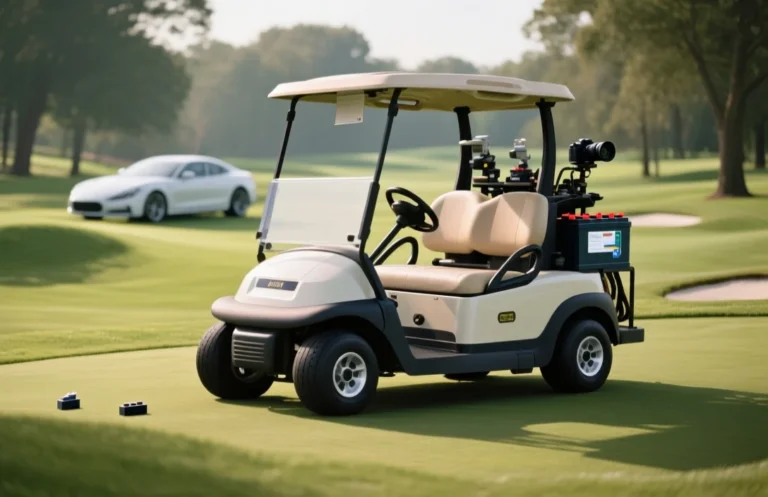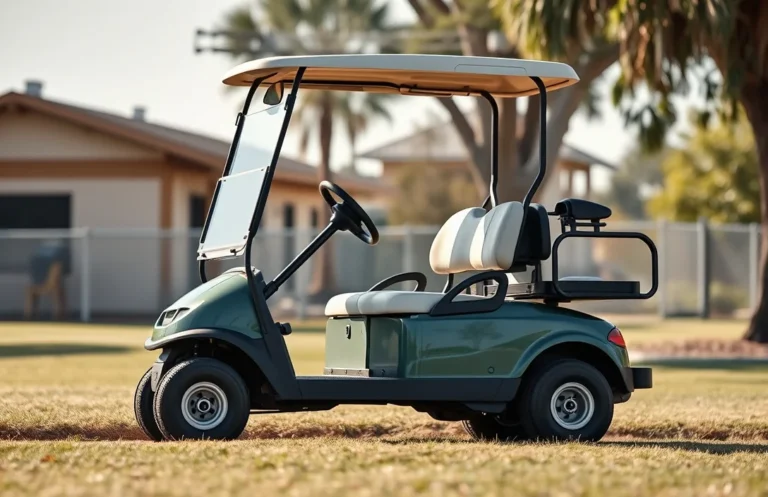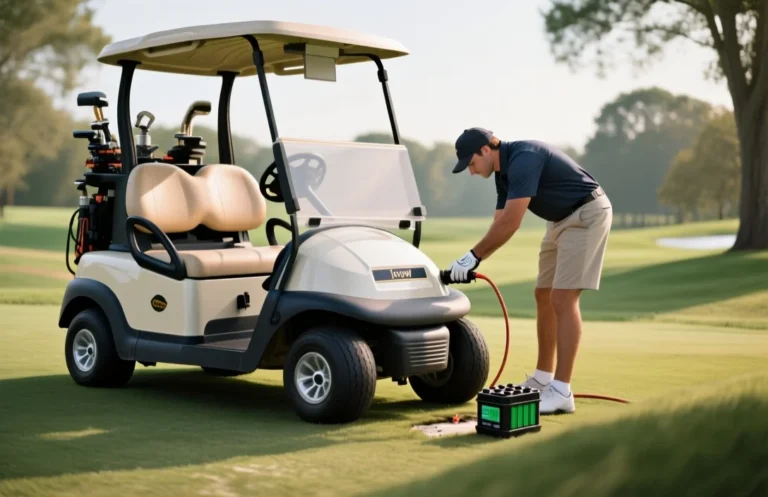

How many batteries does a golf cart need?
Most electric golf carts use a fixed system voltage, so the number of batteries is math, not guesswork. A common mistake is matching battery size only, and ignoring the cart voltage. Before you buy, check the charger label or controller plate for the nominal voltage so you order the correct count and chemistry.
How many batteries does a golf cart need? Typical answers: 36V carts use 6 × 6V or 3 × 12V batteries, 48V carts use 8 × 6V or 4 × 12V, because batteries are wired in series to reach the cart’s nominal voltage; count and chemistry must match the charger and controller.
Quick top answer
Most electric golf carts are built around either a 36 volt or a 48 volt battery pack, so the battery count follows the pack voltage: a 36V pack is typically six 6V batteries in series or three 12V batteries in series, and a 48V pack is typically eight 6V batteries in series or four 12V batteries in series. The number of batteries equals the pack voltage divided by each battery’s nominal voltage, because carts wire cells in series to reach the system voltage.
Think of each battery as a voltage step. Series wiring adds volts while keeping amp-hour capacity the same, so you match the cart’s nominal voltage first, then pick capacity (Ah) for runtime.
Series example (36V from 6V batteries): 6V + 6V + 6V + 6V + 6V + 6V = 36V Series example (48V from 12V batteries): 12V + 12V + 12V + 12V = 48V
For example, to estimate runtime use watt-hours. Pack Wh = nominal volts × Ah. Runtime hours = Wh ÷ average continuous motor draw in watts. Use a realistic draw, not peak stall current, when you calculate.
| Example pack | Value |
|---|---|
| Pack | 48V × 100Ah (example) |
| Energy | 48 × 100 = 4800 Wh |
| Runtime at 1,000 W | 4800 ÷ 1000 = 4.8 hours (example) |
OEM quick notes: Club Car modern electric models commonly use 48V packs, older Club Car models used 36V; EZGO and Yamaha have both 36V and 48V models over the years. Always confirm your model when buying replacements.
Upgrade note: switching lead-acid to lithium usually keeps the same nominal voltage and battery count, but requires a compatible charger and a battery management system (BMS). Do not install lithium cells on a charger designed only for flooded lead-acid without verifying compatibility.
Confirm your cart voltage
Most carts use either a 36 volt or 48 volt electrical system; a 36 V pack is normally built from six 6 V batteries or three 12 V batteries, and a 48 V pack is normally eight 6 V batteries or four 12 V batteries. Count and verify the pack voltage before buying replacements so you match the system, not just an individual battery size.
After you confirm the nominal voltage and battery arrangement, you can pick the correct number and type of replacement batteries and verify charger compatibility. If anything is unclear or the pack measurement is inconsistent with labels, contact the OEM or a qualified technician before buying batteries.
Common battery types & sizes
Most 36 volt carts use either 6 × 6 volt batteries or 3 × 12 volt batteries, while most 48 volt carts use 8 × 6 volt batteries or 4 × 12 volt batteries. The required battery count equals the cart nominal voltage divided by the battery nominal voltage, because the batteries are wired in series to reach the system voltage.
Common lead acid choices are 6 volt GC2 cells and 12 volt group 27 or group 24 batteries. GC2 6 volt deep cycle batteries are the standard OEM replacement for many carts because their long narrow tray and bolt-on terminals match existing racks and they usually fall in the 200 to 245 amp hour range.
| Type | Nominal V | Typical pack / group | Typical Ah range | Notes |
|---|---|---|---|---|
| GC2 deep cycle (flooded or AGM) | 6 V | GC2 | 200 – 245 Ah | Common OEM, long runtime per cell, heavy |
| Group 27 / Group 24 | 12 V | Group 27 / 24 | 75 – 125 Ah | Used where 12 V sizing fits trays, lighter options exist |
| 8 V industrial cells | 8 V | Various | 170 – 225 Ah | Found on some OEMs, check tray and terminal fit |
| LiFePO4 retrofit modules | 12 V or purpose 48 V packs | 12 V modules or integrated 48 V pack | 100 – 200 Ah examples | Much lighter, higher usable Ah, require compatible charger and BMS |
Wh = V × Ah. Runtime hours = Wh ÷ average draw in watts. Use these to compare bank sizes and changes in chemistry.
For example, an entire 48 V bank made from 8 × 6 V, 200 Ah batteries equals 48 V × 200 Ah = 9600 Wh. If your cart averages 1200 W while driving, theoretical runtime is 9600 ÷ 1200 = 8 hours, before accounting for recommended depth of discharge and real losses.
Safety reminder: swollen cells, overheating, corroded cables, or mismatched batteries are signs to stop use and get a professional check. Replacement decisions should weigh tray fit, terminal style, Ah and chemistry, plus charger and BMS compatibility before buying.
Wiring: series vs parallel
Most 36 volt golf carts use either 6 × 6V batteries or 3 × 12V batteries, and most 48 volt carts use either 8 × 6V or 4 × 12V. Count battery trays or read the charger/controller label to confirm which system your cart has before buying replacements.
Series wiring increases voltage by adding cell voltages end to end, while parallel wiring adds capacity by joining like terminals. Text diagram, series: 6V + 6V + 6V = 18V, extend that chain until you hit the cart system voltage.
For example, a 36V string built from six 6V batteries looks like this in sequence, positive to negative: 6 → + to – → 6 → + to – → 6 → + to – → 6 → + to – → 6 → + to – → 6 = 36V. Each battery adds its nominal voltage, and the pack voltage is the sum of those batteries when wired strictly in series.
For example, a 48V pack can be made either from eight 6V batteries in series: 8 × 6V = 48V, or from four 12V batteries in series: 4 × 12V = 48V. Both give the same nominal pack voltage, but battery size, physical fit, and Ah rating differ between 6V GC2 cells and 12V group sizes.
Capacity, Wh and runtime
Most 36V carts use 6 × 6V or 3 × 12V batteries and most 48V carts use 8 × 6V or 4 × 12V. To estimate runtime, multiply pack voltage by amp-hours to get watt-hours, then divide watt-hours by the average motor draw in watts.
For example, a 48 V, 100 Ah bank is 4,800 Wh. At an 800 W average draw the ideal runtime is 4,800 ÷ 800 = 6.0 h, but with lead-acid derating (≈42.5% usable) available energy is 2,040 Wh, so real runtime ≈ 2.55 h. With lithium chemistry (≈72% usable) available energy is 3,456 Wh, so runtime ≈ 4.32 h.
For instance, a 36 V bank built from 6 × 6 V batteries at 225 Ah gives 36 × 225 = 8,100 Wh. At a 1,200 W draw the ideal runtime is 6.75 h. After lead-acid derating runtime falls to about 2.9 h, while a lithium-equivalent pack would give roughly 4.9 h under the same draw and losses.
| Pack | Wh | Ideal @draw | Lead‑acid usable | Lithium usable |
|---|---|---|---|---|
| 48 V, 100 Ah | 4,800 Wh | 6.0 h @800 W | ≈2.6 h | ≈4.3 h |
| 36 V, 225 Ah | 8,100 Wh | 6.75 h @1,200 W | ≈2.9 h | ≈4.9 h |
Charger compatibility & lithium upgrades
Most common answers: 36 volt carts generally have either 6 × 6V or 3 × 12V batteries, and 48 volt carts commonly use 8 × 6V or 4 × 12V. The number is set by the cart nominal voltage, batteries wired in series to reach that voltage, and sometimes series/parallel layouts when lower‑voltage batteries are paralleled for capacity.
What to verify on the charger and cart before replacing or upgrading: read the charger output voltage and current rating, check the controller or motor plate for system voltage, and count battery trays and terminal wiring to confirm series wiring. If the charger label says 48V output, the pack is a 48V system regardless of battery count.
Charge current guidance: use C‑rate rules and verify the charger’s amp output against battery Ah. For long life, many lead acid banks accept 0.1C to 0.2C safely. Lithium packs can often accept higher charging current, commonly 0.2C to 0.5C, but always follow the battery or cell manufacturer’s recommended charge rate.
Lead acid versus lithium charging differences are critical. Lead acid needs absorption and float stages to maintain capacity, float helps counter self discharge, and prolonged float is normal for lead acid. Lithium chemistry does not need float at full voltage and prefers precise CC to CV charging to a per‑cell limit, so using a lead acid charger on lithium can cause overvoltage and damage unless the charger is lithium compatible.
Safety warning: Do not mix chemistries or connect lithium cells without a BMS and a charger that matches LiFePO4 charge voltage and current limits. Swollen cells, overheating, or burnt wiring indicate an immediate stop and inspection.
Practical lithium conversion checklist:
| System | Common battery counts | Typical battery type | Li option |
|---|---|---|---|
| 36V | 6 × 6V or 3 × 12V | GC2 or 12V group 27/24 | 12 cell LiFePO4 (3.2V cell) or 3 × 12V Li modules |
| 48V | 8 × 6V or 4 × 12V | GC2 or 12V group 24/27 | 16 cell LiFePO4 or 4 × 12V Li modules |
Before buying parts, check the charger output amps against desired C‑rate, confirm the BMS current rating, and plan for contactor and fuse upgrades. If uncertain, photograph the charger label and battery wiring and consult a qualified technician; improper matching is a safety risk.
Maintenance, safety & troubleshooting
Most carts use battery banks that match the controller voltage: common setups are 36 volt carts using 6 × 6V or 3 × 12V batteries, and 48 volt carts using 8 × 6V or 4 × 12V. Verify by reading the charger or controller label and counting battery trays, because the pack must add up to the system voltage when wired in series.
For example, Club Car, EZGO and Yamaha models are often sold in 36V or 48V configurations, so you will typically see 6×6V on older 36V carts and 8×6V on many 48V carts. If you are unsure, check the charger output voltage (printed on the charger) and the number and size of battery modules in the bay.
| System voltage | Common battery count | Common battery size | Typical Ah ranges |
|---|---|---|---|
| 36V | 6×6V or 3×12V | 6V GC2, 12V Group 24/27 | 6V: 150 – 225 Ah, 12V: 70 – 120 Ah |
| 48V | 8×6V or 4×12V | 6V GC2, 12V Group 24/27 | 6V: 150 – 225 Ah, 12V: 70 – 120 Ah |
Worked example: assume a 48V bank rated 100 Ah. Energy is 48V × 100 Ah = 4800 Wh; if the motor averages 800 W, estimated runtime is 4800 Wh ÷ 800 W ≈ 6 hours, using ideal assumptions. Use this formula with your measured motor draw and real Ah to set realistic expectations and to size replacements or upgrades.
Quick Summary
Most golf carts typically require either six or eight batteries, depending on whether the factory system is 36V or 48V; verify your cart’s voltage.
Frequently Asked Questions
How many batteries does a 36V golf cart need?
You can configure a 36V cart with batteries that add up to 36 volts, commonly six 6V batteries or three 12V batteries, and you should verify the required voltage in the owner manual before buying.
How many batteries does a 48V golf cart need?
A 48V cart requires batteries totaling 48 volts, typically eight 6V batteries or four 12V batteries, and you must use a charger rated for 48V systems to avoid damage.
How many batteries does a golf cart need if I want longer runtime?
You can increase runtime by adding capacity in parallel while keeping system voltage the same, for example adding a second identical string of batteries in parallel doubles Ah capacity, but all batteries must match in voltage and Ah.
How many batteries does a golf cart need before I should replace them for safety?
You should replace the battery set when capacity and performance drop noticeably or you see damage; for safety, replace the full string if individual batteries fall to about 50% of rated capacity or show swelling, leaking, or severe voltage imbalance.
How many batteries does a golf cart need and what common buying mistakes should I avoid?
When buying, you must match the cart voltage and Ah rating and avoid mixing ages or types, because a common mistake is buying the wrong voltage pack, so always match the cart voltage and Ah listed on the manual or battery label.