How to jump start a golf cart with dead batteries?
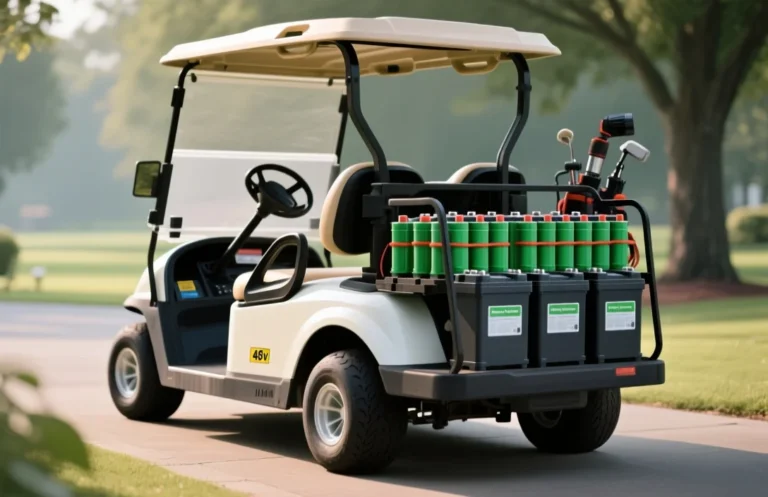
Most electric golf carts have battery packs labeled 36V or 48V, not a single 12V battery. The most important spec is total pack voltage, so match any jumper or booster to that number. A common mistake is using a car battery and damaging electronics. Start by reading the battery label and setting the main service switch to OFF.
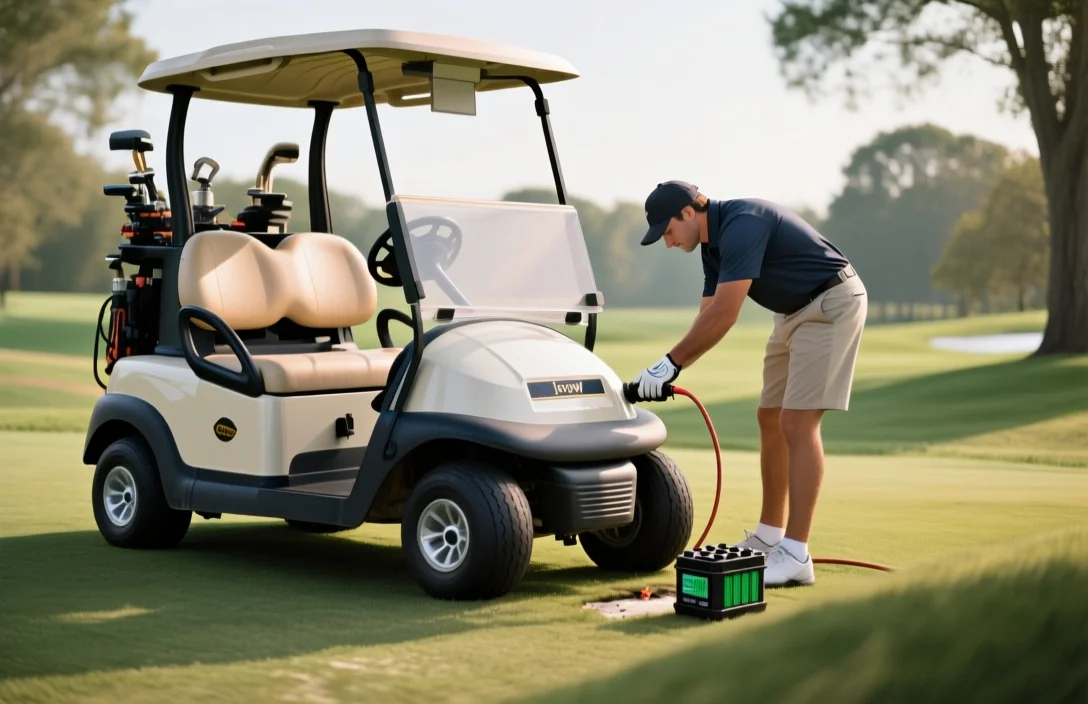
How to jump start a golf cart with dead batteries: Check the pack voltage label, use a matching-voltage booster or an identical pack, connect positive to positive and negative to the metal chassis, allow 5 to 15 minutes of charge, then try the key switch, with chargers removed and eye protection on.
Assess golf cart batteries
Measure the pack voltage and inspect every battery before attempting a jump-start; if the pack is uniformly low a controlled boost may work, but any swollen, leaking, very hot, or near-zero battery means do not jump-start and arrange replacement. A quick, disciplined assessment tells you whether a charger or a jump is appropriate, or if the pack has a failed cell that will kill a jump attempt.
Visual and tactile checks are fast and often decisive. Look for cracked cases, bulging tops, crusty corrosion at terminals, wet electrolyte or white/green deposits, and loose or broken straps between batteries.
| Observed reading | Likely cause | Recommended action |
|---|---|---|
| Total pack low, all batteries similar | Normal discharge or weak charger | Try controlled charging or a jump-start, monitor voltages during boost |
| One battery much lower or near zero | Failed or shorted cell | Do not jump-start, replace the bad battery before attempting boost |
| Swollen, cracked, leaking, or emitting strong odor | Physical failure or venting | Do not jump-start, remove and replace safely |
Warning: Jump-starting hides failed cells and can make a bad battery explode or vent; never jump a pack with damaged, leaking, or extremely hot batteries.
When the assessment shows a single bad battery or physical damage, replacement is the right choice; a jump is only a stopgap for uniform low state of charge. If the pack passes the checks, proceed to the safety checklist and jump-start steps, but only after cleaning terminals and confirming secure interconnects.
Safety checklist before jump-start
Treat the golf cart battery bank as a high-current, venting hazard and follow a strict safety checklist before you touch any clamps or cables. Put on proper PPE, de-energize and secure the cart, ensure ventilation, remove metal jewelry and loose tools, and know exactly where the fuses and emergency cutoffs are located.
For example, if you open the battery box and see active bubbling, a strong rotten-egg odor, or cracked cases, do not try to jump-start; that indicates cell failure or severe gassing and requires safe removal and replacement. Cutting corners in that situation increases the risk of acid injury and fire.
Safety slows the job, but deliberate checks reduce the chance of a short, explosion, or serious injury. Take the extra five minutes to verify PPE, isolation points, and ventilation before moving on to tools and voltage checks.
Tools and voltage requirements
Match the nominal pack voltage before you connect anything, and use heavy-gauge, fused cables or a jump pack rated for that same voltage. Most golf carts are 36 volts or 48 volts made from series-connected 6 volt or 8 volt deep-cycle batteries, so a standard 12 volt car booster will usually not work across the whole pack.
For example, if you have a 48V cart built from eight 6V batteries, you can either use a 48V-rated booster or jump each 6V battery individually with a 12V-capable tool, but the latter requires correct sequence, fusing, and matching battery states to avoid damage. Always confirm the method against the cart manufacturer guidance before proceeding.
Jump options: jump pack vs donor
Using a portable jump pack is often more convenient for jump-starting a golf cart with dead batteries, as it is portable and reduces the risk of electrical damage compared to a donor vehicle. However, a donor vehicle can provide more power for starting, though it has limitations and risks associated with compatibility and potential damage to the cart’s electronics.
When considering a portable jump pack, it makes sense for those who frequently use their golf carts in remote areas or for personal use. These devices are easy to store and can be used without needing another vehicle. However, the capacity of the jump pack must be adequate for the golf cart’s battery specifications.
For instance, if the jump pack cannot deliver the necessary amps, it may fail to start the cart.
On the other hand, using a donor vehicle can offer a quicker and more powerful start. However, this method carries risks, such as voltage spikes that can damage sensitive electronics in the golf cart. The wiring and systems designed for a smaller battery may not handle the higher output from a larger vehicle’s battery. Always ensure that the donor vehicle’s battery voltage matches that of the golf cart to avoid complications.
Battery chargers can also be a reliable method for reviving dead batteries, especially those with a charger-boost mode. This option is particularly useful when dealing with sulfated batteries or in cold climates where batteries tend to lose charge faster. Chargers can gradually restore batteries without the risks associated with jump-starting, though they require more time to get the cart operational.
In practice, for fleet carts that are used frequently and may be stationed at a central location, a jump pack may suffice for occasional use. For single carts, particularly those used in varied conditions, having both a jump pack and access to a donor vehicle can provide optimal flexibility and reliability. Always prioritize safety and ensure proper connections when jump-starting any vehicle.
Step-by-step golf cart jump-start
You can safely revive a dead golf cart battery pack by verifying the pack voltage, using a purpose-built jump pack or a correctly matched donor source, and following a strict clamp order that minimizes spark and backfeed. Always watch for smoke, strong odors, or hot terminals and stop immediately if any appear.
Post-start charging and checks
After the cart starts, you must fully charge and inspect every battery in the string before regular use, because a jump start can mask uneven cell states and a single weak battery will cause a repeat failure. Charge the whole pack until the charger reaches its float or finished indication and then verify each battery’s condition with voltage and, for flooded cells, specific gravity readings.
Keep a simple maintenance log noting date, pre-charge voltages, specific gravity values if measured, charger model and run time, and any batteries replaced or topped with distilled water. Retest the bank under load within 24 to 48 hours to confirm the issue is resolved and to avoid a short-run relapse.
Diagnose and replacement triggers
If a golf cart refuses to start and jump starting is being considered, first confirm whether the batteries are temporarily discharged or permanently failed, because jump starting only masks deeper cell failures. Use simple open-circuit and load checks, inspect for sulfation or internal shorts, and compare age and cycle history to the manufacturer’s warranty before deciding to repair, recondition, or replace.
Do the tests in a safe, ventilated area with eye protection and insulated tools. If batteries are swollen, leaking, or hot to the touch, stop and treat them as hazardous – do not attempt a jump start or reconditioning attempt.
Quick Summary
You can jump-start a golf cart by matching the pack voltage, using proper cables or a correct-voltage booster, and following safety steps.
Frequently Asked Questions
How to jump start a golf cart with dead batteries using another golf cart or a jump starter?
You can jump start from another golf cart or a dedicated jump starter only if the pack voltages match and the equipment is rated for the pack, so check the battery label first. Always confirm the pack voltage, most carts are 36V or 48V, and connect positive to positive then negative to chassis ground.
Can you jump start a golf cart with dead batteries if the batteries are hot or swollen?
You can stop and avoid jumping if the batteries are hot to the touch or visibly swollen, because that indicates failure and risk of rupture. If cells are swollen or leaking, do not attempt a jump and replace the affected batteries, many carts are built from 6V cells so check each cell for damage.
How long will a golf cart run after you jump start dead batteries?
You can usually get enough energy from a jump start to reach a charger or service point, but do not expect full runtime because a jump only tops up a severely discharged pack. In practice you should plan on under 15 minutes of driving in many cases, so move the cart to a safe charging location quickly.
What safety steps should you follow when jump starting a golf cart with dead batteries?
You can reduce risk by turning off accessories, removing onboard chargers, wearing eye protection, and keeping sparks away from battery vents which can emit hydrogen. Connect positive first, then negative to chassis ground rather than the battery post, and keep bystanders at least 3 feet (1 meter) away.
When should you replace golf cart batteries instead of trying to jump start dead batteries, and what buying mistakes should you avoid?
You can stop attempting repeated jump starts and replace batteries if they will not hold charge after a full charge cycle or if they are old or damaged; many lead-acid packs begin to fail around 4 to 6 years depending on use. When buying replacements, avoid wrong voltage or chemistry by confirming the pack is the same 36V or 48V and has a similar amp-hour rating to the originals.