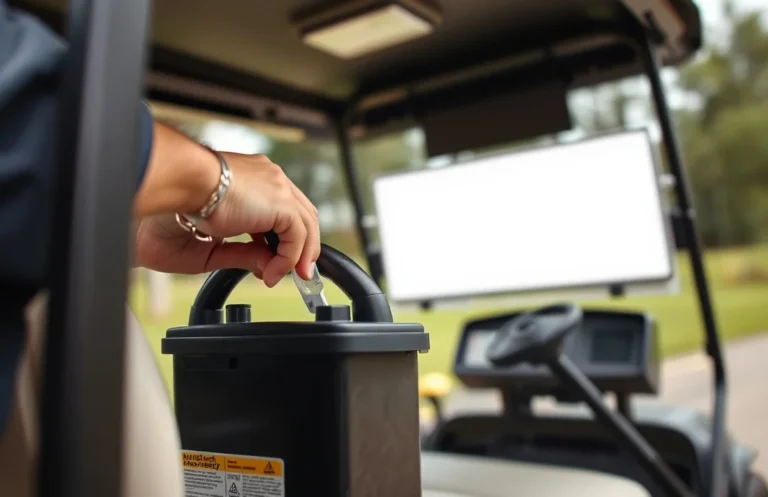
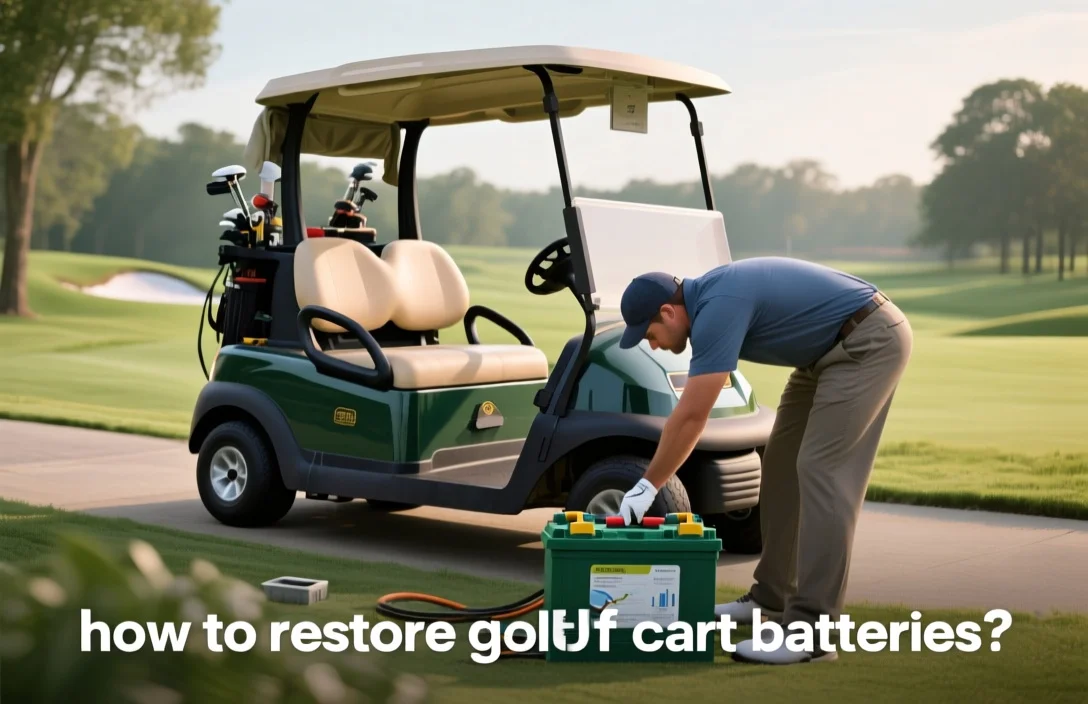
How to restore golf cart batteries?
If your golf cart won’t hold a charge you can sometimes bring the battery bank back to life, but safety comes first. The spec that matters most is each cell’s specific gravity and resting voltage. The common mistake is using a high-current charger to force recovery, so first check the battery bank voltage and the charger voltage and amp setting on the label.
How to restore golf cart batteries: measure bank voltage and each cell’s specific gravity, then apply a slow reconditioning charge at about 10% of the amp-hour rating for 12 to 24 hours, perform an equalization charge if cells balance, and repeat testing until voltages and gravity stabilize.
Quick Health Assessment
You can usually tell if a golf cart battery pack is worth restoring by combining a visual inspection, per-battery open-circuit voltages, specific gravity or conductance readings, and a short load/parity check. If most batteries are close in voltage and recover with a controlled charge, restoration and equalization can be reasonable; if several batteries show physical damage, wildly different voltages, or fail load checks, replacement is the safer choice.
For example, if a six-battery pack shows five batteries with similar voltages and one far lower and slow to recover after charging, that one battery is likely the weak link and often needs replacement rather than trying to revive the whole pack. If three or more batteries read poorly or cases are damaged, restoration costs and reliability risks usually outweigh repair.
Battery Types & Packs
Most golf carts use lead-acid deep-cycle batteries in flooded (wet), AGM, or gel formats, and the available restoration methods depend directly on which one you have. Packs are normally built from 6V, 8V, or 12V batteries to create 36V or 48V systems, so identifying cell voltage and series configuration is the first and most critical step before any restoration attempt.
Flooded, AGM, and gel differ in construction and how they respond to charging and equalization. Flooded batteries have removable caps and can be equalized and topped with distilled water, AGM are sealed and accept limited higher-voltage conditioning only if the manufacturer allows it, and gel batteries are the most sensitive to overvoltage and generally must not be equalized.
| Chemistry | Typical cell voltages used | Equalization allowed? | Restoration options |
|---|---|---|---|
| Flooded (wet) | 6V, 8V, 12V cells | Yes, commonly | Equalize, top up water, specific gravity checks, desulfation |
| AGM | 6V, 8V, 12V sealed | Sometimes, only by maker spec | Low-rate reconditioning, limited pulse desulfation, often replacement |
| Gel | 6V, 8V, 12V sealed | No, usually not | Slow charge, gentle recovery, replace if sulfated |
Safety And Replacement Triggers
Working with lead-acid golf cart batteries requires strict adherence to safety protocols. Always use personal protective equipment (PPE) such as gloves, goggles, and face protection to guard against acid exposure and other hazards. Ensure the workspace is well-ventilated to avoid inhaling harmful gases.
Physical signs of battery failure can indicate when a battery is beyond restoration. Monitoring these signs can prevent unsafe conditions and ensure user safety.
It’s crucial to recognize when to stop restoration efforts. Attempting to revive a battery that shows clear signs of failure can lead to dangerous situations.
Cleaning, Watering, Connections
Proper maintenance of golf cart batteries is essential for effective restoration. Begin by ensuring the battery terminals and connections are clean, and that the electrolyte levels are adequate, using distilled water when necessary.
In practice, maintaining clean and well-watered batteries can significantly enhance their performance and lifespan. Regular inspections can help you catch potential issues early, ensuring your golf cart remains operational and efficient.
Charging, Equalization & Desulfation
Restoring golf cart lead-acid batteries depends on controlled charging: bring each battery to full charge slowly, use equalization only when the manufacturer approves it, and treat sulfation with short, monitored desulfation pulses rather than prolonged overvoltage. Improper equalization or aggressive pulses can cause gassing, overheating, lost water in flooded cells, and permanent plate damage.
Smart chargers are usually the right choice for restoration because they manage bulk, absorption, and float stages and can include temperature compensation and automatic shutoff. Manual chargers or bench supplies can work for targeted treatments, but they require careful monitoring of voltage, current, and temperature to avoid harm.
| Charger Type | Best For | Tradeoffs |
|---|---|---|
| Smart multi-stage | General restoration and maintenance | Safer, may be slower |
| Manual/bench supply | Targeted repairs and controlled equalization | Higher skill required, risk of mistakes |
| Pulse/desulfator | Light sulfation cases | Limited success on heavy sulfation, can void warranty |
Safety warning: Always verify manufacturer specifications before equalizing or using desulfation pulses and monitor voltage, current, and temperature closely during treatment. If a battery shows swelling, persistent overheating, or strong sulfur smell, stop treatments and replace the battery.
Step-by-Step Restoration Procedure
You can sometimes revive flooded lead-acid golf-cart batteries by isolating the bad battery or cell, performing a controlled slow charge and soak cycle, checking specific gravity and voltage, then repeating conditioning cycles until capacity and gravities converge. Restoration works only when plates are not physically warped or the case is cracked, so watch for swelling, severe corrosion, or overheating and stop if any of those are present.
When Restoration Fails
If restoration attempts for golf cart batteries do not yield satisfactory results, it is essential to recognize the signs of failure and proceed with replacing the batteries. Common indicators include significantly reduced capacity, inability to hold a charge, and physical damage such as swelling or corrosion.
When considering replacement batteries, focus on the following criteria:
Verify warranty details and vendor reliability before purchasing:
“Always consult your golf cart’s manual for specific battery specifications and recommendations.”
Once you have selected new batteries, responsible disposal of the old ones is crucial:
In summary, recognizing when restoration fails involves understanding the signs of battery decline and knowing how to choose suitable replacements while ensuring responsible disposal practices. This approach not only maintains the efficiency of your golf cart but also supports environmental safety.
Quick Summary
Restoring golf cart batteries requires careful assessment and specific techniques to ensure effectiveness and safety.
Frequently Asked Questions
How can I tell if my golf cart batteries are compatible with a new charger?
To ensure compatibility, check the voltage rating of your batteries, which is usually 6V, 8V, or 12V. Make sure the charger matches this voltage and is designed for the specific type of battery, such as lead-acid or lithium-ion.
Is it safe to restore golf cart batteries if they are overheating?
Overheating can indicate a problem, so you should stop the charging process immediately. Allow the batteries to cool down before inspecting for damage or considering a restoration process.
How long does it typically take to restore golf cart batteries?
The restoration process can take anywhere from a few hours to several days, depending on the method used. If you are using a desulfation charger, it may take up to 24 hours for a complete cycle.
What are common mistakes to avoid when restoring golf cart batteries?
A common mistake is using a charger not suitable for your battery type, which can lead to overcharging or damaging the batteries. Always read the manufacturer’s instructions and verify the charger specifications before starting.
When should I consider replacing my golf cart batteries instead of restoring them?
If your batteries are more than 5-7 years old and show signs of significant wear, such as not holding a charge or physical damage, it may be time to consider replacement. Restoration might not be effective in such cases.