Best Way To Charge Golf Cart Batteries Overnight
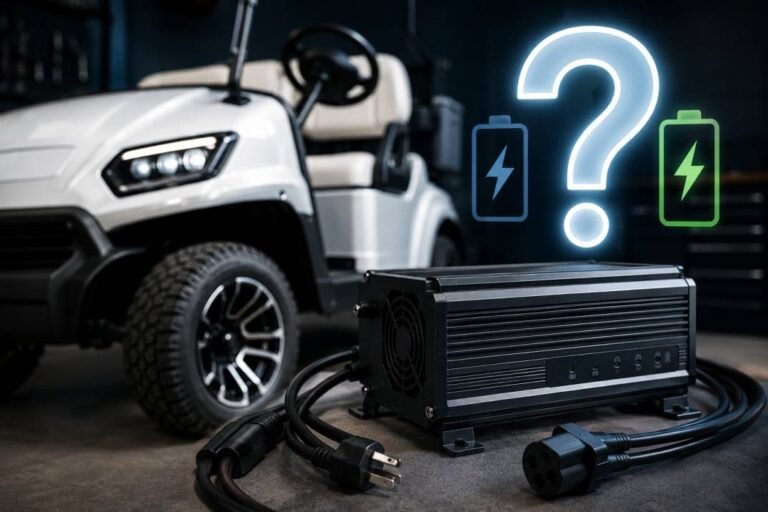
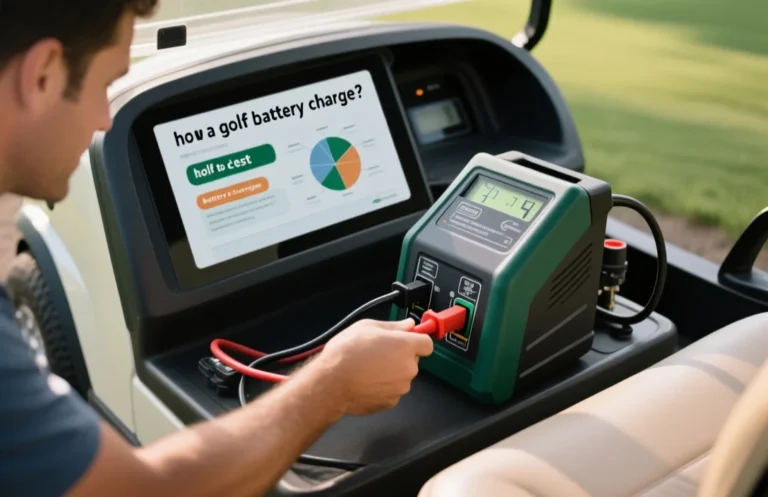
Charging golf cart batteries overnight is normal, but the best way depends on your charger type and battery chemistry. For most owners, an overnight charge of 8 to 10 hours is the standard window to reach full capacity. The safest setup is a charger that matches your cart’s voltage and battery type, then switches to reduced output or maintenance mode when the batteries are full.
Use a modern automatic/smart charger whenever you can. Smart chargers handle the end of the charge cycle on their own, which makes overnight charging practical instead of risky. Dumb timers and wrong-voltage chargers are where overcharging, heat, and battery damage start.
Key Takeaways
- Use a smart charger. Automatic chargers reduce output or shut off after full charge, which lowers overnight overcharge risk.
- Match voltage exactly. Use a charger built for your cart’s system, usually 36V or 48V, or you risk poor charging or damage.
- Stick to 8-10 hours. A complete overnight charge is usually 8 to 10 hours for typical packs.
- Lead-acid needs watering. Flooded lead-acid batteries need periodic checks and distilled water after charging.
- Ventilate the space. Lead-acid charging produces flammable hydrogen gas, so charge in a well-ventilated area.
- Unplug if anything seems off. Heat, a burnt-plastic smell, or strange noises mean stop charging and inspect the setup.
Best Way To Charge Golf Cart Batteries Overnight

The best way to charge golf cart batteries overnight is to use an automatic smart charger matched to your battery type, then plug in for 8 to 10 hours. That gives you a full charge without babysitting the cart or relying on a wall timer. If you have lead-acid batteries, a proper charger keeps gassing and boiling within the normal charge window as long as the settings are correct.
Battery chemistry matters just as much as charger quality. Flooded lead-acid is the most common setup, AGM needs proper overcharge protection, and lithium-ion requires a charger made for lithium charging, not a lead-acid profile. If the charger does not clearly support your battery type, treat it as the wrong charger until you confirm otherwise.
Quick ranking criteria
- Stops overcharging by design – automatic bulk and absorption charging, then maintenance or shutdown
- Correct output for your system – 36V vs 48V, plus the right amp rating for your pack
- Stable connections – clip style or hardwired, with built-in protection
- Lower hassle overnight – clear LED indicators and smart completion behavior
Best picks by use case
- If you want the safest set-it-and-forget-it routine: pick a smart automatic charger with float or maintenance mode.
- If you run flooded lead-acid: prioritize a charger suitable for lead-acid and plan to check water levels.
- Charger indicates completion – shutdown, green “full,” or maintenance mode
- You hit 8-10 hours with a non-smart charger or unclear charger status
- You see or smell trouble – burnt plastic smell, overheating, or damaged cables
- Well-ventilated location – especially for flooded lead-acid
- Dry, clean terminals before charging
- Proper charger rated for your system – 36V/48V and the correct battery chemistry
- Basic protection gear for watering and inspection, at minimum eye protection
- Easy access to unplug – not buried behind clutter
- Verify 36V vs 48V charger match to your cart
- Confirm the charger is compatible with your battery type – lead-acid, AGM, or lithium-ion
- Clean any terminal corrosion before connecting
- Connect fully and firmly so clips do not wiggle
- Keep cables away from moving parts and sharp edges
- Charger indicates charging and then shows full or maintenance mode for smart chargers
- Battery area stays cool to the touch relative to ambient conditions
- No burnt smell, no smoking, no melting, and no unusual sparking
- Add water with batteries completely charged
- Use distilled water only
- Do not fill to the cap – avoid overfilling and overflow
- Recheck water levels periodically, especially in hot weather and after heavy use
| If you have lithium-ion: use a charger specifically designed for lithium chemistry and matched to the system voltage. | Charger approach | What it’s best at | Key spec/behavior to look for | Best for overnight? |
|---|---|---|---|---|
| Smart/automatic charger | Full charge, then reduced output or shutdown | Float/maintenance mode, automatic completion | Yes – my top pick | |
| Standard charger (non-smart) | Basic charging to a set level | No adaptive behavior, relies on you to time unplug | Only if you can unplug at the right time | |
| Trickle/maintainer style | Keeping a charged battery topped off | Low-current maintenance mode | Yes for long holds after full charge | |
| Wrong battery chemistry charger | None | Mismatched voltage or chemistry | No, stop and correct |
Can You Leave a Golf Cart Charging Overnight?
Yes, you can leave a golf cart charging overnight if the charger is the right kind. With a modern automatic smart charger, the charger reduces output or shuts off once the battery is full, which is why overnight charging is so common. With an older or “dumb” charger, leaving it plugged in too long can cause overheating and shorten battery life.
Overnight charging is safest when you treat it as a timed cycle, not a forget-it-forever habit. The usual target for a complete charge is 8 to 10 hours, so if your pack is full sooner, a smart charger should manage the transition. If the charger is not smart, you need to unplug it at the right time instead of assuming it will stop itself.
Battery type matters here too. Flooded lead-acid batteries release flammable hydrogen gas while charging, so ventilation matters and ignition sources should stay away. Lithium-ion packs are usually more forgiving in normal charging because the BMS and the proper charging profile control the process, but the charger still has to match the battery.
3 Rules for Overnight Charging and When to Unplug

Overnight charging comes down to three rules: use a charger that can finish safely, charge for the right amount of time, and stop immediately if anything looks wrong. The normal overnight window is 8 to 10 hours for a full charge, which gives most carts enough time to reach capacity without guessing.
Rule 1: Match charger to battery type and voltage. A 36V charger on a 48V pack – or the reverse – can lead to poor charging or damage. Lead-acid, AGM, and lithium-ion each need different charging profiles.
Rule 2: Treat 8-10 hours as a charging cycle, not a forever timer. A complete overnight charge is commonly 8 to 10 hours. After that, you want maintenance behavior, not endless charging.
Rule 3: Unplug on warning signs. Stop charging and inspect the setup if you notice heat near the battery area, a burnt-plastic smell, or persistent buzzing or clicking from the charger. Unplug also if you find corrosion on terminals or loose connections, since those can cause slow charging and excess heat.
When you should unplug
Safety Concerns with Overnight Charging and Gear
Charging overnight is mostly about controlling gas, heat, and electrical mistakes. Flooded lead-acid batteries release hydrogen gas while charging, so ventilation is not optional. An enclosed garage with poor airflow raises risk even if the charger is automatic.
Electrical safety matters too. Loose connections create resistance, and resistance creates heat that can damage terminals and shorten battery life. Keep cables secured, avoid pinching wires under lids or compartments, and use the charger’s intended connection method instead of improvising.
A simple inspection habit helps. Use eye protection when checking connections or watering batteries, and keep the area free of sparks or flames. If you smell hot plastic, shut it down immediately – that usually points to a charger or connection problem, not normal charging.
Gear and setup that actually helps
Step 1 Securely Connect Charger to Golf Cart
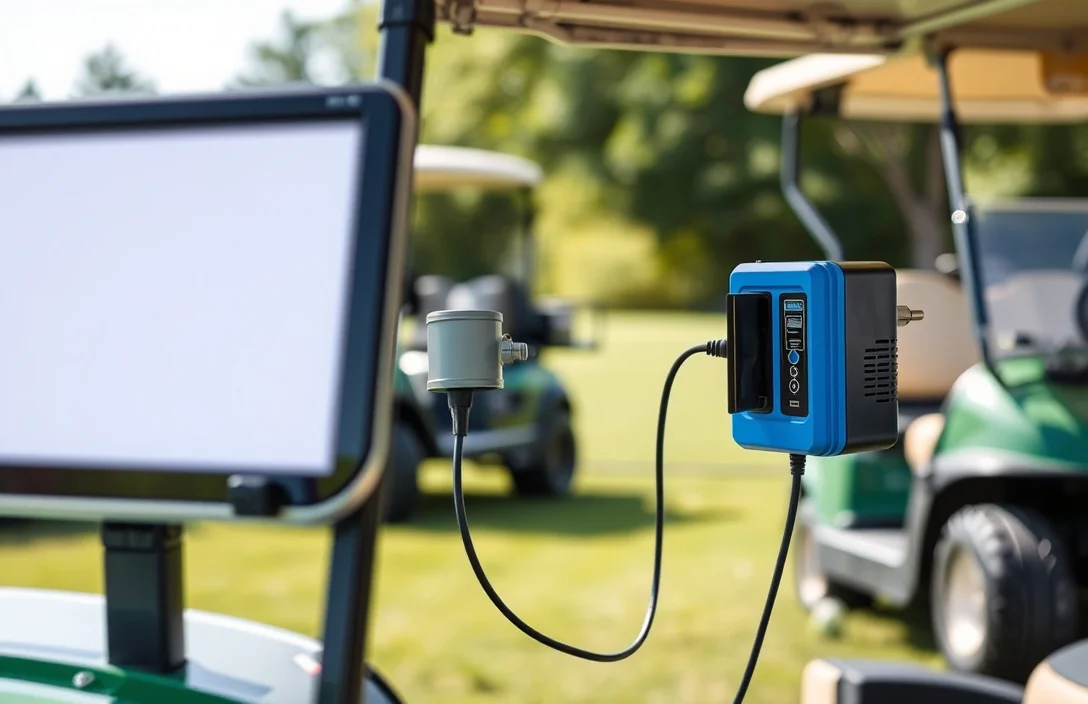
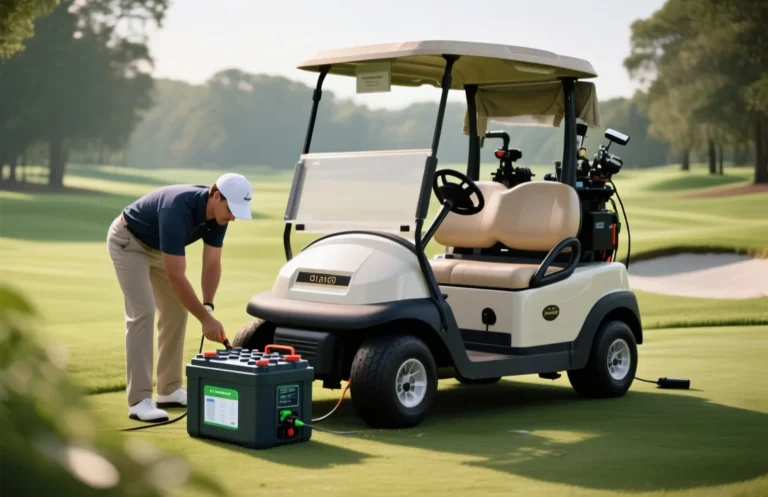
Secure connections are the difference between an easy overnight charge and slow charging, overheating, or early battery aging. Before plugging anything in, park the cart off and confirm the charger matches your system voltage, commonly 36V or 48V, and your battery type. Then connect the charger leads to the correct battery terminals exactly as designed.
Clean connections matter. If you see corrosion or heavy dirt on the terminals, clean them before charging because poor contact can cause slow charging and extra heat at the connection point. Check the charger cables for damage, and route them so they cannot be pinched or pulled when you close a compartment or move around.
For a flooded lead-acid setup, remember that charging produces hydrogen gas, so do not make or break connections in a way that sparks or arcs. Make the connection carefully, with the cart off and the charger ready, to minimize accidental arcing.
Connection
Step 2 Monitoring the Charge and Charging Time
You do not need to babysit a smart charger all night, but you should watch the first part of the cycle long enough to confirm it is working correctly. With automatic charging, your job is to make sure the charger moves through its stages normally and reaches full charge without overheating. If your charger has LEDs or a display, use them as your check.
For timing, the common overnight recommendation for a complete charge is 8 to 10 hours. That gives the pack enough time to reach full capacity for typical lead-acid carts. A smart charger should then move into reduced output or maintenance behavior, which is what makes overnight charging practical.
If your charger is not smart, your job changes. You need a reliable plan to unplug at the right time because a dumb charger can keep pushing after the battery is full. That is how convenience turns into shorter battery life.
What normal looks like during charging
If any of those checks fail, stop and fix the cause – charger, voltage mismatch, terminal corrosion, or damaged cables – before trying again.
Step 3 Post-Charging Procedures and Watering
After charging, protect the battery from the usual follow-up problems: wrong watering timing, dirty terminals, and letting the pack sit in poor condition. For flooded lead-acid batteries, watering is done only when the batteries are fully charged, and you add distilled water carefully without overfilling. Overfilling can cause overflow acid and reduce capacity, so do not fill to the cap.
Inspect the battery area for residue and corrosion. If terminals look chalky or wet, clean them properly and let everything dry before reconnecting. A quick visual check prevents the common “it still charges, so it must be fine” mistake that slowly ruins performance.
Then match the charge routine to how the cart is used. If you charge once and the cart sits for days, a maintainer can help keep voltage healthy without repeated full charging. If you drive daily, charging for the recommended 8 to 10 hours and unplugging is usually enough.
Watering and finishing rules
FAQ
What is the best way to charge golf cart batteries overnight?
Use an automatic smart charger matched to your battery chemistry and cart voltage, then charge for 8 to 10 hours for a complete overnight charge. Smart chargers reduce output or go into float or maintenance mode when full. For non-smart chargers, you need to unplug based on time because they will not reliably stop at full charge.
How long should I leave my golf cart charger plugged in overnight?
A complete overnight charge is commonly 8 to 10 hours to reach full capacity. If your charger is smart and shows full or maintenance, you can leave it connected as designed. If your charger is not smart or lacks clear status, treat 8-10 hours as the maximum window and unplug after that.
Is it safe to leave a golf cart charging overnight in a garage?
It can be safe if you use a modern smart charger and charge in a well-ventilated area. Flooded lead-acid charging produces flammable hydrogen gas, so poor ventilation increases risk. If you notice excessive heat, a burnt-plastic smell, or melting, unplug immediately and fix the charger or connection.
How do I know when to unplug after charging?
Unplug when the charger indicates completion – shutdown, “full,” or maintenance mode. If your charger does not provide clear status, unplug after 8-10 hours. Also unplug immediately if you detect overheating, corrosion growth, loose terminal clips, or any burnt odor from the charger.
What’s the biggest mistake people make when charging overnight?
Using the wrong charger for the battery chemistry, or using a dumb charger for too long. The other common mistake is assuming the charger will know when the battery is full. Smart chargers handle the end of charge automatically, but non-smart timers do not.
When choosing a setup, pick a charger that matches your cart – 36V or 48V, and lead-acid, AGM, or lithium-ion – and has smart completion behavior. Then check your cart’s system voltage and battery type, choose an overnight-friendly charger, and follow the 8 to 10 hour charge window with the connection and watering rules above.