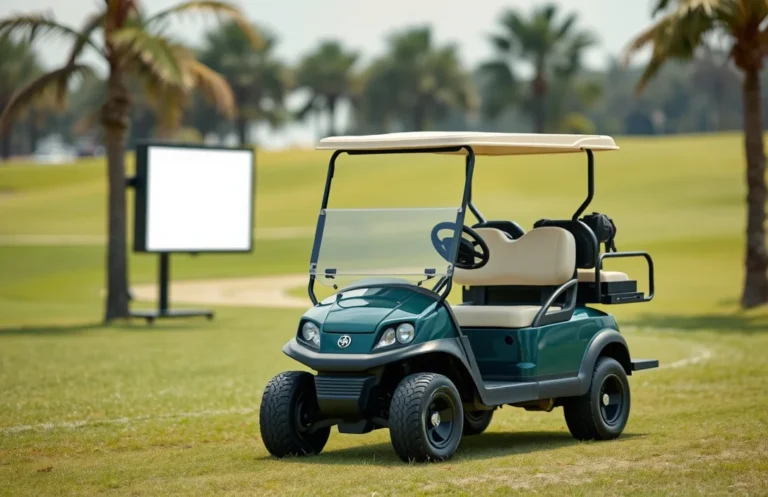

Golf Cart Width: Dimensions And Battery Implications
Width is the spec that matters most for battery fit and safe charging space. The common mistake is assuming the cart’s body width equals usable space without counting tires, bumpers, or mirrors. The first label to check is the official width listed on the cart’s data plate or owner’s manual.
Golf cart width usually ranges from 48 inches for standard 2 to 4 seat models to about 60 inches for wider or lifted carts, with many centered around 48 to 52 inches. Measure the widest point including tires and bumpers to confirm fit for storage, transport, and charging space.
Standard Golf Cart Width
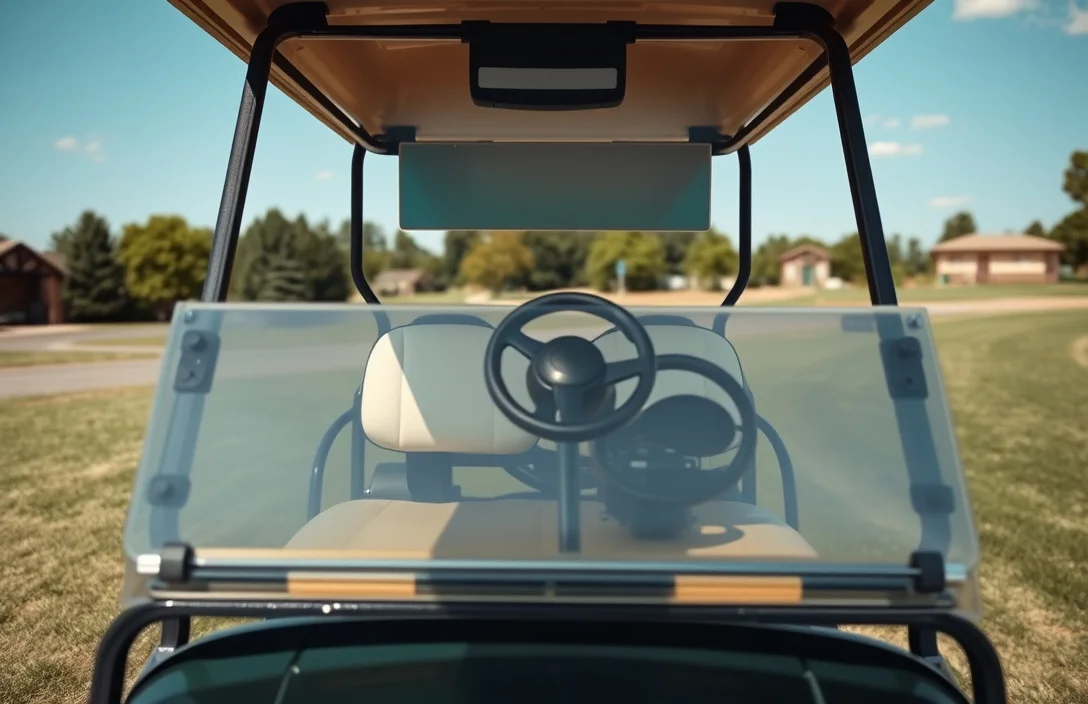
Most 2-seat golf carts are about 48 inches wide. Four-seat models typically run from 48 to 60 inches, while the larger 6-seat or limo designs are usually over 60 inches wide. Actual width varies with the brand, wheel width, and any added features like wider tires or lift kits.
Width is a practical constraint for battery layout and charging access. A wider frame can accommodate larger or more cells side by side, but it also affects where the battery sits, how you route cabling, and whether your charger and cables reach without strain.
For example, a common 2-seat cart around 48″ wide may use a compact under-seat battery stack. A 4-seat cart near 60″ wide often requires a longer tray and careful cable routing.
| Seating Capacity | Typical Width Range (inches) | Notes |
|---|---|---|
| 2-Seater | 47 – 49 | Most compact on courses and personal use; commonly around 48″. |
| 4-Seater | 48 – 60 | Standard frame or wider chassis for extra seating; widths vary with design. |
| 6-Seater / Limo | 60+ | Built for stability with more passengers; width often exceeds 60 inches. |
Note: Width affects how you store, transport, and charge a cart. Always verify the full installed width, including tires and any accessories, before choosing a charger, rack, or storage space.
Factors Influencing Width
Seating capacity is the primary factor that determines overall width. A standard two-seat cart is typically around 48 inches wide, while four-seat models commonly run into the mid 50s to around 60 inches, and six-seat variants often push past 60 inches. When shopping, check the manufacturer’s spec to confirm the exact figure for your chosen configuration.
In practice, width affects more than space between shelves in a garage. It changes how you maneuver the cart on rough paths and how it sits on a trailer or in a pickup bed. Always measure the widest point with the tires installed to avoid surprises at home or on the course.
Upgrades that widen the cart can alter charging setup too. A broader chassis may require longer charging cables or repositioned charging ports, especially if you rely on wall outlets or portable charging stations. Plan for these changes during the buy or upgrade so you can maintain safe, convenient charging without forcing actions that could damage the unit.
Battery Placement Considerations
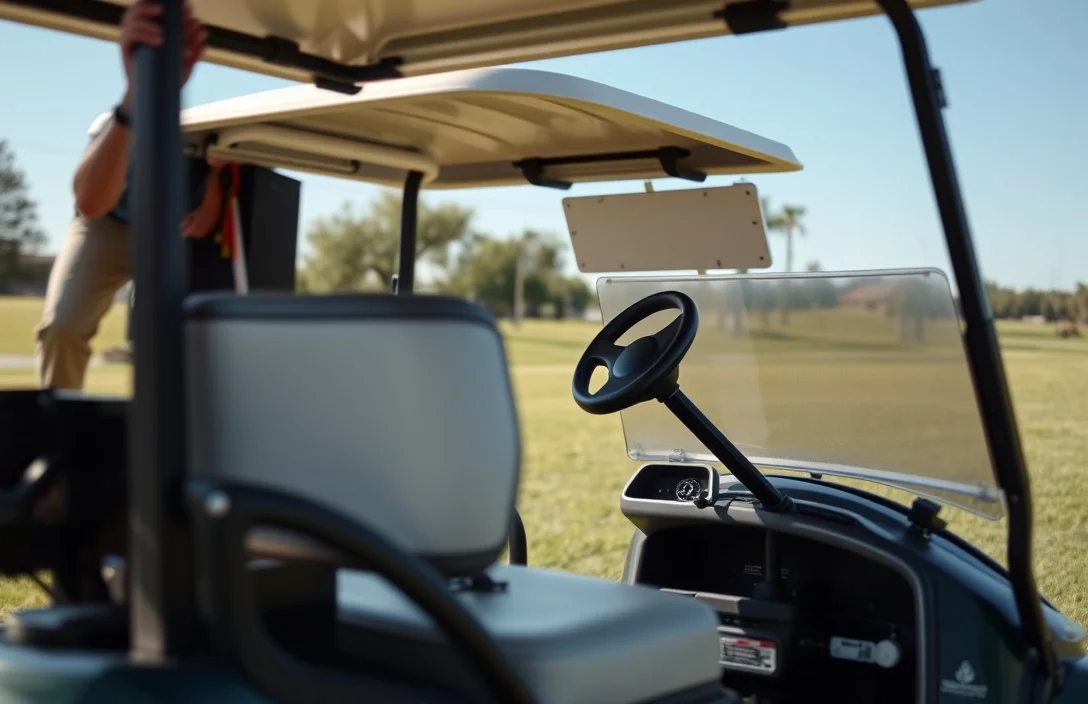
Cart width defines the available footprint for the battery system. Standard two-seat and most four-seat configurations sit around 48 inches wide, while wider models approach 60 inches or more, which changes how you fit and access the battery pack. These width differences drive the choice of pack size, shape, and mounting method to maintain safe clearance and serviceability.
Charging System Compatibility
Width does not change the charging voltage or current your battery needs. The charger must match the cart’s battery system and chemistry, while width mainly influences space for the charger enclosure and cable routing.
In practice, a wider chassis can accommodate larger or better-ventilated charging hardware and simpler cable management.
Measuring Your Golf Cart
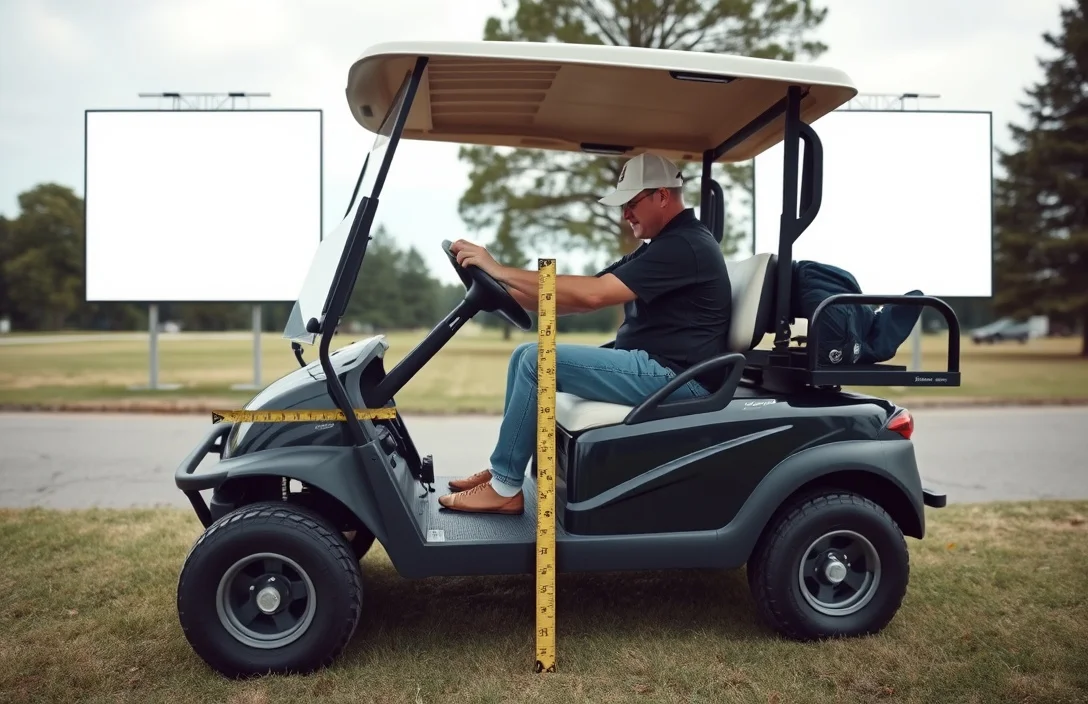
Measuring width shows standard two-seat carts are about 48 inches wide; four-seat models typically range from 48 to 60 inches, and six-seat or limo variants can exceed 60 inches. This width matters for battery layout, charging space, and storage or transport. Always measure at the widest point to plan for doors, ramps, and space.
Tools you need simplify repeatable results and make it easy to compare against storage or transport constraints.
| Seating | Typical Width |
|---|---|
| 2-Seater | ~48 inches |
| 4-Seater | 48 – 60 inches |
| 6-Seater | Over 60 inches |
Measured figures should guide battery placement decisions, ensuring the pack and any wiring or charging gear have clearance. If you expect aftermarket tires or bumpers to widen the cart, remeasure with those parts installed so you do not block access or charger cables.
Real-World Fit Examples
Standard two-seat golf carts are about 48 inches wide. Four-seat and wider models range from 48 inches up to 60 inches or more, with six-seat or limo variants often exceeding 60 inches. The exact width depends on seating arrangement and any aftermarket components.
For example, EZ-GO, Club Car, and Yamaha baselines cluster around 47 to 49 inches in standard builds, while higher capacity or lifted versions push toward 58 to 60 inches or more. Width that affects fit is driven by the chassis design and optional accessories rather than seat count alone.
Common changes that alter width include wider tires and wheel spacers, plus add-ons like front or rear bumpers. Wheel spacers can add 1 to several inches per axle, and oversized tires may widen the overall footprint significantly. Always measure the widest point with the exact configuration and accessories installed before buying storage or transport space.
| Seat Count | Typical Width (inches) | Notes |
|---|---|---|
| 2-seat | ~47 – 48 | Standard width for base configurations |
| 4-seat | ~48 – 60 | Wider chassis or cargo packages common |
| 6-seat / limo | >60 | Often significantly wider for stability |
| Brand | Model | Width (inches) |
|---|---|---|
| EZ-GO | Freedom RXV / TXT | ~47.0 – 47.5 |
| Club Car | Onward 4 Passenger | 48.75 |
| Club Car | Villager (Standard) | ~47.0 – 59.5 |
| Yamaha | Drive 2 | 47.2 |
| Yamaha | UMAX TWO | 49.3 |
Bottom line, width is a function of seating plus any aftermarket components. If you store or transport carts regularly, verify the widest point with the exact configuration and allow extra clearance for doors, ramps, and turns.
Recommendations for Battery Systems
Golf cart width typically ranges from about 48 inches for two-seat models to over 60 inches for six-seat versions. This cross-section constraint governs the maximum width of the main battery bank and requires clearances for cooling and wiring. For standard 48″ carts, choose a compact 48V pack or a slim lithium configuration that fits under the seat with proper side clearance.
Key specs to prioritize are voltage, chemistry, and footprint. A footprint that leaves room for wiring, vents, and access is as important as the capacity rating. If you have a tighter width, lean toward a modular or low-profile pack that can be split into two narrow modules rather than a single wide block.
| Cart Width (in) | Recommended Battery Approach | Notes |
|---|---|---|
| About 48 | Standard 48V bank, or slim 48V Li-ion modules | Common footprint; ensure side clearance for wiring |
| 48 – 60 | Two slim modules or a compact 60V pack with careful layout | Wider seating can free space behind the seat for a rear module |
| Over 60 | Full-width or dual-row arrangement; lithium packs adapt easily | Watch weight distribution and mounting strength |
Top Brands to Consider
Safety notes: Always confirm charger compatibility with the pack chemistry and verify the BMS requirements for lithium systems. Avoid mixing different chemistries or attempting to force an oversized pack into an undersized space. If in doubt, consult a golf-cart service professional to confirm fit, wiring, and venting before purchase or installation.
Quick Summary
A standard golf cart is about 48 inches wide, while 4- and 6-seat versions exceed 60 inches.
Frequently Asked Questions
How wide is a standard golf cart and how does that affect compatibility with storage or a trailer?
Most standard 2-seat golf carts are about 48 inches wide. Wider 4- to 6-seat configurations can exceed 60 inches, so you should measure your space and check openings before purchase or transport.
Does adding wider tires or a lift change the overall width enough to impact heat or charging safety?
Width itself does not determine heat generation; heat comes from battery load and charging rate. Wider tires or a lift can push width beyond 60 inches, which may affect fit in tight spaces, but not the battery chemistry itself.
Can the width of a golf cart affect its runtime or range, and what width should I plan if I need more clearance?
Runtime is determined by battery capacity and how you drive, not width. To plan for clearance, know that standard carts are about 48 inches wide, with wider options up to 60 inches.
What safety checks should I perform when charging a golf cart in a space sized for its width?
Ensure proper ventilation around the battery area and charger, and leave space for access and cooling. Even in a standard width area, prioritize ventilation and avoid cramped, enclosed cabinets.
What buying mistake about golf cart width should I avoid to prevent needing replacements or space issues later?
Don’t assume a cart’s width is fixed by the seat count; wheel spacers, tires, or lifts can push width beyond 60 inches. Measure the cart at its widest point and compare to your storage or transport space before buying.