How to charge dead golf cart batteries?
Dead golf cart batteries can often be charged and safely returned to service, but the single spec that matters is pack voltage and battery chemistry. A common mistake is forcing a wrong-voltage or high-rate charger on the pack. Before you touch any leads, read the battery label and set your charger to the matching voltage or chemistry setting.
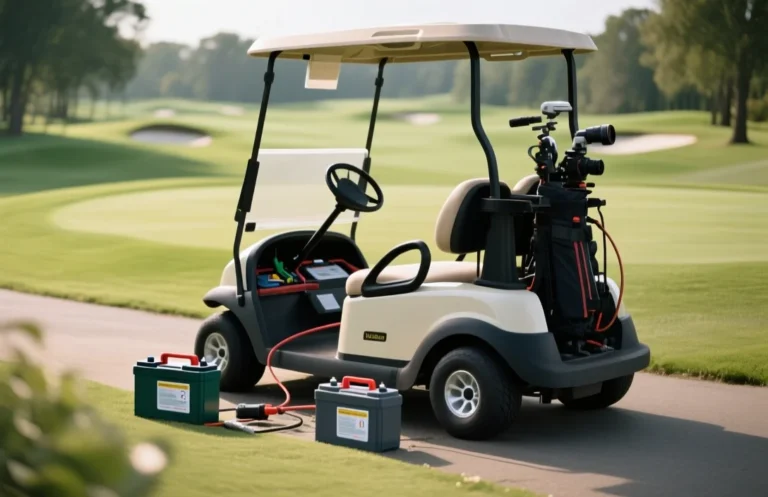
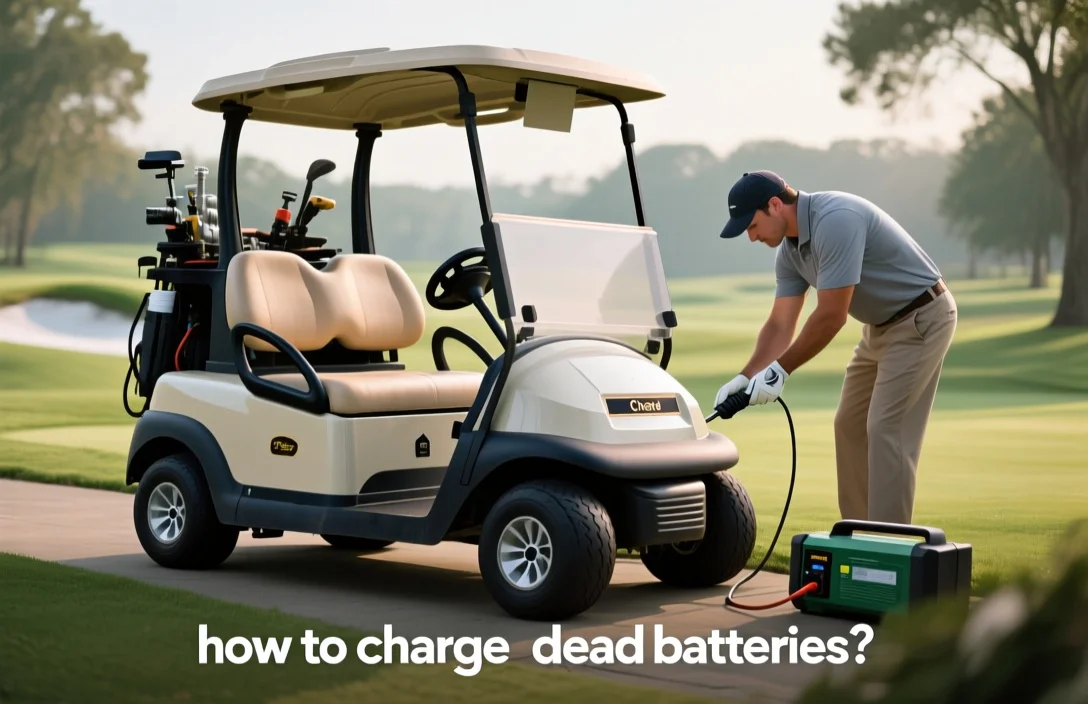
Dead golf cart batteries should be charged with a correct-voltage smart charger matched to the pack, typically 36V or 48V; connect positive and negative firmly, charge until the charger reaches float, and expect a full charge to take about 6 to 12 hours on a standard multi-stage charger.
How to Tell It’s Dead
If a golf cart battery reads well below its nominal per-cell voltage at open-circuit, and it collapses under even a small load, it is effectively dead for service and recovery attempts will likely fail. If voltage is low but stable and cells test evenly, the battery bank is usually recoverable with proper charging and cell maintenance.
Start by measuring each battery, not just the pack voltage. Golf cart packs are multiple 6 volt or 8 volt batteries in series, so a single weak battery will make the whole pack look dead even when others are fine, check each battery individually and compare readings to the label or manual.
| Test | Sign | What it usually means |
|---|---|---|
| Open-circuit voltage | Battery shows much lower than nominal and unequal cell voltages | Deeply discharged or sulfated cells, verify with charger or hydrometer before assuming replace |
| Load/voltmeter test | Voltage drops sharply under modest load and does not recover | High internal resistance, likely failed plates or severe sulfation, low chance of full recovery |
| Physical inspection | Corrosion, cracked case, swelling, visible electrolyte loss | Do not charge if case is cracked, swollen, or leaking; replace battery |
Follow a simple sequence to decide next steps: first measure open-circuit voltage on each battery after resting 6 to 12 hours since any recent charge or use. Second, perform a load test with a rated load or a vehicle starter, watching for voltage collapse and immediate recovery after removing the load.
For example, if one battery reads significantly lower than its neighbors or shows much lower specific gravity, that single battery often causes pack failure even when others are fine, replace the weak unit rather than repeatedly charging the whole pack.
Warning: If any cell is swollen, cracked, leaking, or feels hot, stop and do not attempt to charge; dispose or replace the battery safely.
Safety Checklist Before Charging
Charging a dead golf cart battery without preparation can create sparks, hydrogen gas, acid burns, and permanent battery damage. Follow these safety steps to reduce the risk before you touch the charger or reconnect the pack.
For example, if you find a battery with a cracked top and visible electrolyte, stop immediately, isolate the battery, neutralize any spilled acid on the floor with baking soda and water, and arrange professional disposal or replacement. Do not try to tape the crack and charge the pack.
Safety warning: If a battery is hot to the touch, emitting strong gas, or visibly bulged, do not attempt to charge it. Contact a qualified technician or the battery supplier for next steps; charging a compromised battery creates serious burn and fire risks.
Pick the Right Charger
Use a charger that matches the battery pack voltage and chemistry, and size its output current to a safe fraction of the pack capacity (typically around 10 to 20 percent of the amp-hour rating) for reviving deeply discharged golf cart batteries. Prefer a multi-stage automatic charger that has float and an equalize or desulfation option for lead-acid banks, but only use those modes when the battery type and manufacturer allow them.
First, identify the pack voltage printed on the cart or the batteries, for example common pack voltages are 36 V and 48 V, then buy a charger explicitly rated for that pack voltage. Also confirm chemistry, flooded versus AGM or gel, and never attach a charger designed for lithium to a lead-acid bank or vice versa without proper BMS and settings.
For charge current, calculate from the battery bank Ah label: charger amps equal Ah times C-rate. A C/10 to C/5 range (approximately 10 to 20 percent of Ah) is a practical compromise between speed and stress for recovery charging; use lower current if batteries are very sulfated, hot, or older.
| Charger Feature | Why it matters | When to use |
|---|---|---|
| Voltage match | Prevents reversed or undercharging the pack | Always, verify label before connecting |
| Output current (amps) | Determines charge speed and stress on plates | Choose ~10-20% of Ah for recovery charging |
| Automatic multi-stage | Reduces risk of overcharge, finishes with float | Recommended for regular and recovery charging |
| Equalize / desulfation | Can restore balance or remove sulfate buildup in flooded cells | Use for flooded lead-acid only, per manufacturer limits |
Equalization raises cell voltage briefly to balance cells and can recover some capacity on flooded batteries, but it increases gassing and water loss so only use it when you know the bank is flooded and the manufacturer allows the voltage. Desulfation or pulse modes can help when sulfation is early, but they do not reliably revive plates that are physically warped or heavily damaged.
Check before you buy: pack voltage and chemistry, bank Ah, charger amp rating equals ~0.1 to 0.2 times Ah, automatic multi-stage with float, and approval for equalize/desulfation only if the battery type permits.
Warning: If you see swelling, severe corrosion, or repeated overheating, replace batteries rather than repeatedly trying aggressive higher-current or equalize cycles. Always verify charger specs against the battery manual when in doubt.
Step-by-Step Charging
Dead golf cart batteries can sometimes be recovered by a careful sequence: inspect and measure each cell, apply a low-current recovery charge, complete a controlled full charge, optionally equalize if the battery type allows, and then place the bank on a float charge. Recovery is not guaranteed; damaged, swollen, or leaking batteries should be replaced.
Safety first: work outdoors or in a well ventilated area, wear eye and hand protection, and keep sparks and open flames away from batteries that can gas. If you see cracked cases, significant swelling, or active electrolyte leakage, do not attempt to charge and arrange safe disposal or replacement.
Troubleshooting Failed Recovery
If a dead golf cart battery refuses to take a charge the most likely irreversible problems are heavy sulfation, one or more shorted cells, or physical damage that lets electrolyte escape. Do a cell-by-cell voltage and specific gravity check before repeating any aggressive charging, and stop charging immediately if cells are swollen, leaking, or reading far below the pack average.
Symptoms of irreversible failure
Symptom: The pack shows little or no voltage change during several hours of charging, the charger runs hot, or individual batteries get hot to the touch while the rest remain cool. You may also notice a rotten egg smell, visible acid stains, or bulging battery cases.
Cause: Those signs point to internal sulfation, one or more shorted cells, or failed plates that change internal resistance enough to prevent acceptance of current. Continued charging in that state can cause venting and unsafe pressure buildup.
Fix: Do not continue fast or equalization charging. Mark the battery as suspect, remove it from service, and perform the cell-level checks below. If you see physical damage, wear protective gear and replace the battery rather than attempting recovery.
Cell-by-cell voltage and specific-gravity checks
Symptom: Pack voltage may look reasonable while one or two cells are much lower, or specific gravity readings vary widely between cells. That imbalance causes the charger to stop early or the pack to read charged while weak cells are still dead.
Cause: Differences between cells mean one cell is sulfated or shorted and is dragging the whole battery down. A hydrometer and a digital multimeter let you compare each cell to the others and to the manufacturer’s service spec.
Fix: If one cell is notably lower than the others, that battery is usually beyond field recovery and should be replaced. If all cells are low but similar, a controlled slow charge or manufacturer-approved equalization may help, only if the battery has no physical damage.
When to stop and replace the battery
Symptom: Any cell reads essentially zero volts, shows persistent low specific gravity after a controlled charge, or the case is cracked, swollen, or leaking. Repeated charging produces heat but no sustained voltage increase or capacity return.
Cause: Zero or near-zero cell voltage usually means a shorted plate or an open internal connection, and low specific gravity after charge indicates irreversible loss of active material or severe sulfation. Physical damage means electrolyte loss and changed internal geometry, which cannot be repaired safely.
Fix: Stop charging and replace the battery. Dispose of damaged lead-acid batteries at an approved recycling center. If unsure, contact the battery maker or a qualified technician and do not attempt home repairs that involve opening sealed cells or using DIY high-voltage desulfation equipment.
Maintenance After Charging
After you bring a dead golf cart battery back to life, ongoing maintenance is what determines whether it stays usable or dies again quickly. Routine watering for flooded cells, regular equalization when needed, and a sensible storage/float routine preserve capacity and prevent premature sulfation.
Watering is the single most frequent task for flooded lead-acid golf cart batteries. Check cell levels after the battery is fully charged, refill with distilled water only to the manufacturer fill line, and never overfill because expansion during charging can cause overflow and corrosion.
| Maintenance Task | When to Do It | What to Check | Why It Matters |
|---|---|---|---|
| Watering | After a full charge or monthly, whichever comes first | Electrolyte level at fill line, use distilled water | Prevents exposed plates and irreversible capacity loss |
| Terminal Care | Every charge cycle or monthly inspection | Clean corrosion, tighten clamps, check cable insulation | Reduces resistance, prevents heat and starting faults |
| Equalization | Only when manufacturer recommends or when cells are imbalanced | Specific gravity spread, cell voltages, charge acceptance | Re-mixes electrolyte, reduces sulfation and cell imbalance |
| Storage / Float Charging | Before multi-week storage and periodically during storage | Maintain full charge level, check monthly, recharge as needed | Prevents deep self-discharge and capacity loss |
For example, equalization is not something to run on a fixed timer unless the battery maker says so, because unnecessary equalization can overheat and shorten life. Look for unequal specific gravity between cells, persistent undercharge, or slow charge acceptance to justify an equalize cycle, and follow the manufacturer’s method and limits.
Estimating remaining capacity and realistic runtime requires measuring usable amp-hours and matching them to your load. Use a load test or track Ah drawn during a run, then compute runtime as usable Ah times battery volts divided by the load in watts, factoring inverter or controller inefficiency. Expect older batteries to deliver progressively less than their rated Ah, so plan conservative runtimes and verify with periodic tests.
Maintaining revived batteries is about consistency: water correctly, equalize only when indicated, and test capacity so you know the runtime you can actually rely on.
Buying and Replacement Checks
Match the battery chemistry, nominal voltage, amp-hour rating, and physical grouping to your cart and charger before you buy or accept a used pack, because charging behavior and safety depend on those specifics. Also confirm age, warranty status, and that the charger in the cart supports the chemistry you plan to use.
Choose flooded cells if your cart and charger expect serviceable lead-acid batteries and you can perform watering and equalization, choose AGM for maintenance-free lead-acid with similar charging voltages, and choose lithium only if the cart or an external charger supports a lithium charge profile and a battery management system is present. Each option requires a matching charger profile or a compatible BMS, so the chemistry decision is a charging decision first.
| Chemistry | Charging notes | Maintenance | When to choose |
|---|---|---|---|
| Flooded lead-acid | Requires multi-stage charger, periodic equalization, and topping by water after charging | High (water, terminal cleaning) | Lowest cost, existing carts with wet-cell chargers |
| AGM (sealed lead-acid) | Multi-stage charger, lower float current, no watering | Low | Maintenance-free swap for many carts, tolerant of vibration |
| Lithium (LiFePO4 typical) | Requires CC-CV with correct end voltage, BMS management, no float charge in many systems | Very low | Weight, faster recharge, longer cycle life if cart and charger are compatible |
Good seller questions: “When were these batteries installed? Have they had any cells replaced? Can you show a recent load or capacity test and the serial numbers?”
Final position: If any of the compatibility items are unknown or the seller cannot provide test data, buy new or have the batteries professionally tested. Using the wrong charger or mixing chemistries is a safety risk and shortens life, so prioritize verified specs and remaining warranty when replacing a dead pack.
Quick Summary
To charge dead golf cart batteries, confirm system voltage, use a compatible lead-acid charger, and follow safety and conditioning steps.
Frequently Asked Questions
How do I charge dead golf cart batteries safely?
You can use a smart charger with a slow charge rate and ventilation, and monitor temperature and electrolyte levels if the battery is flooded; charge at about 0.1C (10% of the battery Ah) and stop if the battery gets hot above roughly 50°C (122°F).
What charger is compatible with dead golf cart batteries?
You can use a charger that matches the pack voltage and chemistry, for example 36 V or 48 V for common golf cart packs, and confirm the charger is designed for flooded lead acid, AGM, or gel as marked on the battery label.
How long does it take to charge a dead golf cart battery?
You can expect charging time to depend on Ah and charge current, at 0.1C a fully discharged deep cycle battery typically needs about 8 to 12 hours to reach near full charge.
Can I revive a deeply discharged golf cart battery at home?
You can try reviving one with a smart charger and a low current desulfation or slow-charge mode, using roughly 0.05 to 0.1C (5 to 10% of Ah), but stop and consult a professional if voltage does not rise or the battery becomes hot within a few hours.
When should I replace golf cart batteries and what buying mistakes should I avoid?
You should replace batteries that hold less than half their rated capacity or show physical damage, for example replace if capacity drops below about 50%; avoid buying the wrong voltage, undersized Ah, or chargers that are not matched to the battery chemistry.