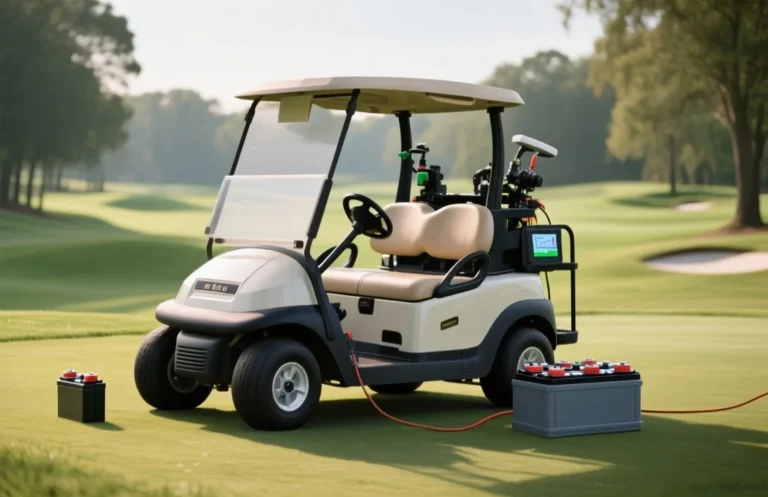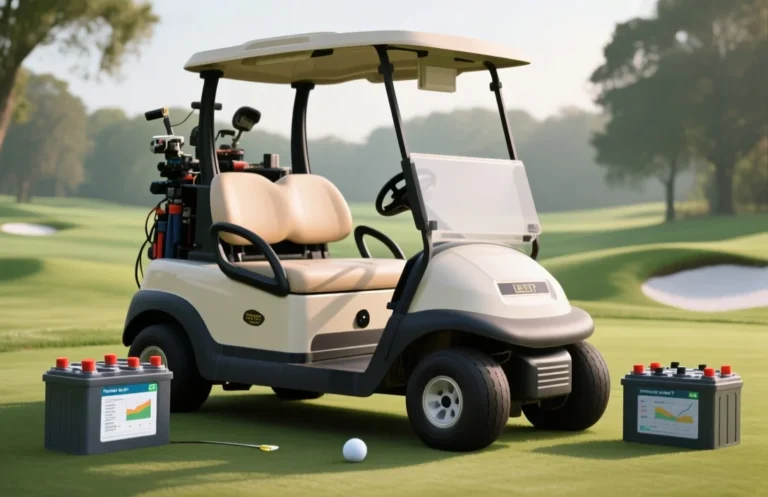
How many volts is a golf cart battery?
Most golf carts run on either 36 volts or 48 volts, and the total pack voltage is the single most important spec when choosing batteries or a charger. People often check one cell or the charger label instead of the whole pack. First, read the cart data plate or the battery pack label for the pack voltage and charger setting.
Golf cart battery voltage is typically 36 volts or 48 volts for the complete pack; individual batteries inside are usually 6V, 8V, or 12V each, depending on the configuration. Always confirm the pack voltage on the cart data plate or battery label before charging, replacing, or matching a charger.
Common golf cart voltages
Golf cart batteries are commonly nominally 6 volts, 8 volts, or 12 volts per battery. Whole-cart electrical systems most often run at 36 volts or 48 volts, while less common systems can be 24 volts or higher voltages for specialty carts.
Single 6V, 8V, and 12V batteries are normally lead-acid types used for deep-cycle duty on carts, though lithium options exist and are rising in aftermarket replacements. The number stamped on the battery is its nominal voltage, not the exact resting voltage you will measure when the battery is charged or under load.
Pack voltage is the number you care about when matching a charger or buying a replacement pack, because the charger must match the pack voltage. Higher pack voltage generally allows the motor and controller to deliver more power for a given current, which is why 48V systems are popular on newer carts and 36V is common on older or lighter-duty models.
For example, some small utility carts and rental fleets still use 36V systems, while many residential and performance-oriented carts are 48V. Specialty or industrial vehicles sometimes use other voltages, so don’t assume your cart matches what a neighbor has.
| Single battery V | Common pack V | Typical use | Quick note |
|---|---|---|---|
| 6V | 36V, 48V | Traditional deep-cycle golf cart batteries | Often used for long life under deep discharge |
| 8V | 48V | Some OEM and replacement packs | Less common, but used by some manufacturers |
| 12V | 24V, 36V, 48V | Versatile, common automotive-sized cells | Easy to find replacements, but verify compatibility |
Quick safety rule: always confirm the pack voltage and individual battery voltage on the label and by measuring before charging or replacing batteries, and do not mix different nominal voltages in one pack.
Battery count per pack
Golf cart battery packs are built to a pack voltage, most commonly 36 volts or 48 volts, created by wiring multiple 6 volt or 12 volt batteries in series. Six 6V batteries or three 12V batteries give a 36V pack, while eight 6V batteries or four 12V batteries give a 48V pack; manufacturers may also use other arrangements when using lithium modules with built-in battery management.
Series wiring adds voltages, so you sum the nominal voltage of each battery in the series string to get pack voltage, while parallel wiring keeps the voltage the same and increases usable capacity. That means the number of batteries in a pack depends on each battery’s nominal voltage and whether there are parallel strings layered into the system.
For example, a 48V lead-acid pack made from 8×6V batteries will have eight batteries in series, wired positive to negative continuously; a 48V pack made from 4×12V batteries will show four batteries in series. Both produce 48 volts but change weight, space, and replacement options.
Voltage, capacity, runtime
Most golf-cart battery packs are either 36 volts or 48 volts, though 24 volt systems appear on small carts and some commercial fleets use higher voltages. Pack voltage is the sum of the individual batteries in series, for example six 6V batteries make a 36V pack and eight 6V or four 12V batteries make a 48V pack.
Battery energy is measured in watt-hours, and the core relationship is simple: Wh = V × Ah. That means the pack voltage multiplied by the amp-hour rating gives the total stored energy you can use, before accounting for losses or recommended depth of discharge.
For example, a 48V 100Ah pack has 4800 Wh. If the cart averages 1200 W while driving, 4800 Wh divided by 1200 W gives about four hours theoretical runtime, but after controller losses and conservative depth-of-discharge you should expect less, often 20 to 40 percent lower in practice.
Higher pack voltage lowers the current for the same power, because current equals power divided by voltage, I = P / V. At 1500 W output a 36V pack draws about 41.7 A, while a 48V pack draws about 31.3 A, which reduces cable heating and allows smaller gauge wiring for the same power delivery.
Charger compatibility and specs
Golf cart electrical systems are typically built as 36 volt or 48 volt packs, and the individual deep-cycle batteries used in those packs are most often 6 volt, 8 volt, or 12 volt units. Always match the charger’s output to the pack nominal voltage printed on the pack or in the owner’s manual before connecting.
Matching voltage is the single most critical compatibility check. A charger rated for 36 volts will undercharge a 48 volt pack and a 48 volt charger will overvoltage a 36 volt pack, both of which can damage batteries, reduce capacity, or create safety hazards.
| Pack nominal voltage | Common battery modules | Charger notes |
|---|---|---|
| 36 V | Often six 6 V deep-cycle batteries | Use a 36 V multi-stage charger set for lead-acid, or an appropriate CC-CV lithium charger if cells are Li |
| 48 V | Often six 8 V or four 12 V batteries | Require a 48 V charger matched to chemistry, larger current capacity for faster charging |
Safety warning: Do not use a charger with a higher nominal voltage than the pack, and avoid generic “multi-voltage” chargers that do not let you lock in exact pack voltage and chemistry.
Final step: if you are unsure about chemistry or pack wiring, stop and consult the cart manual or a qualified technician before charging, because correct voltage and profile choices protect battery life and prevent hazards.
Safety, heat, storage
A standard golf cart battery typically operates at 6 volts, with many golf carts using multiple 6-volt batteries in series to achieve 36 volts or 48 volts for their systems. Understanding how to safely charge and store these batteries is crucial for maintaining their longevity and preventing hazards.
For instance, if you notice a battery is excessively hot to the touch during charging, disconnect it immediately and let it cool down. This can prevent further damage and potential hazards such as fires.
Following these safety practices not only protects the batteries themselves but also enhances the safety of the users and equipment involved.
Buying checks and replacement
Individual golf cart batteries are most commonly 6 volt or 8 volt deep cycle lead acid cells, and some systems use 12 volt batteries. Complete battery packs for golf carts are usually wired to produce either about 36 volts or about 48 volts, so always confirm the pack voltage before buying a replacement battery.
Before you buy, verify the exact pack arrangement and read labels on the existing batteries, the charger, or the cart’s decal to confirm volts and recommended chemistry. If labels are missing or unclear, measure open-circuit voltage across the pack and count the number of batteries in series, then match those numbers when you shop.
| Single battery voltage | Common pack voltages | Typical count in pack | Notes |
|---|---|---|---|
| 6V | 36V, 48V | Six for 36V, Eight for 48V | Most common deep-cycle golf cart cell |
| 8V | 48V | Six for 48V | Used on some 48V carts as an alternative to 6V strings |
| 12V | 36V, 48V | Three for 36V, Four for 48V | Less common, but used by some manufacturers |
Replacement triggers versus refurbish: replace a battery when it can no longer hold useful capacity, when individual cell voltages differ widely under load, when the case leaks or swells, or when internal resistance is high enough to cause severe voltage drop under normal drive loads. Refurbish (equalize charge, clean terminals, replace straps) only if the issue is maintenance related and all cells otherwise test close to original capacity.
Never mix new and old batteries in the same series string, and never mix different chemistries or Ah ratings when they share a series connection.
Troubleshooting voltage issues
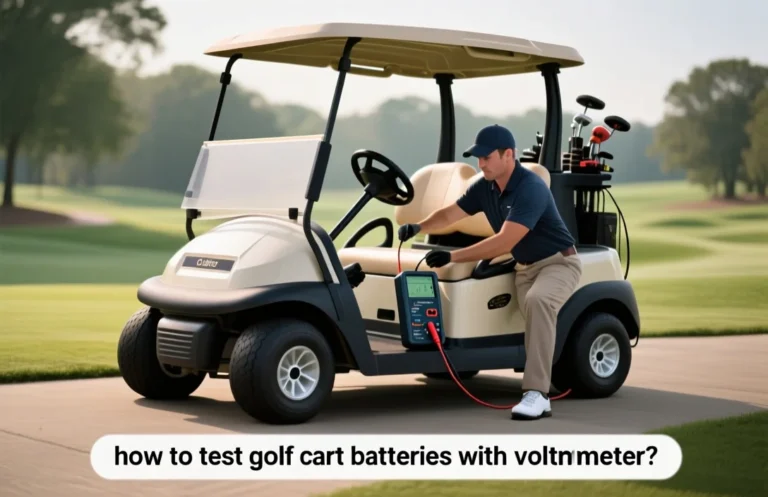
Most golf cart systems are built as 36 volt or 48 volt packs, and the individual batteries inside those packs are commonly 6 volt, 8 volt, or 12 volt units depending on the manufacturer. To find whether the problem is one battery, the charger, or the whole pack you must measure the pack resting voltage, the charger output, and each battery under rest and load.
Safety first: wear eye protection, remove jewelry, and disconnect the charger before probing terminals. If a battery is swollen, hot, or leaking, stop and replace it rather than testing further.
Quick Summary
A golf cart battery pack is most commonly 36 volts or 48 volts, but always verify the cart’s battery label.
Frequently Asked Questions
How many volts is a golf cart battery?
Most golf carts use a 36V or 48V battery pack, and the individual batteries inside are commonly 6V, 8V, or 12V units; you can check the pack label or owner manual to confirm which your cart uses.
Can I charge a 48V golf cart battery with a 36V charger?
No, the charger voltage must match the pack voltage, for example a 48V charger for a 48V pack and a 36V charger for a 36V pack; you can damage batteries or leave them undercharged if voltages do not match.
Will heat change how many volts a golf cart battery has?
Yes, temperature affects measured voltage and capacity, and you can see resting pack voltage shift by a few tenths of a volt with significant temperature change; avoid prolonged high heat because it accelerates capacity loss and shortens life.
How do volts affect runtime for a 36V versus a 48V golf cart?
Voltage sets system power, but runtime depends on amp hours and load, for example a 48V 200Ah pack stores 9.6 kWh (48V x 200Ah = 9.6 kWh), and you can estimate runtime by dividing usable kWh by average motor draw in kW.
What is a common buying mistake related to golf cart battery voltage?
Mixing voltages or mismatched batteries in the same pack is the most common mistake, you can avoid this by buying a full replacement pack with the same voltage and amp-hour rating listed on the cart or manual.