
How many volts is a golf cart with 6 batteries?
A golf cart’s pack voltage is the single spec that matters most, because the motor and charger expect a specific nominal voltage. A common mistake is assuming six batteries always equal 36 volts. First check the voltage stamped on each battery and the label on the onboard charger before touching wiring or swapping batteries.
Golf cart with six batteries: six 6V batteries in series = 36V system, six 8V batteries in series = 48V system, six 12V batteries in series = 72V system. Most consumer carts are 36V or 48V, so verify by reading battery labels or measuring the pack voltage with a multimeter.
Six 6V Batteries (36V)
Six 6V batteries wired in series produce a 36 volt nominal pack, which is a common configuration for many golf carts and is usually marked on the cart data plate. That 36V total matches controllers and chargers sold as 36V systems, so confirming the count and voltage prevents mismatches. Always verify the voltage label on each battery before replacing or charging the bank.
In series wiring the voltages add while the amp-hour rating stays the same as a single battery, so runtime depends on the amp-hour figure printed on the battery, not the number of cells. Most six-battery golf carts use lead-acid chemistry such as flooded or AGM, and replacement involves heavy batteries so handle them with care and plan for safe disposal of old units.
When to use a six 6V battery configuration
Choose six 6V batteries when the cart was designed for 36 volts or when replacement simplicity and compatibility matter, because the motor, controller, and charger are matched to that nominal voltage and swapping pack voltage would require multiple component changes. Replacing the entire set with similar 6V units keeps state-of-charge balance and avoids the need for reprogramming or buying a new controller or charger, which adds cost and complexity. If you are considering changing to a different voltage system, plan for new wiring, a compatible charger, and professional help to ensure safe, reliable operation and to avoid damaging the motor or controller.
Takeaway: Six 6V batteries equal 36V; always confirm each battery label and the charger rating, replace like-for-like when possible, and follow basic battery safety to protect the pack and your cart.
Six 8V Batteries (48V)
48 volts is the total nominal voltage when six 8V batteries are wired in series, and that simple math explains why a six-battery golf cart often shows 48V on its meter. A 48V pack gives more potential power and higher top speed than a 36V setup, which is why some utility and upgraded carts use this arrangement.
When batteries are placed in series the voltage adds while amp-hour capacity stays the same, so runtime depends on the pack voltage multiplied by the battery Ah rating to get watt-hours. Use a charger specifically rated for 48V packs and verify the charger output label before connecting. Do not mix old and new batteries or differing Ah ratings, and watch for swelling, leaks, or excessive terminal corrosion as signs to stop and inspect the pack. For costs and sizes, price and physical dimensions vary widely by chemistry and brand, so check the battery label and vendor spec sheet.
When to choose a 48V, six-battery pack
Choose a six 8V battery pack when you need higher torque or speed and your vehicle and accessories are rated for 48V, but be prepared for a charger and electrical components sized to that voltage; mismatched chargers can undercharge or damage the pack. Also expect maintenance to matter more because series wiring means one weak battery reduces overall performance, so plan to load-test individual batteries and replace failing units rather than adding a different capacity cell to the pack.
Takeaway: six 8V batteries equal 48V total, so always verify the battery labels and the charger output before working on or replacing a golf cart pack, and prioritize matched batteries and regular inspections for safe, reliable operation.
Six 12V Batteries (72V)
Six 12V batteries wired in series give a nominal system voltage of 72 volts, so a golf cart with six 12V batteries is typically a 72V system. That nominal figure is what manufacturers list for system voltage and what a compatible charger and motor controller will expect.
Individual 12V battery voltages change with state of charge, so a fully charged six-battery pack can read higher than 72V and a discharged pack lower than 72V. Use a charger rated for 72V systems and matched to the battery chemistry, for example flooded lead-acid, AGM, or LiFePO4. Runtime depends on ampere-hour capacity, motor/controller efficiency, and battery condition, so verify Ah ratings and age instead of assuming runtime from voltage alone.
When to use it
Choose a six 12V series pack when the cart or controller is specified for 72V operation, because the higher voltage reduces current for the same power and can allow smaller gauge wiring and lower heat in the motor controller; however this only works safely if all six batteries are matched in chemistry, capacity, and age. If you convert from a different voltage or replace individual batteries, match Ah ratings and preferably buy a full set to avoid imbalance issues that shorten life and can create charging or safety problems.
Takeaway: a six-12V setup equals nominally 72V, but always verify full-charge voltage, charger compatibility, and battery condition before charging or servicing the pack. When in doubt, consult the cart manual or a qualified technician.
Series Wiring ASCII Diagram
Six 6 volt deep cycle batteries wired in series produce 36 volts, which is a common configuration on many older electric golf carts. Six 8 volt batteries in series produce 48 volts, so the count of batteries alone does not guarantee pack voltage, you must read the voltage marking on each battery. Series wiring adds voltages while keeping amp hour capacity the same, so controllers and chargers must match the resulting pack voltage.
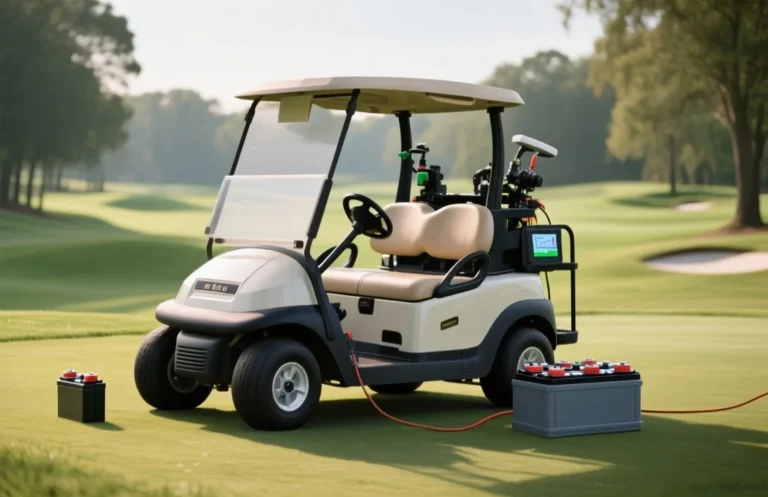
For example, here is a simple ASCII diagram showing six batteries in series where the leftmost positive is the pack positive and the rightmost negative is the pack negative. The controller or contactor connects to those two outer terminals, and each internal connection is a negative-to-positive link between batteries.
Pack + —-[+ 6V -]–[+ 6V -]–[+ 6V -]–[+ 6V -]–[+ 6V -]–[+ 6V -]—- Pack – B1 B2 B3 B4 B5 B6
Check labels and tools before you touch terminals. Do not mix different voltages or chemistries in series, and use insulated wrenches to avoid shorting. Chargers must be rated for the total pack voltage, for example a 36V charger for six 6V batteries, and balance or equalization charging is recommended periodically on lead acid banks.
When to use this diagram
Use the ASCII series diagram when you need a quick wiring check during replacement, maintenance, or troubleshooting to ensure you are connecting batteries correctly for the intended pack voltage. It is especially useful when swapping out a single battery or confirming which terminal is pack positive and which is pack negative before connecting the controller or charger, because reversing connections can blow fuses or damage electronics. Always verify pack voltage with a multimeter before energizing the system.
Takeaway: count the volts stamped on each battery and then use a series diagram like the one above to confirm the pack voltage, verify charger compatibility, and follow the safety checks before any work.
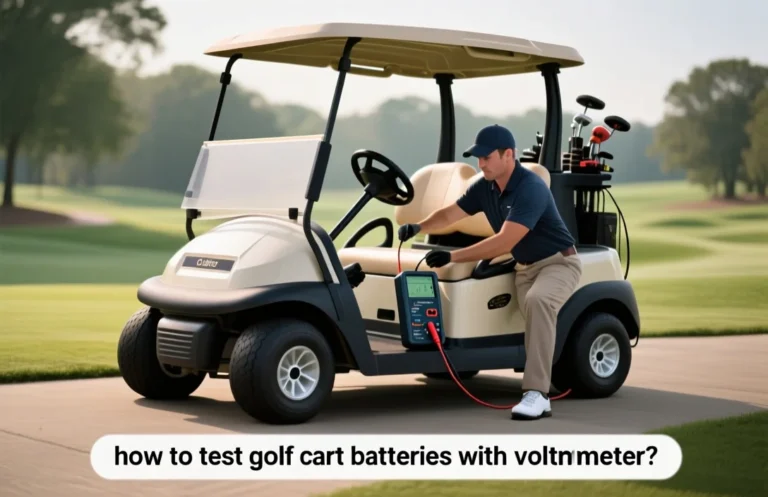
Multimeter Measurement Steps
A typical golf cart wired with six 6 volt batteries is a 36 volt system, so measuring pack voltage with a multimeter quickly confirms whether the pack is near its expected nominal voltage. Verifying the total volts and each battery under the same conditions helps find a weak cell that cuts range or damages chargers.
Start with the cart turned off and the charger unplugged, and use a digital multimeter set to DC voltage with a range above 36 volts (for example a 0-50V range). Use insulated probes, keep fingers behind the probe guards, and remove metal jewelry before touching terminals. If a battery is hot, swollen, or leaking, stop and avoid measuring that battery directly; contact a qualified technician.
When to measure individual batteries
Measure individual batteries after the pack has been at rest for several hours and at least a few minutes after removing the charger so surface charge fades and you get a stable reading. If one battery is consistently lower than the others under the same rested conditions, it may be failing even if the total pack voltage looks acceptable, and replacement or equalization charging should be considered. Always compare measurements to the battery label or manufacturer specifications before deciding on repair or replacement, and document readings for reference.
Takeaway: use a meter on the proper DC range, check both pack and each battery after resting, mark any out-of-line cells, and call a pro if you encounter hot, swollen, or severely low batteries.
Charger Compatibility Guide
A six-battery golf cart most commonly uses six 6-volt batteries wired in series to produce about 36 volts, so matching the charger voltage to that nominal pack is essential for safe, effective charging. Some carts use six 8-volt batteries for a higher nominal voltage, which changes the charger you need. Wrong voltage or wrong charging algorithm can overheat cells, shorten life, or prevent full charges.
Pick a charger that is labeled for the pack nominal voltage and the battery chemistry shown on the battery labels or the cart placard. Chargers are rated in volts and amps; volts must match the pack, amps determine how fast the pack charges and should be appropriate for the battery capacity. Use a “smart” charger with automatic float or a charger recommended by the cart manufacturer when possible, and avoid cheap unbranded units that omit temperature compensation or proper charge profiles.
When to upgrade or replace the charger
If you replace batteries with a different nominal voltage, or move from flooded lead-acid to sealed or lithium chemistry, you must replace the charger with one that matches the new pack voltage and charge profile. Using a higher-voltage charger on a lower-voltage pack will cause overheating and potential failure, and using a charger without the correct algorithm for lithium can prevent the BMS from balancing cells. Regularly inspect the charger for overheating, frayed cables, or swollen batteries on the pack, and replace the charger if its status LEDs behave erratically or if it no longer reaches float properly.
Takeaway: always read the cart and battery labels, match charger voltage to the pack nominal voltage, confirm chemistry compatibility, and prefer manufacturer-recommended smart chargers to protect battery life and safety.
Quick Summary
Most golf carts with six batteries are 36 volt systems when the batteries are 6 volt each, but check battery labels.
Frequently Asked Questions
How many volts is a golf cart with 6 batteries?
You can have either configuration, most commonly a pack is 36 V (six 6 V batteries) or 48 V (six 8 V batteries), so check the voltage stamped on each battery or measure the whole pack with a voltmeter to confirm.
How many volts is a golf cart with 6 batteries and will a 48V charger work?
You must match the charger to the pack voltage, so a 48 V charger only works if your six batteries form a 48 V pack; do not connect a 48 V charger to a 36 V pack and always verify the charger output label before charging.
How many volts is a golf cart with 6 batteries and can they overheat while charging?
Whether the pack is 36 V or 48 V, batteries should not become hot to the touch; if a cell is hot, swollen, or emitting odor, stop charging immediately, ventilate the area, and inspect the batteries, and stop if surface temperature is above about 50 degrees C (122 F).
How many volts is a golf cart with 6 batteries and how long will it run?
Runtime depends on pack voltage and amp-hour rating, use Wh = voltage x Ah to calculate; for example a 48 V 100 Ah pack stores 4800 Wh, so at a 1200 W draw it would run roughly 4 hours, check the Ah label on your batteries to compute your own runtime.
How many volts is a golf cart with 6 batteries and when should I replace them or what buying mistakes should I avoid?
Replace batteries when capacity falls below about 50% of rated Ah or when they fail a load voltage test, and when buying replacements make sure the new batteries match the pack nominal voltage (6 V vs 8 V), Ah rating, and type, and avoid mixing old and new cells.