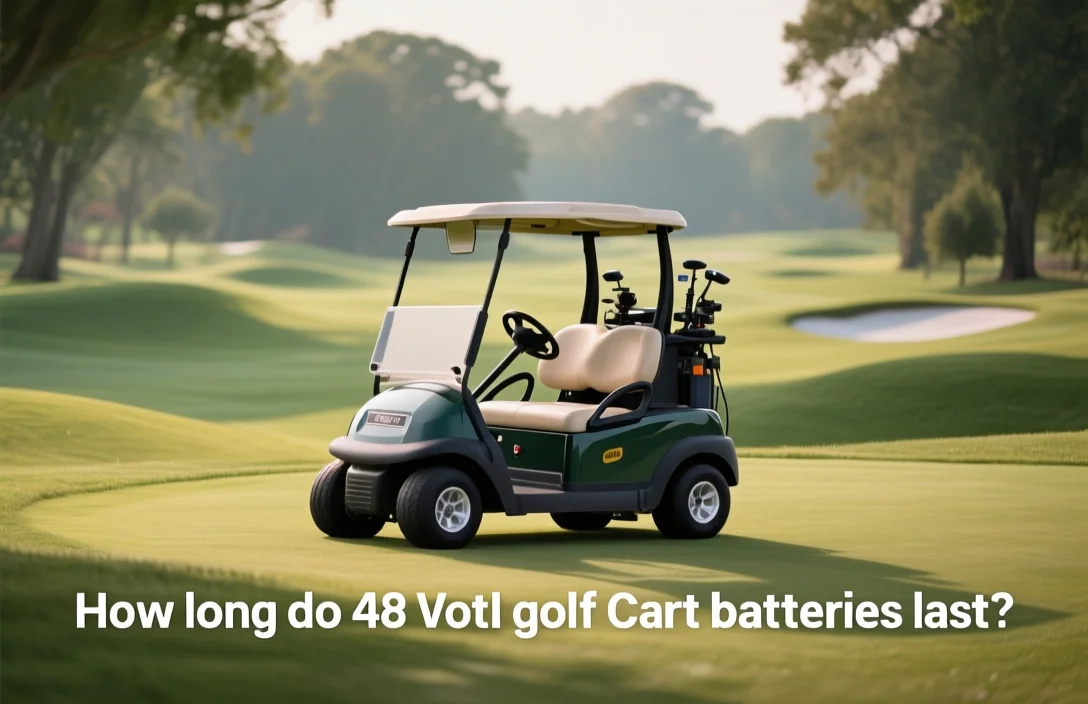
How long do 48 volt golf cart batteries last?
A 48 volt golf cart battery pack will typically deliver anywhere from a few hundred to over a thousand charge cycles, which usually translates to about 3 to 8 years of real-world use depending on chemistry, temperature, and maintenance. The spec that matters most for lifespan is cycle life, shown as rated cycles or the amp-hour (Ah) rating. A common mistake is checking only the 48 volt label, so first check the battery’s Ah rating and your charger’s 48V charge mode.
48 volt golf cart batteries typically last about 3 to 6 years, or roughly 300 to 1,200 charge cycles, depending on battery chemistry, depth of discharge, temperature, and maintenance; lithium packs usually reach the higher end, flooded lead-acid the lower end.
What is how long do 48 volt golf cart batteries last?
A 48 volt golf cart battery pack is commonly assembled from eight 6V batteries or six 8V batteries, so the lifespan of that entire pack directly affects cost and downtime for owners. Knowing how long a pack will last helps you plan maintenance and replacement of multiple cells at once instead of reacting to sudden failures. Pack life ties to chemistry, use patterns, and how well the pack is charged and maintained.
Battery capacity is usually shown in amp-hours, and pack energy equals voltage times amp-hours, so check the Ah rating on the battery label when estimating runtime. Chemistry matters: flooded lead-acid, AGM, and lithium have different cycle characteristics and maintenance needs, and depth of discharge is a primary driver of wear. Safety note: never mix chemistries or old and new batteries in a 48V pack, and watch for swelling, corrosion, or persistent overheating.
For example, a cart that is deeply discharged every day on hilly terrain will degrade faster than one used only on weekends on flat courses, and chargers must be set for the correct 48V profile to avoid overcharge or undercharge. Regular load tests and voltage checks after a full charge reveal weak cells before they force a full pack replacement.
When to replace a 48 volt pack
Replace the pack if range drops noticeably, charge time increases, or individual batteries read well below nominal voltage after a full charge; these signs point to rising internal resistance or sulfation for lead-acid types. A professional load test can confirm whether one bad battery is dragging down the pack, but because series-connected cells share load, many owners replace all cells together to restore balanced performance and avoid repeated shop time. Prioritize replacement when you see persistent overheating, physical damage, or electrolyte loss you cannot correct safely.
Takeaway: verify chemistry, Ah rating, and charger compatibility first, watch for physical and voltage signs of wear, and plan to test or replace the whole 48V pack rather than patching individual mismatched cells.
How It Works
Many 48 volt golf carts are built from eight 6V deep cycle batteries wired in series to make 48 volts, and that physical arrangement has a direct effect on how long the bank will last because every cell in the chain must remain healthy. The total usable energy is the pack voltage times the amp hour rating, so a 48V pack at 100Ah gives about 4,800 watt-hours available before losses. Knowing that math helps translate a battery bank condition into expected ride time.
Battery chemistry and maintenance determine lifespan more than the nominal 48V label. Flooded lead-acid, AGM, and lithium (LiFePO4) are common options, each with different charge requirements and tolerances for deep discharge; chargers and BMS must match the chemistry. For charging and health checks you should monitor individual cell or 6V module voltages, avoid chronic deep discharges, and keep flooded cells topped with distilled water when specified.
When to Replace
Replace the bank when run time falls consistently below what you need, when individual module voltages diverge substantially under load, or when cells show physical damage; these are practical end-of-life signals rather than relying on age alone. Replace the entire series bank rather than mixing new and old batteries, because one weak module drags the whole 48V string down and can cause overcharge or undercharge conditions for the healthy cells. If you see swelling, overheating, persistent sulfation, or a charger cannot bring modules to full voltage, those are safety and performance triggers to retire the pack and source a proper replacement matched to your cart and charger.
Takeaway: confirm the 48V configuration, check Ah and Wh to estimate runtime, use the right charger for the battery chemistry, keep up with maintenance checks, and swap the whole bank when individual modules fail to protect performance and safety.
Key Benefits
48 volt systems are commonly built by connecting four 12 volt batteries in series, which gives a golf cart higher voltage for the same current draw compared with lower-voltage packs. That higher voltage often means more available torque for hills and more efficient runtime for the same amp-hour capacity. Because current is lower at 48 volt for the same power, wiring and controller heat are reduced, which can improve component longevity when the pack is sized and maintained correctly.
Check the pack capacity in amp hours (Ah) and multiply by 48 to get watt-hours, which is the most direct way to estimate how long a cart will run under a known load. Confirm the chemistry label (flooded lead-acid, AGM, or lithium) and the recommended charger voltage and max charge current before replacing or upgrading cells. Watch for swollen batteries, overheating, damaged cables, wrong chargers, and mixing incompatible cells because these are safety-critical signs you must address immediately.
For example, to estimate runtime for accessories or the motor, divide the pack watt-hours by the measured or rated power draw in watts to get hours of operation; this gives a practical window for planning rounds, charging breaks, or range upgrades.
When to replace or upgrade
Replace the pack when capacity falls significantly below original specification, when cells show physical damage, or when the battery takes far longer to reach full charge repeatedly. Reduced range, persistent low-voltage under load, and visible swelling are clear replacement triggers you should not ignore because they indicate internal damage or imbalance. Also avoid mixing old and new batteries in a 48 volt series string, because mismatched cells accelerate failure and create safety risks; when in doubt, consult the battery label and the cart manufacturer for compatible replacements and proper recycling options.
Takeaway: use the pack voltage and Ah to calculate watt-hours, verify chemistry and charger compatibility, watch safety warning signs, and plan replacements when capacity or safety indicators degrade.
Step-by-Step Guide
48 volt golf cart packs commonly use either four 12V batteries or six 8V batteries, so pack life often depends on the condition of the individual cells and how the pack is charged. A concrete reason this step is listed is that matching capacity and maintaining proper charging for 48V systems directly affects how long the pack will deliver usable range. Checking configuration, capacity rating, and charger settings is essential before diagnosing lifespan.
Start by reading the battery label for Ah rating and chemistry, then inspect the charger to confirm it is configured for 48 volts and the correct charging profile for lead acid or AGM. Measure individual battery voltages at rest and under charge to spot weak cells, and watch operating temperature because heat shortens life. Warning: stop use if you see swelling, leakage, or repeated overheating.
For example, if one 12V battery in a four-battery 48V pack drops in capacity, the cart will lose range even though the other batteries test OK, so replacing or reconditioning the weak battery can restore usable life without changing the whole pack.
When to replace individual batteries versus the whole pack
Replace individual batteries when tests show a single cell is significantly lower in resting voltage, fails a load test, or cannot hold charge while matched batteries remain healthy, because the pack depends on the weakest cell. Replace the whole pack if multiple batteries show reduced capacity, there is widespread sulfation after correct charging, or physical damage and leaks are present. Before replacing, record Ah, terminal type, and physical size to buy matched replacements and avoid mixing old and new batteries in the same series string.
Practical takeaway: verify pack configuration, test each battery and the charger, fix single weak batteries when possible, and replace the whole pack only when multiple cells fail or show irreversible damage.
Common Mistakes to Avoid
Most 48 volt golf cart battery systems are made from six 8 volt or eight 6 volt batteries in series, so one weak or mismatched battery can shorten the entire pack noticeably. That physical series layout means cell imbalance, wrong charger settings, and poor maintenance are direct causes of reduced service life for the full 48 volt system. Avoiding those mistakes is essential to preserve range and cycle life.
Use a charger rated for 48 volts and check the charger’s charge algorithm on the label, because bulk, absorption, and float stages affect lead acid battery life. Check battery type markings (flooded, AGM, or gel) before charging or equalizing, and do not mix chemistries in the same pack. Keep batteries clean, tight at terminals, and stored above freezing when possible to limit capacity loss.
For example, leaving a cart parked for months with a partially discharged 48 volt pack can allow stratification or sulfation in flooded cells, which shortens usable life and can be costly to correct. Equalization intervals and charger voltages vary by battery type, so follow the battery maker’s spec sheet rather than guessing a voltage or time. Replacing a single weak battery early is usually better than running a mismatched pack for many cycles.
When to act
If you notice falling range, longer charge times, visible swelling, or consistently uneven cell voltages under load, act promptly because those signs mean the pack is losing usable capacity and the problem can spread. Test individual battery voltages and specific gravity if you have flooded cells, and compare them to the manufacturer’s acceptable ranges before replacing anything. If one battery is consistently low relative to the others after charging and equalization, replace that battery rather than leaving a weak cell in a 48 volt string.
Takeaway: verify charger voltage and programming, never mix battery types or ages in a 48 volt pack, and address any single weak battery quickly to preserve the life of the whole system.
Tips for Success
48 volts is the common nominal voltage for many golf cart battery packs, so managing charge, discharge, and temperature is the most direct way to influence how long the pack lasts. Good habits can reduce premature capacity loss and avoid safety risks such as overheating or corrosion.
Match your charger to the pack voltage and check the charger output label for the correct float voltage and maximum charge current, because incorrect chargers cause stress or undercharging. Keep batteries clean, tightened, and free of corrosion at terminals, and avoid leaving a 48 V pack deeply discharged for long periods. Monitor temperature during heavy use, and if cells feel hot to the touch or a battery bulges, stop using it and get a professional inspection.
When to replace cells
Replace batteries when usable capacity has dropped enough that run time no longer meets your needs, or when repeated attempts to fully charge fail and the pack shows persistent imbalance between batteries; both conditions indicate cell degradation that will continue to worsen. Also replace immediately if there is physical damage, swelling, severe corrosion, or if the pack repeatedly overheats during normal charging or use, because these are safety signals beyond routine maintenance and require professional replacement to avoid fire or acid leakage.
Takeaway: prioritize a correctly rated 48 V charger, regular terminal checks, and temperature monitoring, and plan replacements based on capacity loss or any physical damage rather than an arbitrary calendar age. Regular small investments in chargers and inspections pay off in longer, safer battery life.
Real Examples
A 48 volt golf cart battery bank commonly lasts about 4 to 6 years with regular maintenance and moderate use, which is why real examples matter when estimating replacement timing. Lifespan shifts significantly by chemistry, with traditional flooded lead-acid usually at the lower end and lithium iron phosphate often lasting longer per cycle. Knowing a typical range helps owners budget and choose the right charging and storage habits.
Cycle life, amp-hour rating, and daily depth of discharge determine how long a pack will hold useful capacity; a 48V, 200 Ah pack equals 9.6 kilowatt-hours of stored energy, but usable hours depend on motor load. Use a compatible smart charger and avoid leaving batteries at low state of charge for long periods to extend life. Warning: watch for swelling, overheating, or rapid voltage drop and stop using a battery that shows these signs.
For example, a fleet cart that runs 18 holes daily and is cycled deeply will reach capacity fade faster than a recreational cart that gets occasional use; the heavy-use cart may need replacement near the lower end of the lifespan range. A lithium upgrade can reduce maintenance and tolerate deeper cycles, but it requires a charger and battery management system designed for that chemistry. Always verify the pack voltage, Ah rating, and recommended charger settings in the manual before swapping chemistries.
When to replace
Replace a 48 volt pack when you see a clear, persistent loss of runtime that cannot be corrected by equalization or proper charging, when individual cells show large voltage imbalance, or when physical damage like swelling or cracked cases appears. If a battery that used to carry you 18 holes now only does 9 to 12 holes under the same conditions, that is a practical signal that capacity has degraded enough to justify replacement options. Prioritize safety, and have a qualified technician inspect suspicious batteries rather than continuing to operate them under stress.
Takeaway: use the 4 to 6 year range as a planning guide, monitor Ah, voltage balance, and physical condition, and match chargers and maintenance to the battery chemistry to get the longest safe life from a 48 volt golf cart bank.
Quick Summary
A 48 volt golf cart battery usually lasts several years, often ranging from about three to ten years depending on battery chemistry and maintenance.
Frequently Asked Questions
How long do 48 volt golf cart batteries typically last before needing replacement?
You can generally expect different chemistries to last different amounts of time: lead acid packs commonly last about 3 to 7 years, while LiFePO4 packs often last 8 to 12+ years, but exact life depends on use and maintenance. Check the manufacturer for stated cycle life and warranty to get a more precise number for your pack.
How long will 48 volt golf cart batteries last if I charge them with a 48V charger that has a higher amp output than the battery manufacturer recommends?
You can shorten battery life if charging current exceeds the manufacturer’s recommended rate; as a rule of thumb use a charger sized around 10% to 20% of the battery amp-hour rating (C/10 to C/5) unless the maker approves faster charging. Always match the charger to the pack voltage and charging algorithm, and verify the recommended maximum charge current in the battery specs.
How long do 48 volt golf cart batteries last in hot climates, and how does heat affect their lifespan?
You can expect accelerated capacity loss at high temperatures, so keep the battery compartment cool; aim to operate and store near or below 30 degrees C, and be aware that sustained temperatures above 40 degrees C cause significantly faster degradation. Provide ventilation or shading and avoid charging in extreme heat to preserve cycle life.
How long will a fully charged 48 volt golf cart battery run my cart per charge?
You can estimate runtime with a simple formula: runtime (hours) = battery amp-hours (Ah) ÷ average amp draw (A); for example a 200 Ah pack drawing 50 A runs about 4 hours per charge. Check your cart’s typical amp draw under normal load to calculate a realistic run time for your battery.
How long will my 48 volt batteries last if I buy the cheapest pack or mix old and new batteries?
You can dramatically shorten pack life by buying low-quality units or mixing cells, because mixing old and new batteries or different chemistries can reduce overall pack life and lead to premature failure. Buy the correct chemistry, avoid mixing, verify build and warranty details, and follow charging and maintenance instructions to get expected service life.