How Long Do Agm Golf Cart Batteries Last?
The real lever on longevity is the depth of discharge and how consistently you keep the pack charged. The most common mistake is letting batteries sit discharged or undercharged for days. First, check the charger setting or label to ensure it matches AGM deep-cycle specs and the cart’s pack voltage. That single check can prevent premature aging.
AGM golf cart batteries typically last 3 to 5 years with proper care. They often achieve 300 to 1000 charge cycles depending on depth of discharge. Lifespan improves with shallow DoD, consistent charging, and storage kept cool. Charger type and temperature also matter.
AGM Battery Basics
AGM Battery Basics are sealed lead-acid units that use a glass mat to trap electrolyte, making them spill-resistant and maintenance-free. They deliver stable voltage under load and tolerate vibration, which suits golf carts. Golf carts typically run on 36V or 48V packs, built from individual 12V, 6V, or occasionally 8V modules wired in series or parallel to reach the desired pack voltage.
AGM chemistry keeps water loss to a minimum and reduces venting, but it is still important to monitor for swelling, overheating, and proper charging. The label on the battery pack or cart manual will specify the required pack voltage and the number of modules to reach that voltage.
In practice, you may encounter two main configurations: 36V packs composed of three 12V blocks or six 6V blocks, and 48V packs built from four 12V blocks or six 8V blocks.
| Pack Voltage | Common Module Counts | Module Types |
|---|---|---|
| 36V | 3×12V or 6×6V | 12V or 6V blocks |
| 48V | 4×12V or 6×8V | 12V or 8V blocks |
Tip: Use the cart label or manufacturer spec sheet to confirm the exact module count and end-of-charge voltage for your configuration.
Even with AGM, temperature, charging behavior, and cycling pattern drive long-term performance. Keep the pack within the recommended temperature range, use a charger that respects AGM charge profiles, and avoid deep discharges whenever possible. These practices set up better longevity, which you will assess in later sections.
Key Lifespan Factors
How long these batteries last is driven mainly by how deeply you discharge them, how hot or cold they run, and how you charge and maintain them. Shallow discharges, moderate temperatures, and disciplined charging extend life, while frequent deep discharges and heat shorten it. The effect compounds over many cycles, so small daily habits add up.
Capacity, Runtime, and Cycles

Capacity, Runtime, and Cycles: Capacity expressed as amp-hours (Ah) is a measure of charge at a given voltage, while watt-hours (Wh) represent the total energy available. For a golf cart pack, Wh = Ah × nominal pack voltage, so a 225 Ah, 48 V pack stores about 10,800 Wh. Runtime is usable energy divided by the load in watts, accounting for inverter and charging losses.
Capacity, Runtime, and Cycles: Ah and Wh interact with how the pack is wired. Four 12 V modules in series form a 48 V pack with the same Ah as a single module, so energy scales with voltage even when Ah stays constant. This makes Wh the most straightforward metric for comparing different pack configurations and estimating how long a cart will run between charges.
| Pack example | Nominal voltage | Nominal Ah | Energy (Wh) |
|---|---|---|---|
| Typical 48 V golf cart | 48 V | 225 Ah | 10,800 Wh |
Realistic Lifespan Range
Typical life for AGM golf cart batteries is roughly 3 to 6 years under normal use. Individual sets may stretch to 5 – 7 if kept cool and charged properly, while aggressive use or poor maintenance can shorten life to 2 – 4 years. Longevity improves with disciplined charging and staying above deep discharge ranges.
Temperature affects longevity. Hot climates or poor cooling accelerate aging, while cooler environments slow wear. A temperature compensating charger helps maintain the right voltage, reducing unnecessary overcharging or undercharging.
Typical years under normal use vary with cycling patterns, but the ranges below assume standard AGM packs in golf carts and ordinary maintenance.
Shallow discharges extend life more than deep cycles. Keeping the average DoD well below full capacity reduces sulfation and water loss, while prompt recharging after use helps preserve capacity. Use a charger that matches the chemistry and provides temperature compensation to prevent overcharging.
| DoD target | Impact on life and maintenance |
|---|---|
| Shallow (roughly 20 – 40% DoD) | Best balance; slower capacity fade and fewer deep cycles |
| Moderate (~50% DoD) | Common compromise; reasonable life with decent usable capacity |
| Deep (70 – 100% DoD) | Faster wear; more frequent replacements likely |
Warranty terms vary by brand, but many AGM deep-cycle golf cart packs carry 1 to 4 years of coverage. End-of-life signs include persistent capacity loss, inability to hold a charge, swelling, or heat during charging. If you observe these before the warranty expires, contact the seller for replacement or service options.
Tip: Keep a simple log of cycle counts, dates, and charging voltages to spot early decline.
Charging Setup Essentials
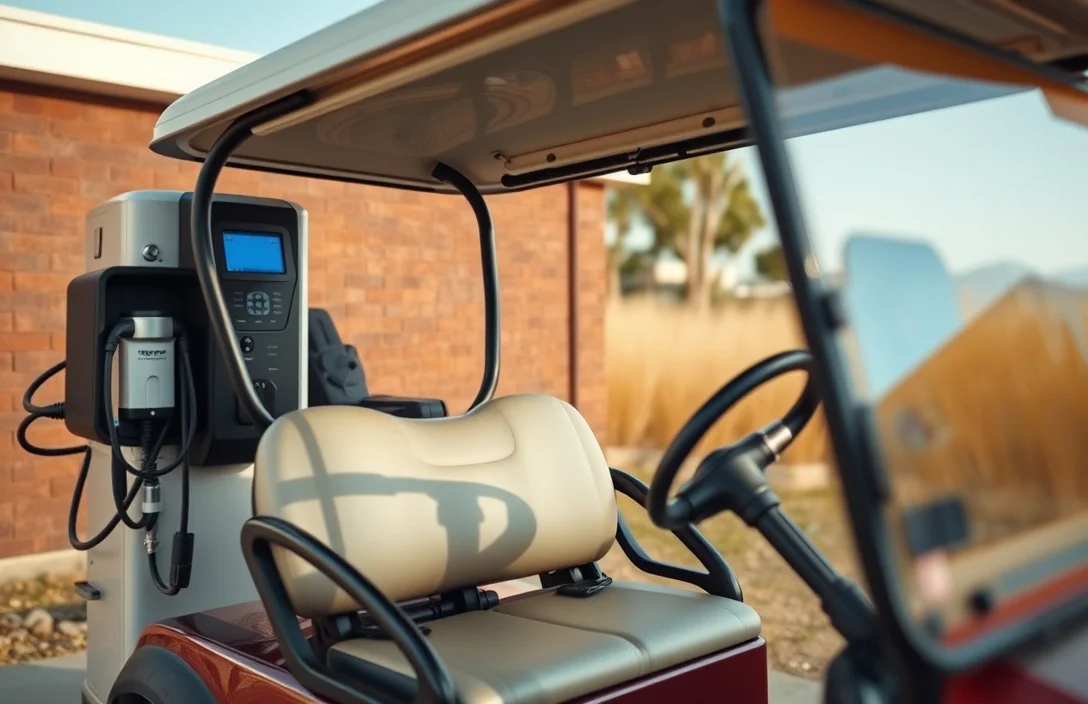
AGM golf cart packs require the correct charging voltage and a charger that uses a true multi-stage profile with temperature compensation. Using the right voltage, proper current, and an auto termination feature helps preserve capacity and reduce risk of overheating or gassing. Temperature sensing during charging keeps the voltage aligned with ambient and pack temperature to prevent overcharge in heat or undercharge in cold.
Quick checks:
Storage, Maintenance, and Safety
Store AGM golf cart packs at a cool, stable temperature, ideally around 0 to 25 C, and avoid long exposure to heat. When not in use, keep the pack charged to a partial level and recharge monthly to slow sulfation. Regular visual checks for swelling, venting, and corrosion help prevent unsafe conditions and unexpected failures.
Managing heat, swelling, and venting: heat accelerates aging and can lead to capacity fade, so place packs away from engine compartments or other heat sources and ensure good air flow. Swelling is a sign of internal gas buildup or damage; stop charging, disconnect, and inspect or replace. Even though AGM packs are sealed, overcharging or sustained high temperature can cause venting and safety risks, so use a charger designed for VRLA batteries and avoid improvised or high-current power connections.
Safety note: never ignore a swollen or hot battery, and keep any vented material away from flames or sparks.
Maintenance checks and records: build a simple log of voltage, ambient temperature, and any physical signs each time you service the pack. Clean terminals and cable lugs with a mild baking soda solution, rinse, dry, and re-tighten. Look for cracks, leaks, or bulging and replace affected packs promptly. Documentation helps you spot gradual aging and plan replacements before a failure occurs.
| Condition | Recommended action | Frequency |
|---|---|---|
| Ambient temperature 0 – 25 C | Store in cool, dry location; avoid heat exposure | During storage |
| State of charge during storage | Partial charge ~50 – 80% | Long-term storage |
| Terminal condition | Inspect, clean, tighten connections | Monthly |
| Swelling or venting observed | Isolate, do not charge, replace if needed | As observed |
Keep a simple records habit: date, voltage, temperature, observed conditions, and any corrective actions. A clear log improves safety and helps you anticipate when a pack is nearing end of life, so replacements can be planned rather than rushed.
Safety Signals and Replacement
Under normal use, AGM golf cart batteries typically deliver 4 to 6 years of service. Heat, deep cycling, and frequent full discharges shorten life, while careful charging and moderate use help it stretch. When symptoms appear, plan replacement rather than chasing risky refurbishes.
Quick Summary
AGM golf cart batteries last several years with proper care, but lifespan varies with usage and maintenance.
Frequently Asked Questions
How long do AGM golf cart batteries last if I use an AGM compatible charger and keep the system voltage matched?
Longevity depends on cycles and depth of discharge; with proper care, AGM golf cart batteries are designed for hundreds of cycles rather than a few years. Using a charger that matches the battery type and system voltage (36V or 48V) is critical because a mismatched charger can cause overcharge or undercharge and speed up wear.
How does heat affect longevity of AGM golf cart batteries and what are the safe temperature targets during charging?
Heat significantly accelerates aging in AGM batteries; higher temperatures reduce cycle life and increase self discharge. Keep charging temperatures under 35 C (95 F) whenever possible, avoid direct sun, and ensure good ventilation to prevent hot spots.
How can I estimate runtime and how does this relate to longevity for AGM golf cart batteries?
Runtime per charge depends on usable capacity and how hard you drive the cart. A simple estimate is runtime ≈ usable Ah divided by the average current draw. Use a DoD around 50 percent to balance runtime and cycle life, since deeper discharges shorten life.
What safety and maintenance practices most affect the longevity of AGM golf cart batteries?
Overcharging, excess heat, and poor venting shorten life. Use an automatic charger designed for AGM and keep the pack vented; typical AGM charge targets are 14.4 to 14.8 V per 12V block, and multiply by the number of blocks for your pack.
What replacement timing and buying mistakes should I avoid to maximize AGM golf cart battery life?
Replacement timing depends on capacity; replace when usable capacity falls below 60-70 percent of the original rating. Check the age and warranty; avoid buying batteries with unknown history or mismatched voltage or capacity.