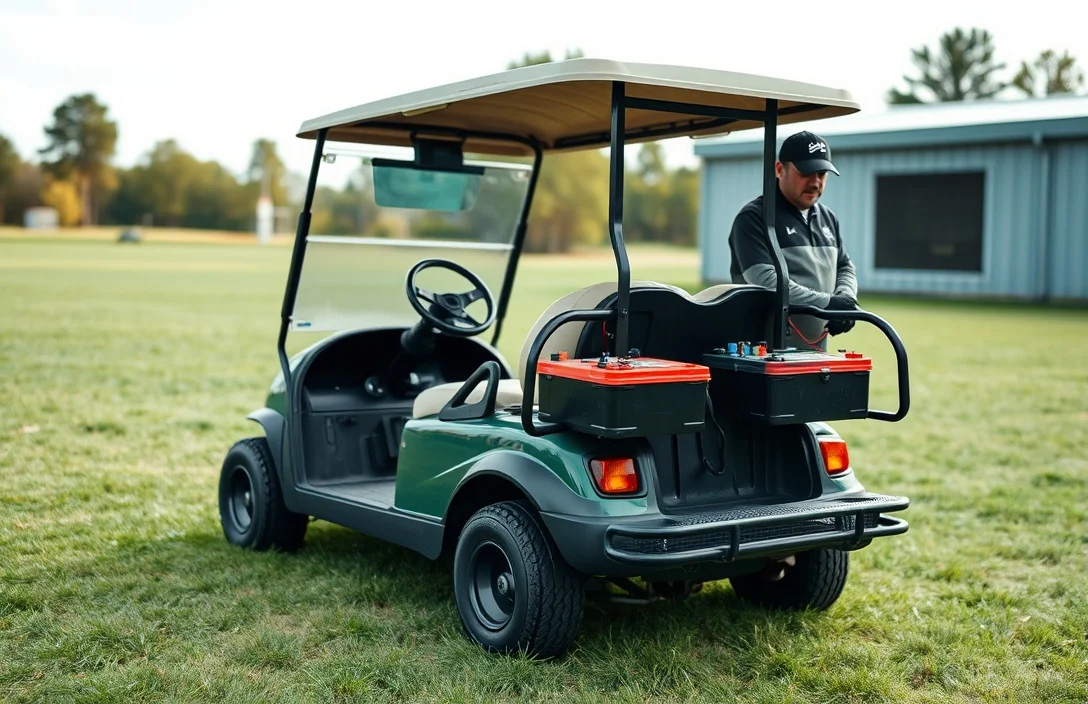
Does Hot Weather Damage Golf Cart Batteries?
Hot weather speeds up battery aging and can cut capacity in golf carts. The spec that matters most is the operating temperature range printed on the battery label. The common mistake is assuming heat only hurts during charging; heat also ages plates in use. Start by checking the battery label for the max operating temperature, and verify the charger has thermal protection set within that range.
Operating temperature matters: heat above 30 C (86 F) accelerates aging, and sustained 40 C (104 F) temperatures can shorten life. Keep batteries shaded, ventilated, and use a charger with thermal protection to prevent charging in high heat outside direct sun.
Heat’s Effect on Battery Capacity
High ambient temperatures reduce the usable capacity of flooded lead-acid golf cart packs by increasing internal resistance and promoting water loss. That combination shortens runtime under heat and accelerates aging over time.
In practice, hot weather leads to more voltage sag under load and faster decline in cycle life.
Battery Chemistry in Hot Weather
High ambient temperatures accelerate chemical reactions inside golf cart batteries, driving water loss in flooded cells and raising gas pressure. Heat also speeds corrosion and plate shedding, which shorten service life and reduce peak capacity.
In practice, you may see swelling, venting, and more frequent electrolyte checks when temperatures climb.
Temperature Specs for Golf Batteries

Most golf cart batteries specify an ambient operating range on the label and in the manual. Within that range heat accelerates water loss and plate corrosion, while cold slows reactions and reduces usable capacity. Staying within the rated range helps preserve life and performance.
Operating temperature ranges to verify include the labeled minimum and maximum ambient temps for use and charging. If the spec allows a wide range, plan to avoid sustained extremes, especially during heavy use or rapid charging, which can stress cells. When in doubt, contact the manufacturer or consult the manual for your exact model and chemistry.
| Factor | Typical Impact | What to Do |
|---|---|---|
| High ambient temperature | Increases electrolyte loss, faster corrosion, and shorter cycle life. | Park in shade, improve ventilation, and avoid leaving a vehicle in hot sun. |
| Low ambient temperature | Reduces chemical reaction rate, lowers available capacity, slower charging. | Warm the battery area before use, and follow a cold-weather charging strategy per manual. |
Storage temperature and seasonal considerations matter because long-term storage shifts risk from heat or cold to condensation, sulfation in lead-acid cells, and unnoticed self-discharge. Store in a cool, dry place within the manufacturer’s storage range, ideally with a partial charge and periodic rechecks. Sudden temperature swings during storage can cause mechanical stress and moisture issues.
Store at moderate temperatures, keep batteries dry, and avoid direct heat or freezing conditions. Always follow the label for storage and recharging guidelines to protect life and safety.
In practice, plan around summer heat by shading the charger and battery compartment, using a vented or climate-controlled space, and scheduling charging for cooler parts of the day. In winter, keep the storage area above freezing and use a controlled charging routine that respects the recommended temperature band. Regular thermal checks with a simple battery thermometer or a temp sensor can help catch hotspots before they become a problem.
Charging in Hot Weather
Hot conditions raise the temperature of golf cart batteries during charging, which can trigger the charger or the battery management system to reduce current and cut charging efficiency. Continuous high heat accelerates electrolyte losses and plate corrosion, shortening cycle life. The practical rule is to charge at moderate temperatures and with temperature-aware equipment to protect longevity and safety.
Cooling, Placement, and Ventilation

Hot ambient temperatures increase the pack temperature during operation and charging. Heat accelerates electrolyte loss in flooded cells, speeds plate corrosion, and shortens cycle life for common golf cart batteries. Keeping temperatures lower helps preserve capacity and longevity.
Placement choices influence heat exposure around the pack. Implementing these practices reduces risk and extends life in warm conditions.
Ventilation and cooling strategies
| Strategy | Effect | Notes |
|---|---|---|
| Shade and ventilation | Lower average pack temperature | Best long term for battery health |
| Active cooling (12V fan) | Improved heat removal | Requires wiring and protection from debris |
| Sealed compartments | Increases heat risk | Prefer vented designs if heat is a concern |
Checklist to prevent heat buildup: regularly inspect vents, keep connections clean, and avoid covering the pack during charging or operation.
Maintenance & Troubleshooting in Heat
Heat exposure accelerates chemical reactions inside flooded lead-acid golf cart batteries, shortening life and reducing capacity. Visible swelling, bulging cases, or unusual warmth are clear signs of internal stress that demand immediate attention. Do not charge or use a hot battery until it has cooled and been inspected.
Prevention is the best remedy: keep the golf cart in shade, provide ventilation, and avoid charging in direct sun. If you must charge in hot weather, use a fan or ambient cooling and monitor temperatures during the first cycles after a replacement.
Quick Summary
Hot weather can damage golf cart batteries if charging and cooling are not managed properly.
Frequently Asked Questions
Does hot weather affect compatibility between golf cart batteries and chargers?
You may see charging behavior change in high heat. Temperature compensation helps keep charging within safe ranges, but verify both the battery and charger list a compatible operating range, typically 0 – 40°C (32 – 104°F).
How does heat impact golf cart battery runtime and performance?
Hot conditions can increase internal chemical stress and may lead to faster apparent voltage sag under load.
In practice, heat above 40°C can accelerate capacity loss, and keeping the battery cooler can help preserve runtime.
How long do golf cart batteries last in hot climates before replacement?
Most lead-acid golf cart batteries have a typical life of 4-6 years under normal use; hot climates or frequent high-rate charging can shorten that life. Always check the manufacturer’s warranty and temperature guidance for your specific model.
What safety considerations should I observe when charging in hot weather?
Charge in a well-ventilated, shaded area and avoid direct sun; high heat increases gas risk and can accelerate corrosion. If you see swelling, a strong odor, or the case is very hot, stop charging and inspect or move to cooler conditions.
What buying mistakes do people make about hot weather and golf cart batteries, and how can I avoid them?
Avoid buying batteries or chargers without temperature ratings or without a temperature compensation feature; always verify the spec sheet shows a safe charging range such as 0 – 40°C. Also skip units that lack proper ventilation or a warranty for hot climates.
Frequently Asked Questions
Does hot weather affect compatibility between golf cart batteries and chargers?
You may see charging behavior change in high heat. Temperature compensation helps keep charging within safe ranges, but verify both the battery and charger list a compatible operating range, typically 0 – 40°C (32 – 104°F).
How does heat impact golf cart battery runtime and performance?
Hot conditions can increase internal chemical stress and may lead to faster apparent voltage sag under load.
In practice, heat above 40°C can accelerate capacity loss, and keeping the battery cooler can help preserve runtime.
How long do golf cart batteries last in hot climates before replacement?
Most lead-acid golf cart batteries have a typical life of 4-6 years under normal use; hot climates or frequent high-rate charging can shorten that life. Always check the manufacturer’s warranty and temperature guidance for your specific model.
What safety considerations should I observe when charging in hot weather?
Charge in a well-ventilated, shaded area and avoid direct sun; high heat increases gas risk and can accelerate corrosion. If you see swelling, a strong odor, or the case is very hot, stop charging and inspect or move to cooler conditions.
What buying mistakes do people make about hot weather and golf cart batteries, and how can I avoid them?
Avoid buying batteries or chargers without temperature ratings or without a temperature compensation feature; always verify the spec sheet shows a safe charging range such as 0 – 40°C. Also skip units that lack proper ventilation or a warranty for hot climates.