How To Restore A Golf Cart Battery?
Swollen or venting golf cart batteries must not be revived with a quick charge. If you see heat, fizz, or a foul smell, shut it down and move to replacement or a pro. The spec that matters most is the correct charging profile for your pack, based on voltage and chemistry. Start by reading the battery pack label for nominal voltage (36V or 48V) and the recommended charger settings.
Restoring a golf cart battery requires matching the pack voltage and chemistry and using a proper charger. Start by checking the label for 36V or 48V and lead-acid type, then apply a slow, controlled charge with the correct charger for 8 to 24 hours while monitoring temperature and stopping if the pack swells or heats.
Identify Battery Type and Pack Voltage

Nominal golf cart packs are usually 36 or 48 volts. Check the label on the battery case or the charger documentation to confirm the pack voltage and how the cells are arranged in series, which informs restoration steps.
Safety First for Restoration
Goggles or a faceshield, chemical-resistant gloves, and a long-sleeve apron protect skin and eyes from acid splashes and fumes. Ensure the gloves and apron are rated for chemical exposure and free of tears before you begin. Wear sturdy, closed-toe shoes and a natural-fiber or treated fabric to resist chemical burn. Inspect PPE for damage and fit; replace any items that fail the test.
Work in a well-ventilated area to dilute hydrogen and other battery fumes. Keep a spill containment tray and a ready-to-use spill kit with baking soda or sodium bicarbonate, absorbent pads, and a non-sparking scoop. Have water and a mild neutralizer available in case of a spill, and keep flames or heat sources far away.
| Item | Purpose |
|---|---|
| Spill tray | Contains leaks to protect the work surface |
| Neutralizer kit | Reacts with acid to reduce hazards |
| Absorbent pads | Sops up liquids after a spill |
| Non-sparking scoop | Transfers spills without sparks |
Disconnect and isolate the pack from loads to prevent energization during work. Power down the vehicle and remove the key before touching any cables. Disconnect the negative terminal first, then the positive, and cap exposed terminals to prevent accidental contact.
Warning: Damaged or swollen packs must not be opened; seek professional service and replace the pack if swelling, leakage, or hissing occurs.
Return tools to storage, clean spills, and dispose of absorbent materials according to local regulations.
Diagnose Battery Health

Open-circuit voltage is the fastest reality check for a golf cart pack. A rested, healthy 48V pack tends to sit in a tight voltage band, while wide spreads between blocks or a resting voltage far below expectations strongly suggests limited recovery potential.
Hydrometer testing is limited to flooded lead-acid cells. Remove vent caps only when safe, ensure the electrolyte covers the plates, and draw a sample from each cell. Read the specific gravity (SG) at about 25C; healthy, fully charged cells typically show SG around 1.265 to 1.285. Discharged cells trend toward 1.12 or lower. Large SG discrepancies between cells, or a consistently low SG across the pack, signal sulfation or plate degradation that limits revival potential.
Note: Do not use a hydrometer on AGM, gel, or lithium-based golf cart batteries. Those chemistries require different tests and safety precautions.
Visual signs and odor are practical sanity checks that often reveal deep trouble. Swollen cases or lids indicate gas buildup and internal damage; cracks or leaks mean electrolyte loss and structural failure. Terminal corrosion appears as white, blue, or green crusts that raise resistance and reduce contact. A strong sulfur-like odor or exposed vents warns of hydrogen release and a safety risk. If you observe any of these, treat the pack as damaged and plan replacement rather than aggressive recovery.
| Reading | Healthy range / expectation | What it means | Action |
|---|---|---|---|
| OCV pack voltage | 50 – 52V when rested and charged | Pack is balanced and charged; very low values imply discharge or weakness | Recharge and re-test; investigate imbalances if readings vary |
| Per-block voltage (6V/8V blocks) | Within 0.5V of one another | Balanced blocks; one low block suggests a bad cell group | isolate and test the weak block; replacement likely required |
| SG (flooded cells) | 1.265 – 1.285 fully charged | Uniform, healthy cells; low values indicate sulfation or aging | consider equalization or replacement for weak cells |
| Visual/odor signs | No swelling, leaks, or strong gas odor | Damage or venting risk present | safer to replace the pack; do not attempt aggressive revival |
Restoration vs Replacement Decision
Reconditioning is worth pursuing only when the golf cart battery shows mild sulfation and still has reasonably balanced cells. If the pack is swollen, has a clearly failed cell, or its capacity is well below its original rating, replacement is safer and usually cheaper in the long run.
Sulfation and capacity loss are the two immediate signs that guide this choice. Mild sulfation can sometimes be reversed with proper conditioning and rest, while significant sulfation or permanent plate damage reduces the chance of a durable recovery. Large capacity fade, persistent voltage drop under load, or frequent recharging without restoring usable runtime indicate limited value in attempting to restore.
When a single bad cell or a swollen pack appears, replacement is the safer path. A pack with a swollen case or a cell that cannot be brought back to balance risks thermal runaway, misbalance under charge, and unpredictable performance.
In practice, a single weak cell within a multi-cell string often drags down the entire bank, making reconditioning unreliable.
| Decision cue | Reconditioning viable | Replacement advised |
|---|---|---|
| Mild sulfation with good cell balance | Likely viable with proper rest and conditioning | No |
| Swollen pack or obvious cell failure | Not viable | Yes |
| Significant capacity loss in an old pack | Limited value | Yes |
Cost, warranty, and safety considerations tilt the decision toward replacement in many cases. Reconditioning typically costs less upfront but offers limited or uncertain durability, and may void certain warranties if performed outside approved procedures. If the pack is under warranty, filing a claim often yields a safer, sometimes cheaper replacement through the manufacturer or dealer. Safety sits at the center: swollen packs, venting, or damaged cables demand caution and professional assessment rather than DIY restoration.
Equalization and Reconditioning Steps
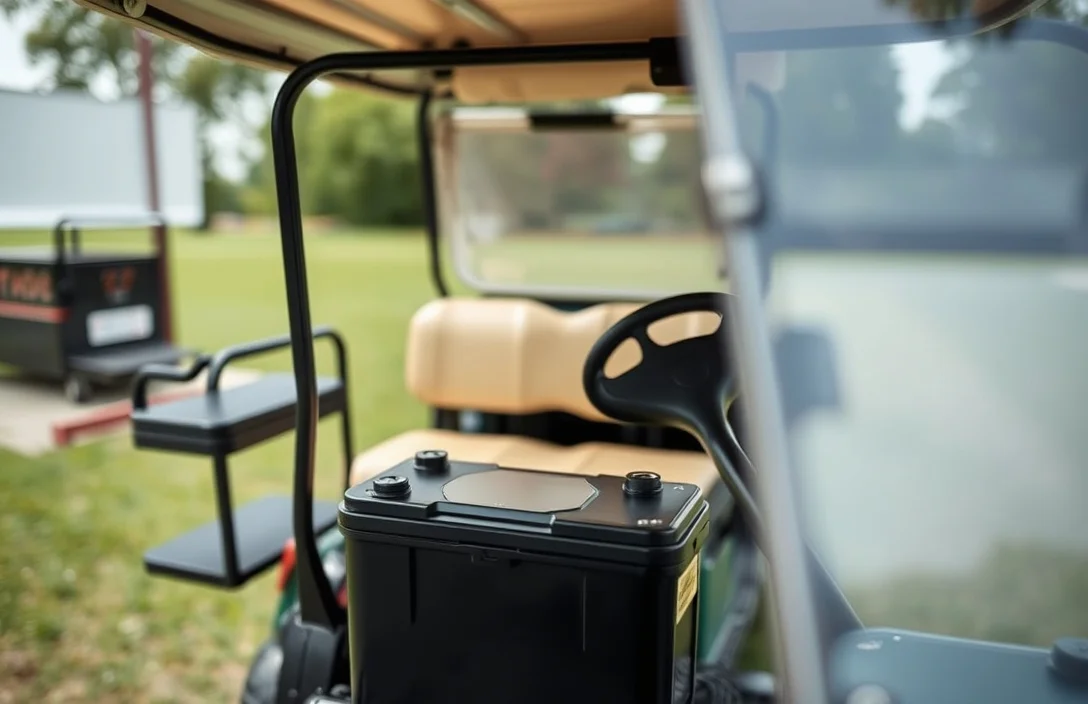
Equalization is a controlled overcharge used on flooded lead-acid golf cart packs to reduce sulfation and electrolyte stratification. Use a charger that supports equalization and keep the process within a safe temperature window around 20 to 25 C. Do not perform this step on AGM or gel packs unless the manufacturer explicitly approves.
Safe Reconditioning Charging
Using the correct charger for a 36V or 48V battery pack is crucial to safely restore golf cart batteries. Overcharging can lead to overheating, swelling, and even battery failure, making it essential to follow specific guidelines for charger selection, current limits, and monitoring during the charging process.
Following these guidelines will help maintain battery health and performance throughout the restoration process. Regular checks and a cautious approach to charging will enhance the longevity and reliability of your golf cart battery.
Post-Restore Testing and Maintenance
Allow the pack to rest 12 to 24 hours after the final charge to dissipate surface charge, then record the open-circuit voltage. Use this resting baseline to evaluate consistency across strings before any discharge tests.
Voltage stabilization is verified by taking a no-load voltage after the rest period and confirming it sits within the expected range for the bank. A significant mismatch between strings or a drifting reading points to unbalanced cells or connection issues that should be addressed before loading.
Capacity testing validates energy retention after restoration. Two practical approaches are a C-hour discharge test or a slower load test, each requiring appropriate equipment and a defined cutoff voltage per cell or block. Record the total ampere-hours delivered and compare to the rated capacity to gauge remaining life.
| Test type | Setup | What you measure | Pros | Cons | Typical duration |
|---|---|---|---|---|---|
| C-hour test | Discharge at a constant current, commonly C/5 to C/10 | Total Ah delivered until cutoff | Good baseline of usable capacity | Longer test time and strict cutoff | 4 – 12 hours |
| Load test | Discharge under a realistic load with moderate current | Voltage behavior under load and remaining capacity | Reveals health under typical use | Requires appropriate equipment and careful monitoring | 2 – 6 hours |
Regular maintenance checks help prevent sulfation and premature failure, extending useful life and keeping the golf cart ready for reliable use.
Warning: swollen cells, overheating, or venting gas are signs of danger. If you observe any of these, stop charging, isolate the pack, and seek professional service.
Quick Summary
Restore a golf cart battery safely by verifying type, following safety procedures, and using the correct charger and tests.
Frequently Asked Questions
Question 1? How do I verify compatibility when restoring a golf cart battery?
You should start by checking the cart manual for the required voltage and battery type. Verify that the replacement pack has the same voltage, for example 48V, and that the capacity (Ah) is at least equal to the original.
Question 2? How long does a golf cart battery restoration take and how many cycles should I expect?
Restoration often requires multiple charging cycles; plan for 1-3 days for a full restoration depending on sulfation level, after an initial cycle that can take several hours.
Question 3? What safety steps should I follow to prevent overheating or gas buildup during restoration?
Work in a well ventilated area and wear eye protection and gloves. Use a charger that matches the battery type, and stop if the surface temperature exceeds 60 C or if the case is swollen.
Question 4? How can I estimate runtime after restoration and what factors influence it?
Estimate runtime by calculating energy in the pack: Wh = voltage times Ah. For a typical 4800 Wh pack, at a moderate draw of 20 A you would expect about 5 hours of runtime (4800 Wh divided by 960 W).
Question 5? What common buying mistakes should I avoid when replacing or upgrading a golf cart battery?
Avoid mixing chemistries or brands within the same pack and do not buy used or refurbished packs unless a reputable warranty is included. Always ensure matching voltage with your cart and verify a valid warranty and return policy from the seller.