How to Properly Fill Golf Cart Batteries with Distilled Water
Golf cart batteries that accept distilled water are flooded lead-acid cells, not sealed AGM or gel. The spec that matters most is battery type, so check for markings like “flooded”, “serviceable”, or removable vent caps. A common mistake is overfilling or using tap water, so first read the battery label or owner manual.
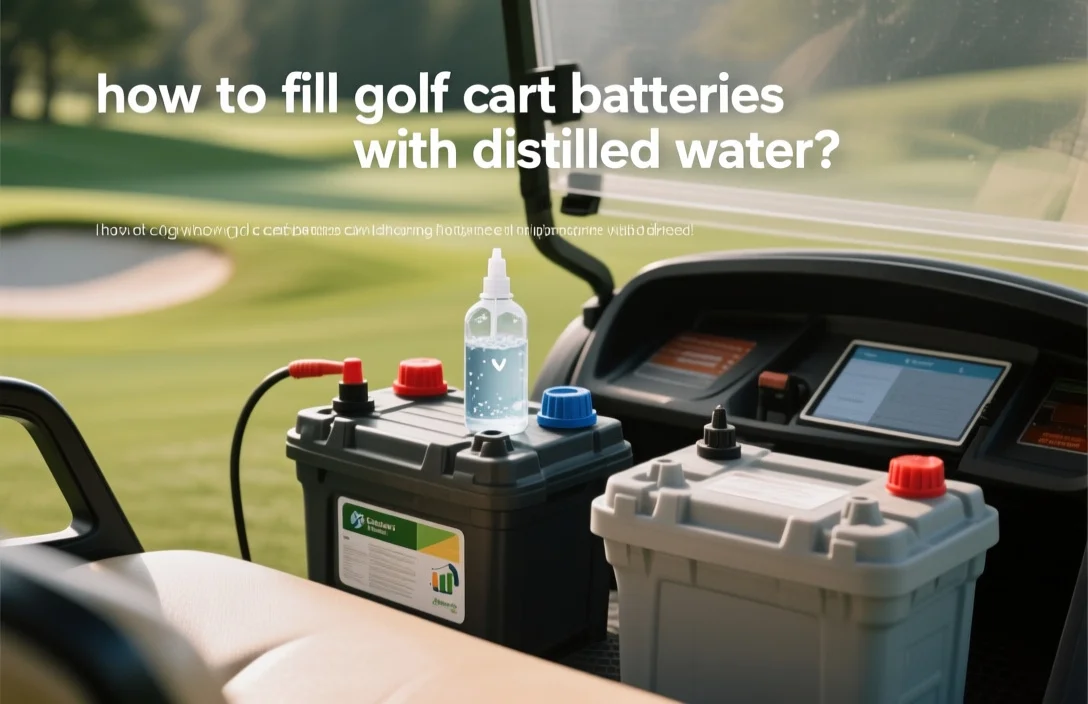
Filling golf cart batteries with distilled water: Remove vent caps, add only distilled water until the electrolyte just covers the plates, typically 1/8 to 1/4 inch above the plates or to the bottom of the fill well; top off after a full charge and check monthly.
When to Add Water
Add distilled water to golf cart batteries only when the electrolyte in flooded lead-acid cells is visibly low, and only after the battery has been fully charged and allowed to cool. Do not add water to sealed AGM, gel, or lithium batteries; topping off is only for flooded, vented cells and should cover the plates without filling the vent well.
Check levels after a full charge because charging pushes electrolyte upward and can hide a low condition. Waiting until the battery cools to near ambient temperature gives a reliable level reading and reduces the risk of overfilling.
Establish a routine inspection schedule based on use and climate: inspect monthly during active use or hot weather, and at least every few months when stored. Increase frequency if you do many deep discharges, run equalization charges, or operate in high heat.
For example, if a cell shows plate material above the electrolyte after a full-charge cool-down, add distilled water slowly until the plate is just covered and there is a small gap below the filler well. When in doubt follow the battery maker’s manual, because manufacturers sometimes give specific fill-level guidance for their cells.
Tools and What to Buy
Only distilled water should be used to top flooded golf cart batteries, because minerals and dissolved salts in tap water raise internal conductivity and reduce life. Bring a long-spout funnel or an automatic battery filler, a hydrometer for specific gravity checks, a DC multimeter, insulated hand tools, and acid-resistant PPE before you start.
When buying, inspect labels and sizes, not just brand names. Verify the battery cell vent type, cap thread or snap style, and the battery bank voltage so the meter and any single-point watering kit you buy fit the cells and pack.
| Item | Amount / Specification | Notes |
|---|---|---|
| Distilled water | 1 gallon (or refill size) | Buy bottled labeled “distilled”; avoid tap, spring, or mineral water. Store sealed and clean. |
| Long-spout funnel or flexible nozzle | Flexible, narrow, non-metallic | Helps reach recessed cell openings, low cost. Use only for pouring, not pressurizing cells. |
| Automatic battery filler (optional) | Float-valve type, correct adapter | Saves time for multi-battery banks. Check adapter fit and manufacturer guidance before installing. |
| Replacement vent caps / cell caps | Match battery model | Replace cracked or missing caps to prevent contamination and allow safe venting. |
| Hydrometer | Acid-resistant, temperature compensation preferred | Measures specific gravity per cell. Carry spare rubber bulb for draw tests. |
| DC multimeter / voltmeter | 0-60V DC range, 10A clamp optional | Check overall pack voltage and verify charger off before working. |
| Insulated tools | Wrenches, sockets sized to terminals | Use insulated handles to avoid shorts. Keep wrench sizes for your terminal hardware. |
| PPE | Acid-resistant gloves, eye protection, apron | Must protect skin and eyes from acid splash. |
| Cleaning supplies | Baking soda, spray bottle, shop rags, terminal brush | Neutralize spills with baking soda solution, clean terminals and surrounding area. |
| Waste container | Plastic bucket or tray | Catch drips; dispose of contaminated rags per local rules. |
Choose a hydrometer that is built for lead-acid batteries and, if possible, one with temperature correction or a conversion chart, because specific gravity readings change with temperature. For the voltmeter, confirm the range covers your full pack voltage; a 12- to 48-volt range covers most golf cart systems.
Step-by-Step Filling Procedure
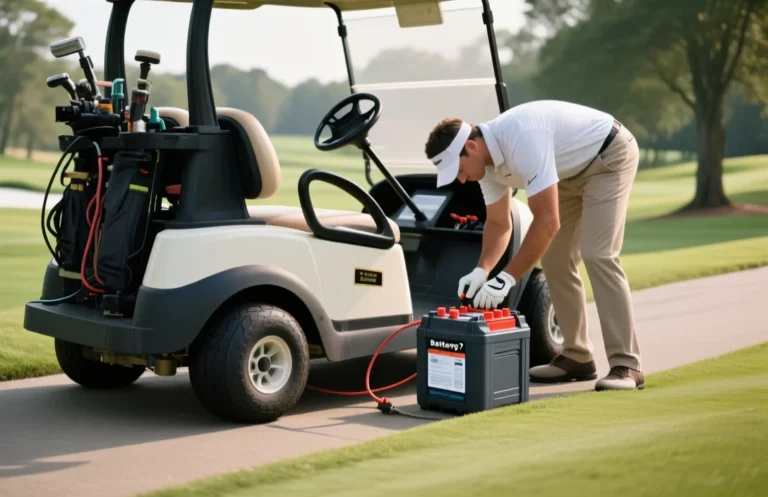
Always add only distilled water to flooded lead-acid golf cart batteries, and never while the charger is connected. Work in a well ventilated area, wear eye and hand protection, and stop if you see cracked cases, swollen cells, or active arcing.
For example, if a cell shows low electrolyte but the plates are exposed or the case is damaged, stop and seek repair rather than topping. After filling, plan to check levels again after a full charge, because electrolyte settles and levels can change during charging.
How Much Water to Add?
Fill each flooded lead-acid golf cart battery cell to the bottom of the recessed fill well or to the manufacturer’s “max” mark on the case, leaving a small air gap above the plates, roughly 1/4 inch, to allow for gassing and expansion. Always use distilled water only; tap or well water can introduce minerals that shorten battery life.
Cell-level markers vary by manufacturer and battery style. Some batteries have translucent sidewalls with molded min and max lines, others have individual recessed fill wells around each vent opening, and a few have clear sight gauges or float indicators that show proper electrolyte height.
Risks of overfilling: Electrolyte can boil and overflow during charging, causing acid corrosion on terminals and frame, and dilute the acid which hurts capacity. Overfilling also increases the chance of acid contact with wiring and electronics.
Risks of underfilling: Exposed plates can sulfate and suffer irreversible capacity loss, and hot spots can form that shorten life. Low electrolyte also increases internal resistance and reduces amp-hour capacity.
Charge Timing, Capacity Effects & Compatibility
Low electrolyte exposes battery plates or reduces effective active area, which raises internal resistance and cuts usable capacity and runtime under load. If plates are exposed, add distilled water immediately to cover the plates; if levels are only slightly low, it is often better to charge first and then top to the manufacturer’s fill line because charging causes electrolyte to rise during gassing.
Exposed plates can cause rapid sulfation, permanent capacity loss, and higher voltage sag when the cart is loaded, so topping cells is not cosmetic. Filling only after long neglect will not recover lost capacity, it only prevents further damage, so timing matters for preservation more than restoration.
Follow the battery and charger manufacturer instructions when available, because improper topping or using the wrong charger can void warranties or accelerate failure. If the manual is unclear, contact the manufacturer or an authorized service center before making routine changes to charging or topping procedures.
When in doubt, protect the plates first, then optimize timing to reduce overflow and water loss, and always verify charger specs on the label or datasheet before using it with your golf cart battery bank.
Safety, Spills, and PPE
Always wear acid-resistant gloves, splash goggles, and a face shield when adding distilled water to golf cart batteries, and work outdoors or with strong exhaust ventilation to prevent hydrogen accumulation. Neutralize any sulfuric acid spill with sodium bicarbonate (baking soda), contain the residue, and dispose of contaminated material according to local hazardous-waste rules.
Wear gloves that resist sulfuric acid, not thin disposable vinyl alone, and use chemical splash goggles that seal around the eyes rather than regular eyeglasses. Add a chemical-resistant apron and closed-toe shoes to protect skin and clothing; change contaminated clothing immediately and wash exposed skin with water.
Ventilation must move any hydrogen gas away from the battery area; even small amounts of hydrogen are flammable when charging and when cells are disturbed. Do not smoke, weld, or create sparks near batteries, and avoid using power tools that can arc in the immediate area.
| Item | Primary use |
|---|---|
| Acid-resistant gloves | Protect hands during filling and cleanup |
| Splash goggles + face shield | Prevent eye and facial burns from splashes |
| Respirator (if needed) | Protect from fumes when ventilation is inadequate |
| Baking soda and plastic scoop | Neutralize spills and collect residue |
If acid contacts skin or eyes, flush with running water for at least 15 minutes and seek medical attention immediately. If swallowed or if breathing is difficult, call emergency services and do not induce vomiting.
Handle acid-contaminated materials as hazardous waste; after neutralizing, place solids and used PPE in sealed bags and label them. Check your local waste authority for disposal rules, because household trash policies vary and some areas require drop-off at hazardous-waste facilities.
For example, if a cell overflows while you top off, stop work, put on gloves and goggles, sprinkle baking soda, wait for fizzing to finish, then scoop the paste into a bag, rinse the tray once neutral, and ventilate until the smell is gone. Close battery caps and move the charger to a safe distance before returning the cart to service.
Troubleshooting & Replacement Triggers
If electrolyte falls below the top of the plates, the exposed plates will sulfate and lose capacity; topping with distilled water restores electrolyte level but will not repair sulfated or physically damaged plates. Regular rapid water loss, bulging, persistent low specific gravity, or leaking cells are clear triggers to consider cell repair or battery replacement rather than more water.
Low water reoccurrence – Symptom → Cause → Fix
Symptom: Cells that need filling again inside days or weeks after a proper fill, often with visible foam or heavy gassing during charging.
Cause: Overcharging from a bad charger or voltage set too high, cell or vent damage, or a cracked cover letting vapor escape cause persistent loss. Heat speeds gassing and water loss.
Fix: Verify charger voltage and float settings with a multimeter while charging. If charger is correct, inspect cell covers and vent caps for cracks and replace them, then fill to just over the plates with distilled water. If the battery still loses water after corrective steps, replace the affected cells or the whole battery, because continuous electrolyte loss shortens life and creates acid leaks.
Swelling, bulging, or leakage – Symptom → Cause → Fix
Symptom: Case bulges, tops are warped, or acid is visible around seams or vent caps. Cells may show white crust or brown stains at terminals.
Cause: Plate damage from deep discharge followed by high-current charging, thermal runaway, or internal shorting can deform the casing and force electrolyte out. Physical damage and frozen cells also leak.
Fix: Do not attempt to refill or reuse a swollen, cracked, or leaking battery. Replacement is required for any cell with structural damage because sealing or refilling will not restore internal plate alignment or prevent future leaks. Dispose of the battery following local hazardous-waste rules.
Low specific gravity and sulfation – Symptom → Cause → Fix
Symptom: Hydrometer readings per cell remain low after a full charge, and runtime is reduced despite correct water level. Cells may take surface charge but drop quickly under load.
Cause: Extended undercharge, frequent deep discharges, or prolonged low electrolyte exposes plates and forms hard sulfate crystals that resist normal charging.
Fix: Perform a full charge at a controlled, correct voltage, then test specific gravity across cells. Gentle equalization charging can sometimes recover mildly sulfated cells, but heavy sulfation that leaves permanently low gravity or mismatched cells means the battery should be replaced. Replace cells when gravity cannot be restored or cells differ by more than 0.050 SG.
When to repair versus replace
Decision hinges on three practical checks: physical integrity, matched specific gravity after a proper charge, and repeated rapid water loss. Run these checks in order for a clear decision path.
Replace immediately if any cell leaks, the case is warped, cells show irreversible low gravity after correct charging, or if separate cells show wide gravity spread. Repair (cell replacement or equalizing) is only cost-effective when the case and most plates are sound and the issue is isolated.
Quick Summary
Filling golf cart batteries with distilled water is essential for maintaining battery performance and lifespan.
Frequently Asked Questions
How often should I fill golf cart batteries with distilled water?
You should check your golf cart batteries every month and fill them with distilled water as needed, ensuring that the water level is above the plates but below the fill neck. Keeping the water level consistent helps maintain battery health and performance.
What happens if I overfill my golf cart batteries with distilled water?
Overfilling can lead to overflow during charging, which may cause battery acid to leak out. This not only creates safety hazards but can also damage the battery and surrounding components.
Is distilled water necessary for my golf cart batteries?
Yes, using distilled water is recommended because it is free of minerals that can damage battery plates and reduce efficiency. Tap water can introduce impurities that affect battery life.
Can I use other types of water instead of distilled water for my golf cart batteries?
No, you should avoid using tap water, spring water, or well water, as these can contain minerals and chemicals that can harm the battery. Always use distilled water to ensure optimal battery performance and longevity.
What common mistakes should I avoid when filling golf cart batteries with distilled water?
One common mistake is not waiting long enough after charging before adding water, as the electrolyte expands during charging. Always check the levels after charging and add distilled water only if necessary to avoid overfilling.