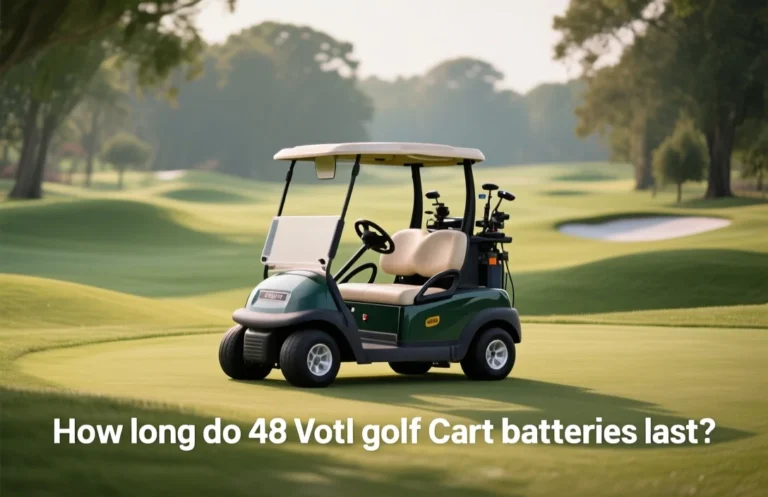
Which Golf Cart Battery Lasts The Longest?
Long life hinges on cycle life, not just capacity. In golf carts, the most telling spec is how many charging cycles the pack can endure at a practical depth of discharge. The common mistake is chasing higher Ah or voltage without matching the chemistry. Start by verifying the battery chemistry on the label and using a charger that matches that chemistry.
LiFePO4 golf cart batteries last the longest among common chemistries. LiFePO4 packs typically deliver far more charge-discharge cycles and slower capacity fade than flooded or AGM lead acid, making them the longest lasting choice when you maintain the pack and use a compatible charger.
Battery Types for Golf Carts
Lithium golf cart packs typically deliver more usable energy and far more charging cycles than traditional lead-acid options, so they can last longer in routine use. Endurance hinges on pack chemistry, depth of discharge, and how the pack is configured, including voltage, series parallel arrangement, and how a BMS manages safety and balance.
Capacity, Wattage & Runtime
Watt-hours (Wh) is the practical energy available to drive the golf cart, and it directly translates to run time when voltage and discharge are similar. Ah alone is not enough because it ignores pack voltage; Wh = Ah × voltage, so two batteries with the same Ah at different voltages store different amounts of energy. The usable energy also depends on the C-rate and the chemistry, which affects how quickly high-current loads can be drawn without excessive voltage drop.
Longevity: Lithium vs Lead-Acid
In golf carts, LiFePO4 lithium packs typically outlast lead-acid options in cycle life, often delivering two to four times as many cycles. They also tolerate deeper discharges with less capacity fade, and manufacturers commonly back that longevity with longer warranties.
Depth of discharge has a big impact on longevity for every chemistry, but lead-acid degrade faster as DoD rises. LiFePO4 and other lithium chemistries maintain usable capacity over many more cycles even at higher DoD, so you get more reliable runtime between replacements.
| Chemistry | Typical cycle life at ~80% DoD | Effect of DoD on longevity | Typical warranty | Notes |
|---|---|---|---|---|
| Flooded Lead-Acid (deep-cycle) | 500 – 1,000 cycles | Significant cycle loss with higher DoD; best life around 50% DoD | 1 – 2 years | Maintenance required; water top-ups where allowed |
| AGM Lead-Acid | 600 – 900 cycles | Similar DoD sensitivity; longevity rises with moderate DoD | 1 – 3 years | Sealed; lower energy density per kg |
| LiFePO4 (Lithium iron phosphate) | 2,000 – 4,000+ cycles | High DoD (80 – 90%) has minimal impact; long life is sustained | 5 – 10 years | Lower energy density per kg than some lithiums; strong thermal stability |
| Li-ion (NMC/LFP variants) | 1,500 – 3,000 cycles | Good DoD tolerance; performance depends on exact chemistry and management | 3 – 7 years | Higher energy density; requires a proper BMS and charger compatibility |
Warranty and replacement expectations reflect these differences. Lead-acid packs are commonly covered for 1 to 2 years, with prorated wear after that. LiFePO4 and other lithium packs frequently carry longer warranties, often 5 to 10 years or more, tied to cycle-life expectations and proper charging conditions. Check whether the warranty requires an approved charger and a functioning battery management system.
In practice, the upfront cost of lithium packs is higher, but you recoup it over years of service through fewer replacements and less maintenance. Temperature, charging, and how deeply you routinely discharge the pack are the biggest levers in real-world life.
Charger Standards & Connections
Voltage matching and charger amperage are the foundation of safe golf cart charging. Match the pack voltage to the charger’s output and stay within the manufacturer’s recommended amperage. Using a charger that delivers too much current or the wrong voltage can overheat the pack and shorten its life.
Connector types and charging protocols must align with the pack and charger. Use a connector rated for the current and weather exposure, and ensure the charger follows a CC/CV profile appropriate to the chemistry. The normal approach is constant current until the pack reaches a set voltage, then constant voltage to finish charging. If the charger does not support the correct protocol, charging will be incomplete or unsafe.
Fast-charging pushes more current into the pack, which raises heat and can accelerate degradation, especially for lead-acid variants that gas as they charge. For lithium packs equipped with a capable BMS, high C-rate charging is possible but still adds stress and may reduce cycle life if done routinely. Always follow the recommended charge current and avoid routinely charging at the highest allowable rate in hot environments.
| Pack Voltage | Typical Charger Current Range (A) | Notes |
|---|---|---|
| 36 V | 4 – 8 A | Common for traditional flooded lead-acid; lithium may vary by BMS |
| 48 V | 8 – 20 A | Popular in fleets; ensure compatibility with chemistry and BMS |
| 72 V | 20 – 40 A | High-power setups; verify heat management and BMS limits |
When in doubt, contact the pack manufacturer or a qualified technician to confirm compatibility before proceeding with a fast-charging setup.
Safety: Heat and Swelling

Heat accelerates aging of golf cart batteries across chemistries, trimming both capacity and cycle life. Sustained high temperatures drive faster electrolyte loss and plate corrosion. Swelling is a warning sign of internal gas buildup and warrants immediate action.
Swelling indicators include a visibly bulging case, warped components, or gas venting. If you notice swelling, stop charging immediately and move the pack to a cool, safe area; do not apply pressure or puncture the cells and contact service for replacement options.
Storage temperature and long-term storage guidelines: Store batteries in a cool, dry place away from direct sun, ideally within the manufacturer recommended range. Avoid freezing or exposing to sustained heat; for long-term storage, follow the battery maker’s instructions regarding state of charge and disconnect from chargers to minimize self-discharge and heat buildup. If multiple batteries are stored together, keep them separated to prevent heat transfer and monitor humidity levels to avoid corrosion.
| Situation | Observation | Immediate Action |
|---|---|---|
| Overheating during charge | Packs feel hot to the touch or a temperature sensor reads high | Pause charging, move to a cooler area, check for proper ventilation and charger compatibility |
| Swelling or deformation | Visible bulge, warped lid or venting | Stop use immediately, disconnect from all power sources, isolate from flammable materials, and contact a technician or supplier |
| Storage outside normal range | Ambient conditions are very hot or very cold for extended periods | Bring to recommended storage conditions before reuse or charging, and check for any signs of damage before operation |
Takeaway: Managing heat and watching for swelling are practical ways to extend life and prevent unsafe situations in golf cart battery systems. Regular checks, proper charging practice, and following manufacturer storage specs help maximize longevity across chemistries while preserving safety.
Storage & Replacement Triggers
Proper storage slows capacity fade and reduces swelling risk in golf cart battery banks. For long gaps between uses, store in a cool, dry location with a partial state of charge (roughly 40 – 60%), and recheck voltage levels every 2 – 3 months to top up as needed. Inspect for signs of damage, leakage, or deformation before reconnecting and putting the pack back in service.
| Chemistry | Ideal storage SOC | Replacement indicators |
|---|---|---|
| Flooded Lead-Acid | 40 – 60% | Capacity fade, deep discharge risk, gassing signs |
| AGM / Sealed Lead-Acid | 40 – 60% | Faster capacity loss with cycles, swelling tendency |
| LiFePO4 | 40 – 60% | Gradual capacity fade, BMS alerts, stable voltage under small loads |
In practice, health checks and budget considerations drive replacement timing. Plan periodic voltage and capacity tests, maintain a log, and when thresholds specific to your chemistry are crossed, decide between replacement or upgrading to a higher quality pack. If you replace, verify compatibility with the cart’s charging system and BMS, and explore local recycling options to minimize environmental impact.
Buying Checks & Real-World Fit
Longer life comes from higher usable energy and more charge-discharge cycles. Compare the Wh rating and cycle-life across options, then confirm the cart voltage and the charger are compatible to avoid premature wear.
In practice, the best longevity often comes from a battery with a strong cycle-life claim and a well-supported charging ecosystem. Ensure you have a compatible charger and BMS, and avoid models with limited service networks.
| Chemistry | Nominal voltage | Typical cycle life (rough ranges) | Longevity considerations |
|---|---|---|---|
| Flooded Lead-Acid | 36V / 48V options common | 200 – 500 cycles | Lower upfront cost but more susceptible to sulfation and maintenance; lifetime depends on depth of discharge. |
| AGM | 36V / 48V | 400 – 800 cycles | Better not to deep-discharge; sealed option with less maintenance. |
| Gel | 36V / 48V | 600 – 1000 cycles | Good vibration resistance but requires proper charging to avoid gel damage. |
| LiFePO4 | 36V / 48V | 1500 – 4000+ cycles | High longevity with proper BMS and charger; heavier upfront cost but slower capacity fade. |
For example, in a daily 2- to 3-hour ride cycle in warm weather, a LiFePO4 pack typically outlasts a flooded lead-acid by a wide margin. You must verify the cart’s charging setup and mounting space before buying.
Battery longevity is shaped by chemistry, usage pattern, and charging discipline; choosing a higher-quality pack with a compatible charger often yields the best real-world life.
Quick Summary
LiFePO4 golf cart packs generally last the longest when paired with proper charging and maintenance.
Frequently Asked Questions
Which golf cart battery chemistry lasts the longest and is compatible with most carts?
Deep-cycle flooded lead-acid batteries are often the longest lasting option when properly maintained, and compatibility depends on the cart’s voltage and group size (commonly 6V or 8V).
How does temperature affect the longest lasting golf cart battery, and what can I do to reduce heat impact?
Heat accelerates battery aging and can shorten cycle life, so keep the pack cool and ventilated during charging. If your environment regularly exceeds 25 C to 30 C, consider cooling or charging in a shaded area to preserve longevity.
What runtime can the longest lasting golf cart battery provide, and how should I compare options?
Higher amp hour rating means longer runtime for the same voltage, so compare packs by Ah at the same voltage. For example, a 6V pack rated around 225 Ah will generally run longer than a 180 Ah pack under the same draw.
What safety factors influence how long a golf cart battery lasts, and how should I charge safely?
Use the charger specified by the battery maker because mismatched chargers can overheat and shorten life. Also charge in a ventilated area and keep charging temperature within the typical safe range of 0 C to 40 C to avoid accelerated aging.
What buying mistakes shorten the life of the longest lasting golf cart battery, and when should you replace the pack?
Avoid mixing old and new batteries in a pack, as weak cells drag down the whole system. Replace the entire pack when the overall capacity falls to about 70-80% of a new pack, and avoid buying used or refurbished packs unless you have a clear performance test.