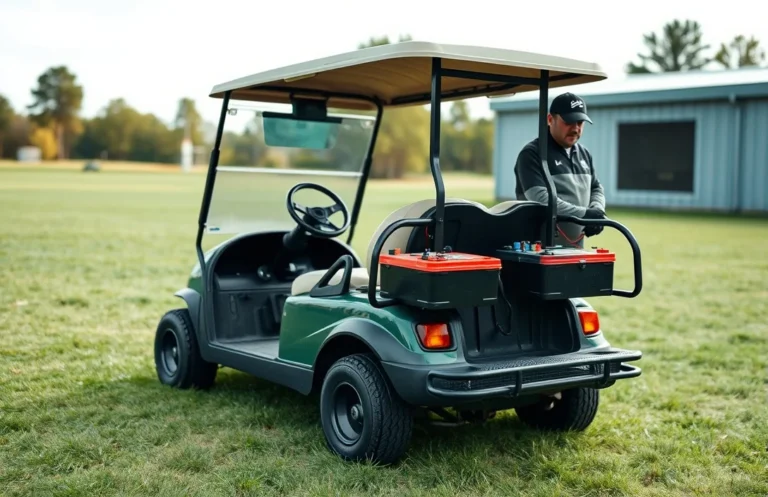

How Weather Affects Golf Cart Battery Lifespan?
Temperature is the key lever behind golf cart battery life, because chemistry changes with heat and cold drive capacity loss and aging. The spec that matters most is operating and charging temperature, with a target range around 20 to 25 C. The common mistake is charging in direct sun or in freezing conditions, which trims capacity and cuts cycle life. The first setting to check is the battery temperature sensor or the charger temperature compensation control.
Weather effects on golf cart battery lifespan are driven by temperature and humidity. Cold reduces usable capacity and slows charging, while heat accelerates aging and corrosion. Keep charging and operation between 0 C and 40 C, with a target near 20-25 C; humidity above 70 percent increases corrosion risk.
Weather and Golf Cart Batteries

Extreme heat speeds water loss and electrolyte evaporation in flooded lead-acid packs, accelerating plate corrosion and shortening cycle life. Cold slows chemical reactions, reducing usable capacity and under load voltage. Humidity and condensation promote terminal corrosion and moisture-related faults, so seasonal care matters for longevity.
Temperature Effects by Chemistry
Lead-acid heat and cold sensitivity: High ambient temperatures accelerate water loss, grid corrosion, and sulfation, which shorten cycle life and reduce overall capacity faster. Cold weather lowers usable capacity and raises internal resistance, making charging slower and performance feel weaker until the battery warms. AGM variants share these heat and cold risks, though their sealed design alters venting behavior and aging patterns somewhat.
Safe Operating and Charging Temps
Temperature governs chemical reactions inside golf cart batteries. Cold temperatures reduce capacity and raise internal resistance, while heat accelerates aging and electrolyte loss, shortening cycle life. Keeping operating and charging temperatures within chemistry-specific windows slows deterioration and preserves capacity over time.
Humidity and Corrosion Risks
High humidity increases corrosion risk on golf cart battery hardware and promotes moisture intrusion into enclosures. Terminal studs, ring terminals, and gasket seals are particularly vulnerable, and corrosion raises contact resistance which reduces effective capacity over time. In flooded lead-acid packs, moisture and condensation can alter electrolyte balance, while sealed types still suffer from moisture-related seal degradation and venting issues during charging. In outdoor or high-humidity environments, the strain on the enclosure seals and venting paths accelerates wear and can invite salt or mineral deposits that worsen conductivity losses.
Seasonal Care Plan

Extreme heat speeds water loss and grid corrosion in lead-acid golf cart batteries, shortening cycle life. Cold snaps slow chemical reactions and reduce usable capacity under load, degrading performance until temperatures rise. Maintaining operation within manufacturer recommended temperatures and charging ranges is the most reliable way to stretch life across seasons.
Summer heat management keeps the pack cooler and charging gentler. Park in shade, improve airflow around the pack, and use a vented enclosure or fan to limit temperature rise inside the case.
Winter cold charging strategy keeps cells within safe ranges as temperatures drop. If you can, warm the battery area to near room temperature before charging, using passive insulation or a controlled heater. Do not charge a frozen pack; charging below the recommended temp can cause plating on lithium cells or sulfation on lead-acid batteries.
Spring and fall checks help catch weather-related wear before it adds up. Inspect seals and venting, clean corrosion from terminals, and verify tight connections. Run a slow capacity or load test after heavy winter use or summer heat exposure to confirm health, and recalibrate the charging setup if needed.
Tip: For long storage during shoulder seasons, keep the battery at moderate temperature and around half state of charge to minimize calendar aging across seasons.
| Chemistry | Recommended charging temperature | Heat impact on life | Cold impact | Maintenance note |
|---|---|---|---|---|
| Flooded lead-acid | 10 to 25 C for best results; charging up to 40 C max | Heat accelerates water loss and grid corrosion | Cold reduces capacity and slows reactions, risk of sulfation if discharged | Check water, vent caps; avoid deep discharge in heat |
| AGM lead-acid | 15 to 25 C | Similar heat effects as flooded but less water loss | Cold reduces performance; risk of sulfation if left discharged | Keep dry, venting intact; avoid high temps |
| Lithium golf cart cells | 0 to 40 C; charging often best below 30 C | Heat ages cells calendar-wise; high temps reduce life | Cold reduces charging efficiency and can trigger protective cutoffs | Use BMS with thermal management; avoid extreme heat |
Storage Guidelines
Short-term storage keeps golf cart batteries in a cool, dry space away from direct sun. Maintain ambient temperatures around 10 to 25°C (50 to 77°F) to limit rapid aging. Keep the battery at a partial state of charge to reduce self-discharge and plate deterioration; aim roughly 50 – 60% for flooded lead-acid and 40 – 60% for lithium chemistries.
Long-term storage requires periodic checks and gentle cycling to prevent deep discharge. Plan monthly voltage checks and recharge if the pack falls outside target SoC. Terminals should be clean, venting unobstructed, and the enclosure should be dry to avoid corrosion and vent gas buildup.
Environment controls matter for humidity and condensation. High humidity raises corrosion risk on terminals and cables, while condensation can affect connections. Store on a rack off the floor, with ventilation, and use a dehumidifier or desiccants in damp spaces.
| Storage Aspect | Lead-Acid | Lithium |
|---|---|---|
| SoC during idle | 50 – 60% | 40 – 60% |
| Temperature range | 10 – 25°C (50 – 77°F) | 10 – 25°C (50 – 77°F) |
| Humidity note | Keep dry, avoid condensation | Keep dry, avoid condensation |
| Maintenance during storage | Recharge periodically as needed | Recharge every 2 – 3 months if unused |
Storing at extreme temperatures or with high humidity accelerates capacity fade and shortens cycle life, so keep the environment stable and dry.
Quick Summary
Weather conditions can noticeably shorten golf cart battery lifespan if charging practices and storage habits ignore temperature and humidity.
Frequently Asked Questions
Can weather conditions affect which batteries or chargers I should use with my golf cart?
Yes. Weather can change charging behavior, so always match the system voltage and temperature ratings on the battery label with your charger. Key fact: use the correct voltage charger for your golf cart’s system (for example 48V).
How does heat affect golf cart battery lifespan?
High ambient temperatures during charging or in storage accelerates chemical aging and can shorten life. Keep charging and storage areas under about 40 C when possible.
What impact does cold weather have on runtime and performance?
Cold temperatures reduce usable capacity, so you may see less range on cold days. Plan for roughly 10-20% less range in freezing conditions.
What safety steps should I take in hot or cold weather to protect battery safety?
Avoid charging outside the recommended temperature range; swollen or leaking batteries are unsafe. Always keep charging between 0 C and 40 C and stop charging if you notice swelling or excessive heat.
When should I replace golf cart batteries and what buying mistakes should I avoid in variable weather?
Replace when capacity falls to about 80% of its original rating, which weather stress can accelerate; look for signs of weakness in warm or cold cycles. Avoid buying a higher capacity or different chemistry just for hot weather; ensure compatibility with voltage, terminals, and warranty.