

How To Save Money On Golf Cart Batteries
Golf cart batteries get expensive fast because the most common “savings” mistake is buying the right battery but using the wrong charger setting, voltage, or charge routine. Most wear comes from undercharging, overcharging, and leaving batteries hot or partially charged. This article shows what to check first (the battery spec and charger label), how to troubleshoot common symptoms, and what maintenance steps prevent premature failure.
Battery savings start with matching charger output to your battery type and voltage. Check the charger label for the correct pack voltage (often 36 V or 48 V) and confirm the battery type matches (flooded lead-acid, AGM, or lithium). Avoid undercharging, which shortens life, and stop charging if the pack gets hot.
how to save money on golf cart batteries
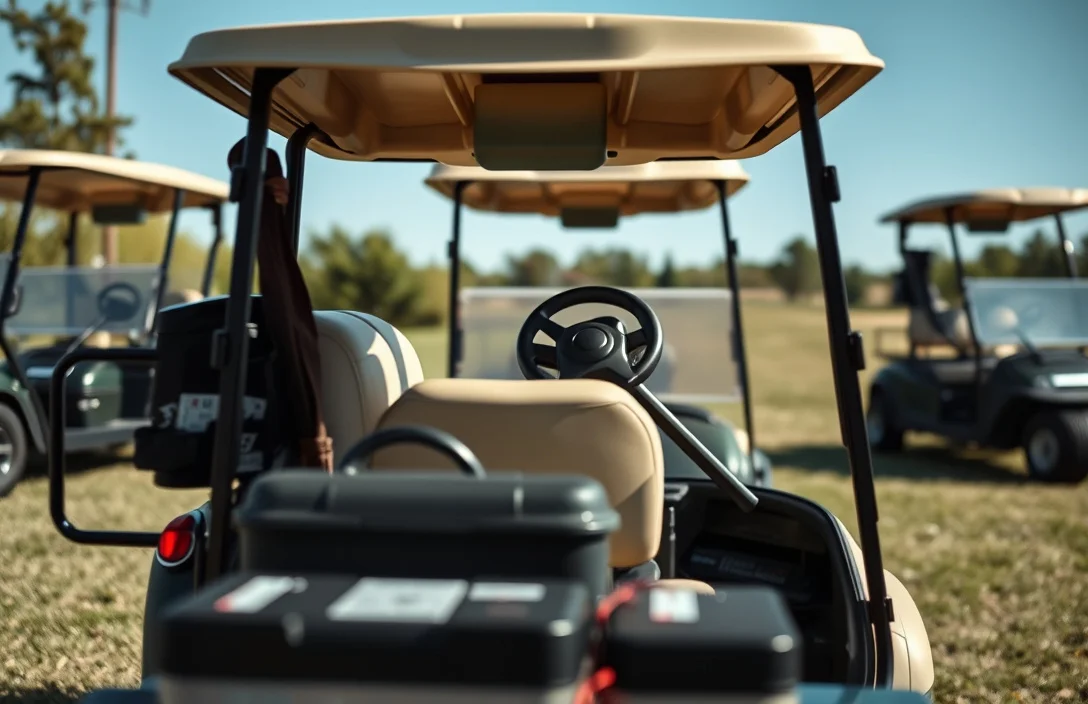
Golf cart battery costs are mostly a lifecycle problem: the battery that lasts longer and stays in good charge balance beats the cheaper battery that dies early. Charging habits, water management (for flooded types), and keeping corrosion under control often matter more than the sticker price. Smaller efficiency losses also add up, because they push the battery deeper and make every charge cycle “work harder.”
Battery prices are high because golf carts use deep-cycle batteries, which are built to handle repeated charge and discharge, and the materials and plate design affect how long they survive. The money drain shows up when you buy early replacements, waste electricity during inefficient charging, or repeatedly swap parts caused by poor charging infrastructure (loose connections, damaged charge leads, wrong charger settings). Cost control starts with measuring what you get, then reducing the causes of wasted capacity.
What to measure before you spend
Golf cart battery economics improve when you track capacity you can actually use, not the marketing rating on the case. Measure performance at the cart level and at the battery level, then compare changes month to month.
For example, two batteries with the same “rated capacity” can cost you very differently if one battery in a pack is lagging. In series strings, the weakest cell group sets the ceiling during charge and discharge, so the rest of the pack can be underused or overstrained.
| Cost driver | What you observe | What usually causes it |
|---|---|---|
| Early replacement | Runtime drops fast or one segment heats up | Imbalanced cells, sulfation from chronic undercharging, loose/dirty connections |
| Higher electricity cost | Batteries need extra charge time to “feel full” | Wrong charger or incorrect charge profile, worn charger, high resistance in wiring |
| Wasted pack capacity | Battery reaches the cutoff sooner than before | One weak battery group limits the pack, or battery is aging unevenly |
Safety first: Stop using the cart and inspect the pack if you see swelling, a strong odor, hot terminals, cracked casing, or any signs of leaking electrolyte. Charging a damaged pack can accelerate failure and increases fire risk.
Golf cart battery savings come from preventing avoidable damage and replacing parts only when they truly fail. This guide builds a cost plan around battery health, charging correctness, and system efficiency, so you do not pay twice for the same problem.
Choose the right golf cart battery
Battery chemistry drives total ownership cost and replacement cycles. Higher energy density options can reduce the number of replacements and downtime, but they cost more upfront. Pick a chemistry that matches how you use the cart and how you charge it to avoid paying twice later.
Common golf cart chemistries include flooded lead-acid, absorbed glass mat AGM, and lithium iron phosphate LiFePO4. Flooded and AGM batteries are cheaper at purchase but require more ongoing maintenance and tend to have shorter service lives in everyday use. LiFePO4 costs more upfront but typically lasts longer, weighs less, and can support faster charging, which can lower total cost of ownership over time. Always verify cycle life, warranty terms, and charger compatibility from the label or datasheet before buying.
Upfront price is only part of the bill. A battery that lasts more cycles or years can be cheaper in the long run even if it costs more today, thanks to fewer replacements and less downtime. Look for the stated cycle life, calendar life, and warranty length, and compare them to your cart usage pattern, charging habits, and how often the cart sits idle.
| Chemistry | Upfront Cost Trend | Long-Term Value | Maintenance & Space |
|---|---|---|---|
| Flooded Lead-Acid | Low | Moderate; shorter replacement window | Watering required, venting needed, occupies space |
| AGM | Moderate | Better than flooded; still limited cycle life | Maintenance-free, compact packaging |
| LiFePO4 | Higher upfront | Typically highest long-term value via many cycles | Lightweight, modular, compact |
Fit checks set the foundation for real savings. The battery must physically fit the tray, clear the seat and frame, and align with the cart’s charger and terminal arrangement. A mismatch can force a costly adapter or a rework that reduces resale value.
Buying checks and real‑world fit go hand in hand. Inspect the label for chemistry, capacity, cycle life, and warranty.
In practice, ask for a hands-on fit test or a return window to verify fit with your cart’s geometry and charging setup.
Tip: never mix chemistries in the same battery pack or in adjacent slots, and avoid using a charger not certified for the battery type. Safety and longevity follow adherence to the label.
Match capacity to usage
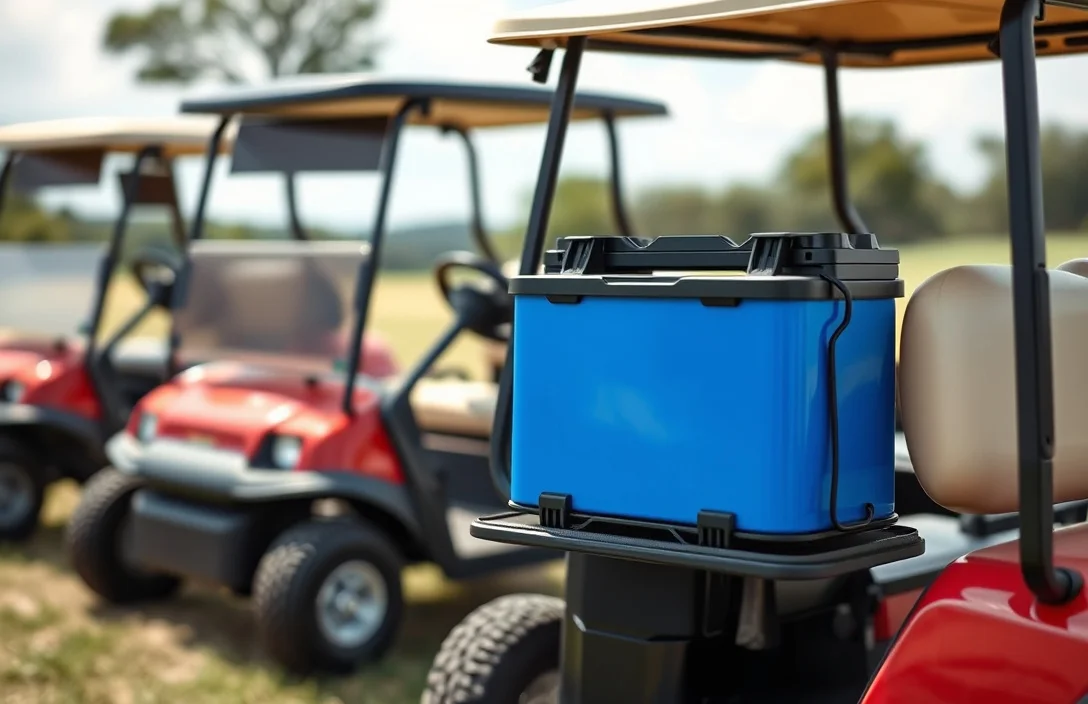
Estimate daily energy use by multiplying miles driven by energy per mile, then convert to amp-hours at your pack voltage. This anchors your battery size to actual usage instead of chasing maximum range.
To plan, choose a realistic Wh per mile value based on speed terrain and payload.
For example, many carts consume about 0.25 to 0.40 kWh per mile; a 48V system doing 20 miles per day would need roughly 5 to 8 kWh per day, which is about 105 to 167 Ah at 48V. Use this daily target as your sizing anchor and pick a bank that covers it with some headroom for variation.
Wh per mile depends on driving patterns and conditions, so track real usage if possible. Consider these factors: speed, acceleration, terrain, payload, climate, and how often you recharge during the day.
Table and quick guidance help translate daily need into pack size. Prefer a bank with usable capacity that matches daily Wh and keeps a small margin for variability rather than full-pack oversizing.
| Variable | Typical guidance |
|---|---|
| Wh per mile | 0.25 – 0.40 kWh |
| Common pack voltages | 36V, 48V, or 72V |
| Usable capacity (DoD guidance) | Lead-acid around 50% DoD; Li-ion often 80 – 90% DoD for longevity |
Reserve capacity matters because peak demand during acceleration or climbing can spike draw. A cushion of about 10 – 20% of daily use helps prevent drifting into a hard recharge window and extends pack life.
Charger compatibility matters
Correct charger compatibility ensures your golf cart pack receives the right voltage, chemistry, and charging profile. That alignment avoids wasted energy and premature degradation, which are common hidden costs.
Start by checking the charger label for three key things: the nominal pack voltage it supports, the chemical compatibility, and the charging profile it uses. The profile should be CC-CV with an appropriate end-of-charge voltage, not a simple constant high current that can overcharge, or a passive trickle that never reaches full capacity. If the label is unclear, contact the manufacturer or consult the cart’s manual before plugging in.
| Label item | Why it matters | What to verify | Practical note |
|---|---|---|---|
| Nominal voltage | Ensures the charger delivers the correct full-charge voltage for the pack | Charger label lists the pack voltage class (for example 36/42 V, 48 V, or 72 V) | Use only a charger that explicitly supports your pack category |
| Chemistry | Different chemistries require different end-of-charge behavior | Charger labeled as lead-acid, Li-ion, or LiFePO4, as appropriate | Mismatch can shorten life or cause safety risks |
| Charging profile | Prevents undercharge or overcharge, protecting capacity | Label shows CC-CV or multi-stage charging with an end voltage | Prefer a profile that matches the pack’s specification |
| Cycle and safety features | Indicates how well the charger handles repeated use and protects safety | End-of-charge termination, overtemperature, and short-circuit protections listed | Good protections save costly replacements over time |
Connector types and future-proofing are essential. Ensure the charger output connector fits your cart inlet or that you can swap cables without buying a new charger. If you expect to change carts or chemistries, pick a charger with a modular cable or multiple connector options so you can adapt without extra equipment.
Tip: A charger with automatic temperature compensation can prevent overheating in hot environments and undercharging in cool weather, which helps extend pack life and save money over time.
For example, upgrading a 48 V lead-acid cart to a compatible lithium pack requires a charger rated for lithium chemistry and a BMS-aware profile. Using a lead-acid charger with a lithium pack can trigger improper termination or fast wear, costing more in replacements and maintenance.
Extend life to cut costs

Keeping golf cart batteries within their designed charging range and temperature greatly extends cycles. Heat and overcharging drive swelling and capacity fade, so sticking to manufacturer voltages and a cool, dry environment matters. When storage or non-use is long, partial-state-of-charge storage slows loss and lowers replacement costs.
Prevent heat and swelling by charging at the recommended voltage and avoiding high currents. Use a charger that matches the battery type and includes temperature sensing and automatic shutoff; fast charging can heat cells and shorten life if the battery isn’t designed for it. Regularly check for warmth during charging and disconnect if a pack stays hot after a brief cooldown.
Storage matters. Inactive batteries do best in a cool, dry space away from direct sun and moisture, with reasonable airflow. If you plan long storage, keep the pack around 50 percent state of charge and recharge every 2-3 months to prevent deep discharge and sulfation on lead-acid packs. If possible, store batteries upright to reduce venting and moisture pooling.
Depth of discharge management matters for cycle life. Shallow cycles wear less than deep drains, so avoid routinely draining to near zero and instead plan use around 40-60 percent remaining. For lithium chemistries, partial state of charge is typical; for flooded or AGM, the same practice helps but remember to recharge after each use. If you must discharge deeply, limit the number of deep cycles or segment usage to preserve overall life.
Replacement triggers and what to watch for. Watch for swelling, rapid capacity drop, or signs of failure like reduced range, erratic performance, or inability to hold a charge. If swelling appears, stop using the battery, isolate it, and replace the cell bank; avoid DIY repairs on swollen packs.
| Trigger | What it indicates | Recommended action |
|---|---|---|
| Swelling or bulging | Internal gas build-up; safety risk. | Stop use, isolate the pack, and replace the battery bank. |
| Rapid capacity loss | Cells degrading faster than expected. | Test for fault, assess warranty coverage, plan replacement. |
| Inability to hold charge | Persistent voltage drop under load. | Evaluate with a load test; replace if abnormal and persistent. |
| Persistent heat during charging | Overheating risk and accelerated wear. | Inspect charger compatibility, monitor temps, replace if it remains hot. |
Quick Summary
To save money on golf cart batteries, buy replacements that match your cart exactly, charge correctly, and avoid damage that shortens lifespan.
Frequently Asked Questions
Question 1?
You can start by checking the cart’s label or owner’s manual for the pack voltage, typically 36V or 48V, and the connector type, then buy a battery that matches that spec. Always match the voltage exactly and stay with the same chemistry to avoid wasted money on incompatible parts.
Question 2?
Heat accelerates capacity loss and shortens life, so keep the battery compartment ventilated and avoid charging in extreme heat. Keep temperatures under 35 C when charging and use a charger with temperature compensation if available.
Question 3?
Read the Ah rating on the pack label and use it to estimate runtime under your typical load, then recharge before you drop below 50% state of charge. Recharge before 50% DoD to reduce deep cycles and extend life.
Question 4?
Use a charger designed for golf cart batteries and inspect for swelling, leaks, or unusual heat; never mix different chemistries or damaged cells. Swelling or leakage is a red flag; stop using the pack.
Question 5?
Compare the cost of a new battery against ongoing maintenance or refurbishment, and check the warranty length and expected cycle life to guide replacement timing. Check the warranty length and cycle life to avoid buying mistakes.
Frequently Asked Questions
Question 1?
You can start by checking the cart’s label or owner’s manual for the pack voltage, typically 36V or 48V, and the connector type, then buy a battery that matches that spec. Always match the voltage exactly and stay with the same chemistry to avoid wasted money on incompatible parts.
Question 2?
Heat accelerates capacity loss and shortens life, so keep the battery compartment ventilated and avoid charging in extreme heat. Keep temperatures under 35 C when charging and use a charger with temperature compensation if available.
Question 3?
Read the Ah rating on the pack label and use it to estimate runtime under your typical load, then recharge before you drop below 50% state of charge. Recharge before 50% DoD to reduce deep cycles and extend life.
Question 4?
Use a charger designed for golf cart batteries and inspect for swelling, leaks, or unusual heat; never mix different chemistries or damaged cells. Swelling or leakage is a red flag; stop using the pack.
Question 5?
Compare the cost of a new battery against ongoing maintenance or refurbishment, and check the warranty length and expected cycle life to guide replacement timing. Check the warranty length and cycle life to avoid buying mistakes.
Frequently Asked Questions
Question 1?
You can start by checking the cart’s label or owner’s manual for the pack voltage, typically 36V or 48V, and the connector type, then buy a battery that matches that spec. Always match the voltage exactly and stay with the same chemistry to avoid wasted money on incompatible parts.
Question 2?
Heat accelerates capacity loss and shortens life, so keep the battery compartment ventilated and avoid charging in extreme heat. Keep temperatures under 35 C when charging and use a charger with temperature compensation if available.
Question 3?
Read the Ah rating on the pack label and use it to estimate runtime under your typical load, then recharge before you drop below 50% state of charge. Recharge before 50% DoD to reduce deep cycles and extend life.
Question 4?
Use a charger designed for golf cart batteries and inspect for swelling, leaks, or unusual heat; never mix different chemistries or damaged cells. Swelling or leakage is a red flag; stop using the pack.
Question 5?
Compare the cost of a new battery against ongoing maintenance or refurbishment, and check the warranty length and expected cycle life to guide replacement timing. Check the warranty length and cycle life to avoid buying mistakes.
Frequently Asked Questions
Question 1?
You can start by checking the cart’s label or owner’s manual for the pack voltage, typically 36V or 48V, and the connector type, then buy a battery that matches that spec. Always match the voltage exactly and stay with the same chemistry to avoid wasted money on incompatible parts.
Question 2?
Heat accelerates capacity loss and shortens life, so keep the battery compartment ventilated and avoid charging in extreme heat. Keep temperatures under 35 C when charging and use a charger with temperature compensation if available.
Question 3?
Read the Ah rating on the pack label and use it to estimate runtime under your typical load, then recharge before you drop below 50% state of charge. Recharge before 50% DoD to reduce deep cycles and extend life.
Question 4?
Use a charger designed for golf cart batteries and inspect for swelling, leaks, or unusual heat; never mix different chemistries or damaged cells. Swelling or leakage is a red flag; stop using the pack.
Question 5?
Compare the cost of a new battery against ongoing maintenance or refurbishment, and check the warranty length and expected cycle life to guide replacement timing. Check the warranty length and cycle life to avoid buying mistakes.
Frequently Asked Questions
Question 1?
You can start by checking the cart’s label or owner’s manual for the pack voltage, typically 36V or 48V, and the connector type, then buy a battery that matches that spec. Always match the voltage exactly and stay with the same chemistry to avoid wasted money on incompatible parts.
Question 2?
Heat accelerates capacity loss and shortens life, so keep the battery compartment ventilated and avoid charging in extreme heat. Keep temperatures under 35 C when charging and use a charger with temperature compensation if available.
Question 3?
Read the Ah rating on the pack label and use it to estimate runtime under your typical load, then recharge before you drop below 50% state of charge. Recharge before 50% DoD to reduce deep cycles and extend life.
Question 4?
Use a charger designed for golf cart batteries and inspect for swelling, leaks, or unusual heat; never mix different chemistries or damaged cells. Swelling or leakage is a red flag; stop using the pack.
Question 5?
Compare the cost of a new battery against ongoing maintenance or refurbishment, and check the warranty length and expected cycle life to guide replacement timing. Check the warranty length and cycle life to avoid buying mistakes.