How Much Do Premium Golf Cart Batteries Cost
How much do premium golf cart batteries cost comes down to matching the advice to your situation instead of following a generic checklist. I will focus on the main decision points, the tradeoffs that matter most, and the practical next steps you can use before spending time or money.
how much do premium golf cart batteries cost

Premium golf cart batteries cost more upfront because they use higher-grade cells, safer packaging, and longer cycle life. Prices typically span from a few hundred dollars for premium flooded lead-acid packs to several thousand dollars for high-capacity lithium systems, with the exact figure driven by chemistry and form factor. Market conditions, brand, and warranty terms also influence the final tag.
| Chemistry | Form factor / pack type | Typical price range (USD) | Notes |
|---|---|---|---|
| Premium flooded lead-acid | Full-pack, 48V | roughly $700 – $1,600 | Long track record, lower energy density, easier to service |
| Premium AGM lead-acid | Full-pack, 48V | roughly $1,000 – $2,200 | Maintenance-free, better vibration resistance |
| Premium gel lead-acid | Full-pack, 48V | roughly $1,100 – $2,300 | Lower sulfation risk, charging sensitivity varies by model |
| Lithium iron phosphate (LiFePO4, LFP) | 48V pack or modular cells | roughly $2,500 – $5,500 | Higher energy density, lighter, longer life, higher upfront |
| Lithium NMC/other lithium packs | 48V system or modular | roughly $3,000 – $6,000 | High performance, fastest charging, more complex BMS |
Price drivers include total energy capacity measured in watt-hours or amp-hours, system voltage, and how the cells are arranged in the pack. Higher cycle life and better safety features also push the cost upward. Form factor matters too, with modular or compact lithium configurations often costing more upfront than traditional sealed lead-acid options.
In practice, evaluate cost against potential savings in downtime, maintenance, and weight. Lithium packs usually offer longer life and lighter weight, which can reduce total cost of ownership over several years, while premium lead-acid options may provide a lower initial price with different maintenance needs. Always verify the pack’s warranty terms, replacement cycle, and compatibility with your cart’s controller and charging system.
Premium battery chemistries
Premium golf cart energy storage costs vary by chemistry. Upfront, lead-acid options are cheaper to buy, while lithium packs cost more but offer longer life and better usable capacity, reducing replacements and downtime over the years.
System size and voltage impact
Pack size and system voltage drive upfront cost. Premium golf cart packs that operate at higher voltages or store more energy require more cells, a bigger BMS, and tougher enclosures, which raises the price. Installation work and charging-system upgrades also scale with pack size.
Where price varies most
Price variance is driven mainly by how much energy you get, how fast you can draw it, and the buying path. Higher capacity and higher C-rate packs cost more upfront, while brand, warranties, and bundled add-ons push total price as well.
For regular use, the total cost of ownership matters as much as the sticker price. Bigger packs cut charging stops and improve run time, but they add weight and may require a larger charger or different mounting hardware.
| Levers | What it drives in price | What to verify on the label or specs |
|---|---|---|
| Capacity / Ah rating | More usable energy (higher Wh) raises upfront cost. Price per Wh often decreases as capacity grows, but total spend rises with larger packs. | Check nominal vs usable capacity, weight, and where Ah or Wh is stated. Look for cycle life and any temperature derating. |
| C-rate and cycle life | Higher discharge capability and longer life typically add cost due to better cells and BMS. Premium packs that sustain higher currents can command premium prices. | Verify C-rate rating and stated cycle life, and whether the pack maintains performance under full load. |
| Brand and warranty | Well-known brands charge a premium for reputation and longer warranties. Lesser-known brands may cost less but offer shorter coverage. | Read warranty terms, what counts as failure, and whether transfer is allowed if you sell the cart. |
| Dealer vs direct purchase | Direct-from-brand often saves middleman markup, but may not include local service or ease of return. Dealers may bundle installation and support into the price. | Ask about tax, shipping, installation, and return options; confirm compatibility with your cart model. |
| Add-ons and bundled features | Built-in chargers, advanced BMS, Bluetooth monitoring, case, mounting hardware, and connectors add to total cost. | List included items and verify compatibility with existing hardware and your charging routine. |
Total ownership costs
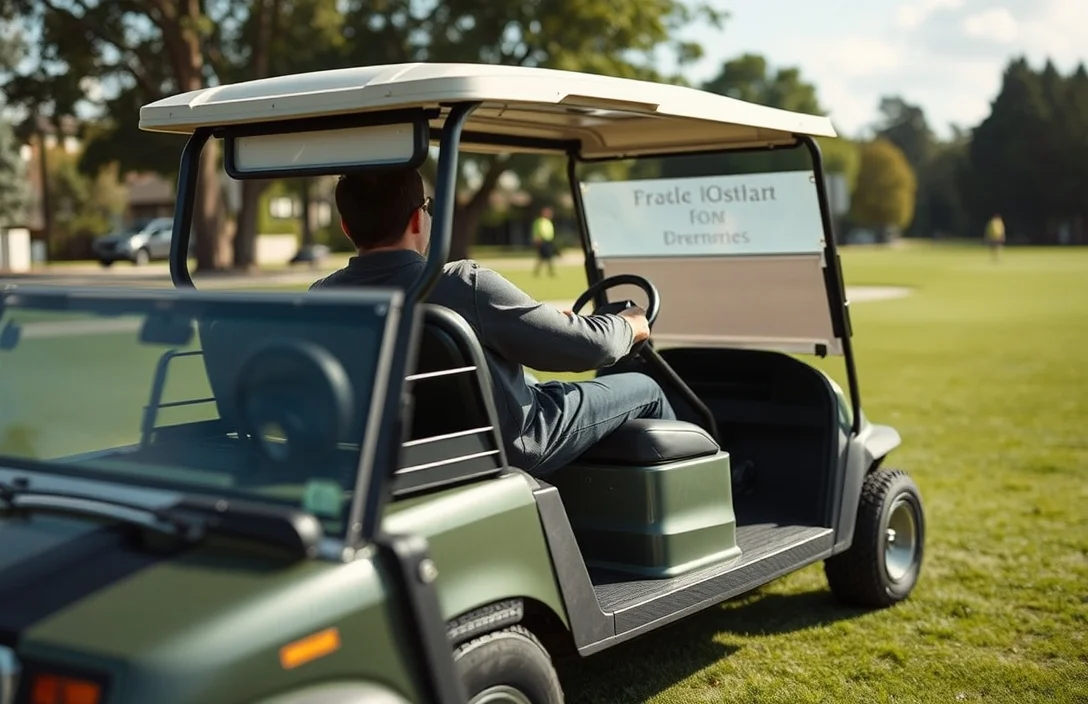
Premium golf cart batteries cost more upfront, but their long life and lower maintenance can reduce the total ownership cost over the cart’s lifetime. If sizing and charging are matched to the pack, these premium options often deliver a lower cost per year despite the higher purchase price.
Warranty terms and service coverage are a key part of total ownership cost. Look for long, clearly defined coverage that matches the pack’s expected life and check what voids coverage, such as improper charging or installation, may trigger.
Maintenance requirements vary by chemistry. Flooded lead-acid needs regular fluid top-offs, cleaning terminals, and periodic equalization charges. Sealed alternatives reduce liquid handling but still require periodic checks of connections and charging equipment to ensure the BMS and wiring stay healthy.
Replacement cycles depend on chemistry and usage. Premium lead-acid packs often reach the end of useful life in roughly 4 to 8 years under typical cart use. Premium LiFePO4 packs commonly extend well beyond 8 years and can exceed 12 years with moderate cycling, depending on heat and depth of discharge.
Ancillary costs include charging hardware and potential upgrades. A LiFePO4 pack usually requires a compatible charger and a functioning BMS, whereas some lead-acid solutions work with standard chargers. Installation labor, disposal fees at end of life, and occasional module replacements add to the long-term spend.
| Cost/ownership factor | Premium lead-acid | Premium LiFePO4 |
|---|---|---|
| Upfront cost relative to standard packs | Lower upfront, but higher replacement frequency | Higher upfront, but much longer life |
| Warranty length and coverage | Typically shorter, 3 to 5 years; coverage varies | Often longer, 8 to 10 years; clear capacity retention terms |
| Maintenance cost per year | Moderate due to fluid checks and equalization if flooded | Low; minimal upkeep beyond periodic checks |
| Replacement cycle (years under normal use) | 4 to 8 years | 8 to 15+ years |
| Ancillary costs (charger, BMS, installation) | Standard charger usually OK; minimal additional parts | Requires compatible charger and active BMS; higher setup costs |
| Estimated total cost of ownership over 8-12 years | Higher replacement rate raises total costs | Potentially lower total when counting fewer replacements |
Buying checks and fit
Premium golf cart batteries cost more upfront because higher quality materials and longer cycle life demand premium pricing. Prices vary by system voltage and chemistry, so calculate per-volt or per-Ah when comparing. Always verify charger and cart compatibility before buying.
For example, upgrading a 48V LiFePO4 pack requires a charger with a LiFePO4 charging profile and an appropriate BMS connection.
In practice, a mismatch can lead to charging faults or reduced life unless the system is designed to work together.
Compatibility is the core of a hassle-free replacement. Match voltage, chemistry, and charging profile to avoid safety risks and warranty issues.
| Check | Lead-acid / AGM / Flooded | Premium Li-ion (LiFePO4 etc.) |
|---|---|---|
| System voltage | 6V, 8V, or 12V per cell; total system varies | Commonly 48V or 36V in golf carts |
| Label clarity | Voltage, Ah, and date code usually listed | Voltage, Ah or kWh, chemistry, BMS requirements |
| Maintenance | Watering required for flooded types; AGM minimal | Low maintenance, relies on BMS monitoring |
| Warranty | Often 12 – 36 months | Typically 2 – 5+ years with cycle-life claims |
| Safety marks | UL/CE common on reputable brands | UL/CE and transport certifications usually present |
Keep a simple purchase dossier: note the cart model, voltage, pack size, and the dealer’s return policy. This helps ensure you buy a compatible, reliable replacement rather than chasing a bargain that won’t fit or perform as expected.
Safety, charging, and care
Premium golf cart batteries cost more upfront than standard options, especially lithium-based packs or high-capacity AGM variants. Their higher price reflects energy density, safety features, and longer cycle life, but long-term ownership can be lower if you charge properly and replace less often.
Quick Summary
Premium golf cart batteries cost a wide range depending on chemistry and capacity, so expect a broad price span.
Frequently Asked Questions
Question 1?
You can ensure compatibility by matching the cart’s voltage and connector type; premium packs commonly come in 36V or 48V configurations, and the label should show voltage, capacity, and terminal type. Matching voltage and connectors is the single most important factor for avoiding extra costs.
Question 2?
Premium golf cart batteries with better heat management and a robust BMS stay cooler during use, which can reduce wear. Keep charging within the recommended temperature range (roughly 15 to 25 C for optimal performance).
Question 3?
Longer runtime is a common reason to pay more, but actual gains depend on your load and terrain; in typical use LiFePO4 packs can deliver about 20-40% more usable energy per charge than standard lead acid packs. Expect a 20-40% runtime improvement as a realistic target.
Question 4?
Safety features like a built in BMS and thermal sensors add to the cost but protect the pack and cart electronics. Look for a BMS with overcharge, overdischarge, and short circuit protection and verify it is rated for your chemistry.
Question 5?
Buying mistakes often blow up total cost: buying too small a capacity, ignoring cycle life, or mismatch in chemistry and voltage; for example, choosing a premium pack with only 60% of required runtime means you will replace sooner. Plans that consider replacement timing and total cost of ownership save money in the long run.