

Golf Cart Battery Core Charge Explained
Know this up front: the core charge is not a battery performance spec, it is a refundable deposit that affects your upfront cost. The single spec that matters most is the return window for the core and the amount of credit offered. A common mistake is buying without checking the core policy or returning the core late. The first label to verify is the ‘Core Charge’ line on the receipt or product page and its 30 day return window.
golf cart battery core charge explained: A core charge is a refundable deposit charged when you buy a new lead-acid golf cart battery; you recover it by returning the old battery core. Refund windows vary, but many sellers honor the credit within 30 days of purchase; the amount depends on the battery size.
golf cart battery core charge explained basics

The core is the used golf cart battery you trade in when you buy a replacement. It provides a salvage or recycling value to the seller, independent of the new battery’s charge level or performance. The core charge is a refundable deposit tied to that traded-in unit, not a measure of how full the new battery happens to be.
Core charge vs state of charge
State of charge is the current energy remaining, shown as a percent of the battery’s rated capacity. Core charge is a refundable deposit tied to the old core, not a measurement of energy. On invoices or spec sheets you typically see SoC as a percent or estimated runtime and core charge as a dollar amount to be refunded when you return the core.
| Item | What it means | Decision impact |
|---|---|---|
| SoC | Current energy left as a percent of capacity | Guides when to recharge and expected run time |
| Core charge | Refundable deposit for the old core | Affects upfront cost and return requirements |
Core charge in golf-cart purchases
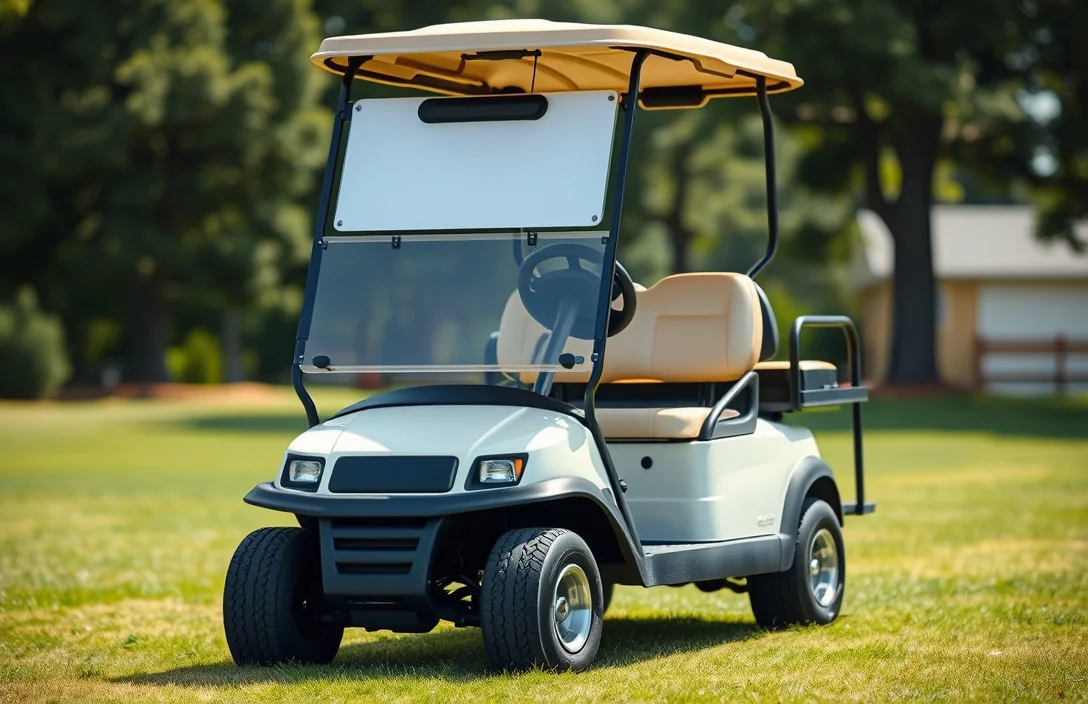
Core charges are added at purchase when a retailer wants your old battery or battery pack returned, then credited after you hand it in. This keeps the selling price lower up front, but you should plan for the return process (shipping, pickup, or drop-off) to get the credit.
When a core charge is added
Core charges are typically triggered when you buy a new replacement battery for a golf cart, especially when the seller offers a “exchange” program. The receipt should show the charge as a separate line item from the battery price so you can see exactly what gets credited later.
Core charges can apply to whole battery units (for example, lead-acid carts using exchange programs) and sometimes to packs that are eligible for refurbishment. The key is return eligibility, which depends on whether your old battery meets the seller’s condition requirements, serial number matching rules (if any), and whether the retailer can safely accept it.
Core charge billing usually looks like this:
Refund timing and conditions
Refund timing is usually measured in processing days after the return arrives, not after you buy. The most common delays come from missed deadlines, shipment issues, or condition disputes when the old battery fails the acceptance criteria.
Condition rules are strict for safety and recycling: sellers generally reject cores that are damaged in ways that make them unsafe to handle (for example, cracked cases, leaking electrolyte, severe swelling, or missing components). If the old battery is accepted but arrives late, the seller may still refund at a reduced rate or deny the credit, depending on their policy.
How to verify the core charge on your receipt
Receipt verification is a quick way to avoid surprises. Check for a separate line item labeled something like “core charge,” “battery core,” or “core deposit,” and confirm it shows an amount different from the battery purchase price.
For verification, scan for these details on the receipt or email confirmation:
If the receipt has a core charge but you see no return instructions or deadline terms, contact the seller before dropping the old battery off. Waiting until after the return is sent can turn a simple exchange program into a dispute over eligibility.
Battery capacity and run time
A golf cart’s pack capacity is usually rated in amp-hours (Ah) at a nominal voltage, which you can convert to watt-hours (Wh) by multiplying Ah by volts. Watt-hours is the energy budget that more closely predicts run time.
In practice, actual runtime depends heavily on how hard the cart works (speed, hills, acceleration) and how efficiently the drive system converts battery energy into motion.
Amps-hours (Ah) tells you current for a duration under a specific test condition, while watt-hours (Wh) tells you energy stored.
For example, a higher voltage pack can deliver more power at the same current, and it also changes how current and heat behave in the controller and wiring. When you compare packs, Wh is the more apples-to-apples number because carts draw power (watts), not just current.
Load, efficiency, and why runtime shrinks fast
Golf carts experience high and changing loads, so runtime is not linear. Climbing a grade, running at higher speed, and quick acceleration all raise average power draw (watts). Higher draw increases internal losses (heat inside the cells and voltage sag across cables, controller, and connections), which reduces effective Wh available to the motor.
Battery chemistry and age change how much energy you can pull before voltage drops too far.
For instance, a worn pack may still show good “capacity on paper,” yet it hits the cart’s cutback sooner because cell resistance rises. Cold temperatures also reduce usable capacity and increase voltage drop, so the cart can feel like it has less “range” even with the same stated Ah.
| Pack rating you see | Convert to | What it predicts |
|---|---|---|
| Ah at nominal voltage | Wh = Ah × V | Upper-bound energy available |
| Actual Wh delivered under load | Runtime estimate | Real-world driving time |
For a practical estimate, start with Wh, then divide by average watts after losses. If a pack is rated at 48 V and 200 Ah, its nominal energy is about 9,600 Wh (9.6 kWh). If your cart averages, for example, 2,000 W and the effective usable fraction after losses and cutoff is 0.8, runtime is roughly 9.6 kWh × 0.8 ÷ 2.0 kW, or about 3.8 hours.
Estimating real-world runtime is best when you measure or verify average current during your typical route. A battery monitor can log voltage and current, letting you compute Wh used per trip and build a range expectation based on your exact driving. If you cannot measure, treat “range” claims as marketing unless they specify route profile, speed, temperature, and whether runtime is to a cutoff threshold.
Charger compatibility and connectors
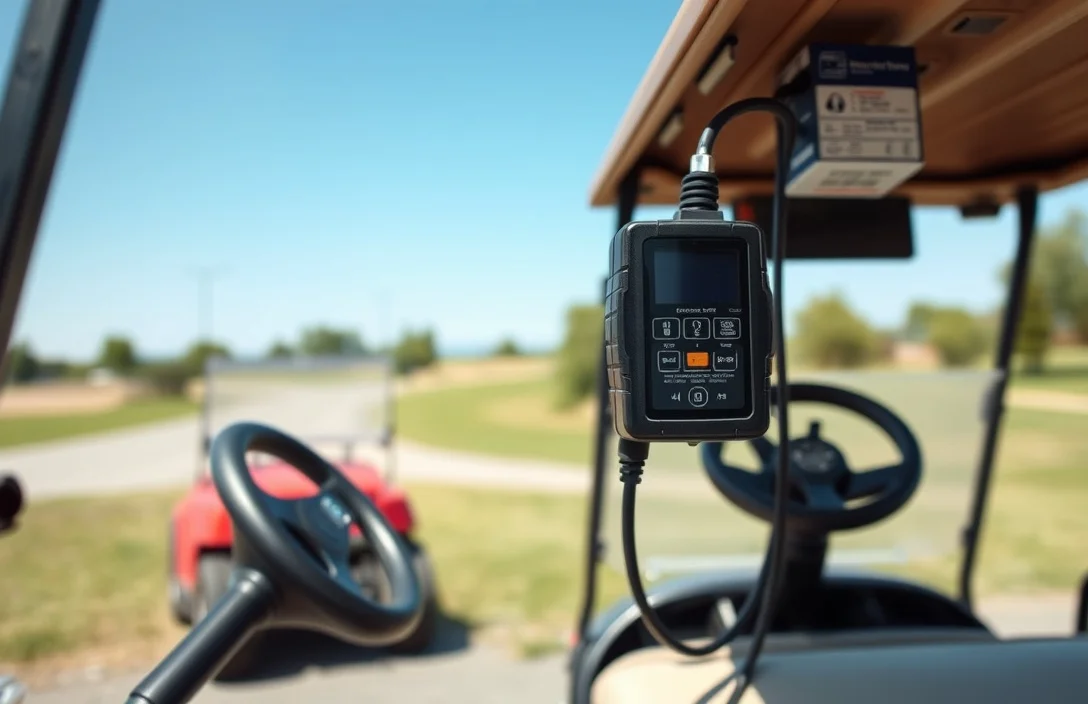
Golf cart chargers must match the pack voltage and the battery chemistry (flooded lead-acid, AGM, or lithium), because the charger controls both the voltage levels and the charge profile. Connector choice also matters, since using the wrong plug or an adapter that bypasses the cart’s charge sense can lead to incorrect charging behavior.
Pack voltage, output type, and connector reality checks
Pack voltage is the first non-negotiable spec. A “48 V” golf cart pack and a “36 V” charger are not interchangeable, even if the battery looks similar, because the charger will apply the wrong voltage targets and can overcharge or undercharge.
Connector compatibility is the second practical constraint. Many carts use manufacturer-specific charge receptacles and lead/plug styles, so verify the charger’s output plug matches the cart inlet, and confirm there is no missing interlock or charge-control lead.
Charging current and safety limits (what to check on the labels)
Charging current is controlled by the charger, and safety starts with staying within what the battery pack and the charger are designed to deliver. A charger that is rated for a much higher charge current may still “work” electrically but can force harsh conditions, higher heat, and faster wear, especially on compact or aging packs.
Safety signs are a compatibility signal in disguise. If the charger has an abnormal fan behavior, the cable gets hot quickly, or the connector shows discoloration, stop charging and re-check voltage, chemistry, and connector fit before continuing.
Chemistry-specific cautions that affect compatibility
Flooded lead-acid can tolerate some charging variation, but it still needs the correct voltage targets to avoid excess gassing and plate damage. AGM is more sensitive to overvoltage, since AGM charging typically uses different absorb and float behavior, and venting pathways behave differently.
Lithium packs require the correct charger profile and, in many systems, must obey the pack’s BMS expectations. Using a generic charger intended for lead-acid often leads to repeated BMS trips or failure to reach full charge, and it can increase risk of overheating.
| Battery chemistry | Compatibility what to verify | Main risk from mismatch |
|---|---|---|
| Flooded lead-acid | Charger is rated for lead-acid and matches pack voltage | Overvoltage can cause heavy gassing and plate wear |
| AGM | Charger supports AGM profile and matches pack voltage | Overcharge can permanently reduce capacity |
| Lithium (BMS) | Charger is explicitly lithium-compatible and matches pack voltage | BMS trips, incomplete charge, and heat from wrong profile |
Core charge note for compatibility: “Core charge” logistics often mean the battery is replaced under an exchange program. Compatibility still depends on the returned core’s chemistry and voltage, so ensure your replacement and its charger pairing are verified by the battery type, not just the nominal voltage.
Safety: heat, swelling, storage
Heat and swelling are the clearest warning signs that a golf cart battery is being abused, failing internally, or charged with the wrong conditions. Treat any rise in smell, temperature, or physical deformation as a stop-charge event, then switch to inspection and safe handling.
Overheating during charging or use usually comes from excess current, a charger mismatch, a shorted cell, or blocked ventilation that traps hydrogen gas from flooded designs. Overheated batteries lose capacity faster and can vent electrolyte, which damages terminals and nearby wiring.
Swelling is a mechanical warning, and it usually means internal damage, gas buildup, or electrolyte/pressure issues. A swollen case or raised lid is not something to “cycle out,” and attempting to continue charging increases the risk of rupture and corrosive venting.
Storage changes battery safety, especially when a battery sits partially charged for long periods. For core-charge work and returns, the safest path is to store batteries dry, cool, upright, and protected from accidental short circuits.
For example, if you notice a battery case that is warming faster than normal or a lid that appears lifted, stop the charge right away and isolate the unit. Move it to a ventilated, non-combustible area, then do a visual inspection for leaks, cracked vents, and loose cables before deciding on warranty or replacement steps.
Stop conditions: Swelling, leaking, burning smell, rapid temperature rise, or any sparking at terminals are “do not continue charging.” Let the battery cool, isolate it, and follow your battery manufacturer or service center instructions for next steps.
Troubleshooting and fit checks
Golf cart battery core charges and swaps go wrong most often because the replacement pack does not match the cart’s electrical and physical fit, or because the wrong charger is used after the swap. A quick fit and charger verification saves you from an “installed correctly” battery that still charges incorrectly (and can overheat).
Dimensions, terminals, and layout checks
Battery fit issues create messy symptoms: loose cable ends, binding covers, or a pack that sits crooked in the tray. Core charge programs often assume you return the same battery type, so mismatched posts, orientation, or hold-down style can cause refusal at return time and damage during installation.
Symptom-driven checklist helps you catch it before powering anything up.
Charger verification test (the “right charger” reality check)
Battery swaps feel plug-and-play, but chargers are the second half of the system. A charger set for a different voltage, battery type, or charging profile can overcharge or undercharge, which reduces capacity and can shorten service life.
Core charge disputes often start after a purchase, when the cart’s symptoms show up during charging. Running a controlled test with the correct charger spec prevents you from blaming the battery when the charging system is the actual mismatch.
Safety warning: Stop testing and disconnect if you see swelling, strong venting, or melting smells. Swollen cases and hot terminals are replacement triggers, not “monitor it longer” situations.
Plug-and-play vs custom fit outcomes
Plug-and-play batteries usually keep the original cable routing and use compatible terminal ends. Custom fit situations involve adapters, relocated cables, or different post hardware, which increases the chance of voltage drop and loose joints if the install is not engineered for the cart.
For core-charge exchanges, keep photos of the original battery label, terminal orientation, and the cart connection layout. If a return is rejected, these images speed up matching and reduce the chance you reinstall a mismatched pack.
Quick Summary
A golf cart core charge explained means understanding how the battery’s current state of charge affects safe, effective charging and longevity.
Frequently Asked Questions
How do I know if a golf cart battery core charge is compatible with my cart and charger?
First, confirm your cart uses a 48V system and whether it needs six 8V blocks or four 12V blocks; that determines the compatible battery core. The core charge is a refundable deposit charged by many suppliers when you buy a replacement battery, and you get it back when you return the old core.
Why does charging a golf cart battery core charge generate heat and how hot is too hot?
Heat during charging is normal to a point, but excessive heat can indicate overcharging or poor ventilation. Stop if the surface temperature reaches or exceeds 125 F (52 C) or if it remains hot after you pause charging for 15 minutes.
How does the core charge affect runtime and how can I estimate running time for a golf cart?
Runtime depends on the battery capacity in Ah and your average draw; use the formula runtime hours ≈ Ah / load current (A). For example, a 200 Ah 48V pack with a 20 A draw runs about 10 hours, approximately.
What safety steps should I take when handling a golf cart battery core charge and charging setup?
Always use a charger that matches your battery chemistry and pack voltage; ensure good ventilation and keep water levels topped for lead-acid types. Never charge a damaged battery and wear eye protection when handling fluids or venting batteries.
What buying mistakes should I avoid when replacing golf cart batteries to manage core charge and long term cost?
Don’t overlook the core charge policy or return conditions when buying a replacement battery. Most lead acid golf cart batteries last 3-5 years, so plan for replacement cycles and compare total cost rather than upfront price.