
Cost Of A Complete Golf Cart Battery Pack
A “complete” golf cart battery pack price can swing wildly because the pack cost depends more on voltage and battery type than on brand. Before you chase numbers, check one spec on the cart or charger label: the pack voltage (most commonly 36V or 48V). A common mistake is buying the right-looking batteries at the wrong voltage, then paying again for an incompatible charger or wiring.
Cost of a complete golf cart battery pack usually comes down to battery type and total pack voltage (often 36V or 48V). With lead-acid or lithium options, expect the total to vary a lot by capacity and whether you also need a matching charger. Current exact pricing changes by store and battery brand, so verify the cart’s voltage first.
cost of a complete golf cart battery pack
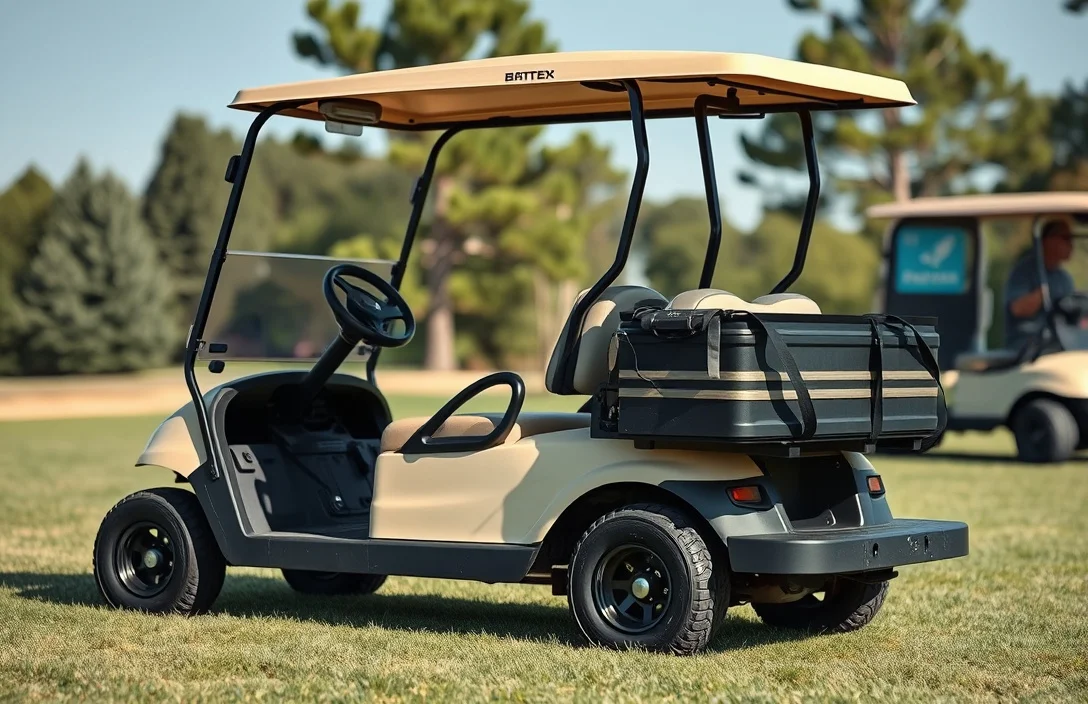
Complete pack composition includes the cells, a robust enclosure, a battery management system, interconnect cables, terminal hardware, fuses, and a compatible charger. The price reflects not only raw materials but how the pack is built to survive vibration and weather exposure. A true complete package often includes installation hardware and safety documentation, with options ranging from basic kits to fully integrated modules. The core fact is that cost scales with chemistry, voltage, and capacity, and whether professional installation is included.
Key price drivers start with chemistry because it governs material costs and cycle life. Lead-acid options are cheaper upfront but heavier, shorter lived under high-use conditions, and require regular maintenance such as water topping and equalization charges; lithium options cost more at purchase but deliver longer life, higher energy density, and lighter packs with faster charge capability. Pack voltage and capacity set the overall scale, since higher voltage or larger capacity requires more cells, bigger wiring, higher current capacity in the charging system, and often more sophisticated cooling. A built‑in battery management system adds safety and monitoring features, which increases cost but lowers risk of overcharge, deep discharge, and thermal runaway while enabling buy-and-forget operation.
| Component / Cost Driver | Role | Typical Cost Impact | Notes |
|---|---|---|---|
| Cell chemistry | Types like lead-acid (flooded/AGM) vs lithium (LiFePO4) | Low to High | Cheaper upfront for lead-acid; higher upfront for lithium but longer life in high-use scenarios. |
| Nominal voltage | Pack voltage (36V, 48V, 72V are common) | Medium to High | Higher voltage needs compatible chargers and wiring; affects overall energy cost per mile. |
| Capacity (Ah) | Energy storage capacity of the pack | Medium to High | Larger capacity increases energy available but raises cell count and wiring needs. |
| Battery management system (BMS) | Monitoring, protection, balancing | Medium to High | Core safety feature; higher-end BMS adds cost but improves longevity and safety. |
| Enclosure and mounting hardware | Casing, bus bars, cables, fuses | Low to Medium | Quality builds reduce leakage risk and simplify installation. |
| Charger (included or not) | Charging hardware compatible with pack | Medium to High | Smart, fast chargers cost more but improve charging safety and efficiency. |
| Installation / integration | Wiring, mounting, cart integration | High | Professional installation adds cost but reduces risk and ensures correct operation. |
| Brand and warranty | Support, replacement terms | Medium to High | Better warranties and widely supported brands cost more upfront but can save on downtime. |
| Thermal management | Cooling features for high drain use | Low to Medium | Important for high-drain lithium packs; adds cost if included as standard. |
Enclosure quality, interconnects, and mounting hardware influence reliability and installation labor, while the charger quality and whether you hire installation services push total outlay up or down. Brand reputation and warranty terms affect price through support expectations and risk mitigation, with reputable manufacturers offering longer warranties and better service. Taken together, the cost picture favors a balanced choice: prioritize reliability and safety for frequent use or heavy load scenarios, but avoid paying a premium for features that do not match your typical duty cycle. If you plan to upgrade later, consider modular options that let you swap in higher capacity packs without replacing the entire system.
In practice, compare quotes for 36V and 48V configurations, and ask what is included in the complete package. Evaluate total cost of ownership by considering cycle life, maintenance, and replacement intervals. When in doubt, choose a reputable brand with solid warranty and a clear installation plan.
Battery types and price bands
Lead-acid packs usually cost the least upfront, while lithium packs cost more upfront but often spread that cost over more years. AGM is priced higher than flooded lead-acid, but it typically sits below lithium in total pack cost.
Cost comparisons stay messy because golf cart pack pricing depends on voltage, cell count, brand, warranty terms, and whether the purchase includes cables, terminals, and a matching charger. Since live price data is not available here, use price bands as decision ranges, then confirm current street prices from local dealers or reputable online sellers for the exact pack spec on your cart.
Core chemistry trade-offs
Lead-acid (flooded) packs are the budget option, and they often tolerate basic charge voltages well when maintained. Flooded lead-acid needs periodic water checks, corrosion control, and ventilation, so labor and replacement due to neglect can raise the true lifetime cost.
AGM lead-acid packs cost more than flooded units because they are sealed and have different internal construction. AGM can reduce maintenance and can be more convenient in carts that run in tight spaces, but it still wears out from repeated deep discharge and aging, so cycle life depends heavily on how you charge and discharge.
Lithium packs cost more for the cells plus the battery management electronics, usually requiring a charger profile that matches lithium chemistry. Lithium typically needs the correct BMS, safe wiring, and charger compatibility, and cheap “universal” chargers can cause premature failure or safety trips if their output is wrong.
| Battery chemistry (common cart options) | Typical upfront cost level | Main cost drivers over time | What to verify before buying |
|---|---|---|---|
| Flooded lead-acid | Lowest | Water/maintenance, corrosion, more frequent replacement if discharged deeply | Correct pack voltage, charger output profile (lead-acid), terminal hardware condition |
| AGM lead-acid | Mid | Higher replacement price than flooded, charge settings still matter | Charger compatibility for AGM, ventilation requirements per manufacturer |
| Li-ion (lithium pack with BMS) | Highest | Charger compatibility, wiring quality, potential earlier loss of value if BMS rules are ignored | Exact chemistry type, BMS voltage limits, charger profile agreement, fuse and cable specs |
Price spread and total cost of ownership (TCO)
Battery packs often look like a single purchase, but total cost includes the charger upgrade and any maintenance you can’t avoid. Flooded lead-acid can win on first cost, then lose if you routinely run them low, skip water, or deal with terminal corrosion from high current connections.
AGM can reduce maintenance and keep performance steadier in day-to-day use, so it can win TCO when you want “less fiddling” without paying lithium pricing. Lithium can win TCO when the cart cycles a lot over multiple seasons, but only if you match the charger to the pack and you keep the wiring and charging practices within the manufacturer’s limits.
For a realistic decision, price each option as a complete system: battery pack plus the charger that is explicitly compatible with that chemistry and your cart’s voltage. Then budget for maintenance where it applies (flooded lead-acid) or for careful setup quality (lithium wiring and protection).
Pack configurations and capacity
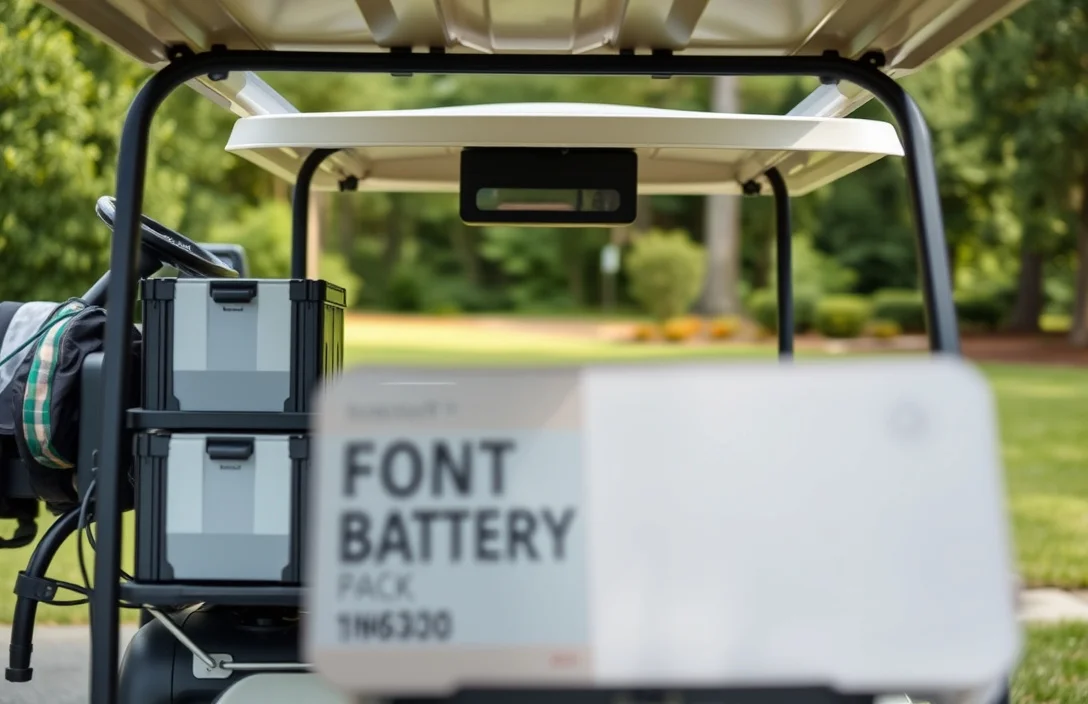
Golf cart packs are sized by system voltage (for example 36V or 48V) and capacity in amp-hours (Ah). Capacity, combined with how hard you drive and how much energy you spend per trip, is what drives expected runtime more than marketing labels. For shopping toward the cost of a complete pack, voltage plus total Ah tells you how many cells you are actually paying for.
Voltage: what the cart is expecting
Golf carts commonly use 36V or 48V electrical systems, and the battery pack voltage must match the cart’s controller and battery compartment wiring. A higher voltage pack can draw lower current for the same power demand, which often helps with efficiency and heat, but it also requires correct system compatibility. Mixing voltages or using a “near match” pack is a safety risk and can damage the controller.
Battery spec sheets may list voltage per module and total pack voltage. Battery capacity is often shown as a total Ah rating for the whole pack, which makes comparisons easier than counting modules one by one.
Pack capacity is usually written as:
| Spec | What it means for runtime | What to check on the label |
|---|---|---|
| Voltage (V) | Determines system power level and compatibility | Pack voltage (for example 36V, 48V) |
| Amp-hours (Ah) | Indicates stored charge, higher Ah usually means longer runtime | Total Ah for the full pack, not per cell |
| Watt-hours (Wh) | Better predictor of usable energy, especially across different voltages/chemistries | Wh rating if provided (often from battery maker or datasheet) |
Capacity vs expected runtime (what changes)
Capacity in Ah is an upper bound on energy storage, but runtime depends on how much of that energy you can use safely.
For example, heavy acceleration, steep hills, cold weather, and running accessories all raise power draw and shorten time on a charge. Charger settings, how fully you recharge, and how much capacity the battery retains as it ages also shift real-world runtime.
Common buying mistakes show up when the pack listing mixes “per module” capacity with “total pack” capacity. Another common issue is assuming two packs have the same runtime because the voltage matches, when the Ah or Wh totals are different.
Charger compatibility and ports
Golf cart batteries require a charger that matches the pack voltage and the charge method the chemistry expects, and it must work with the pack’s BMS or charging leads. Mismatches can cause slow charging, premature battery wear, or repeated protective shutdowns. Use the battery label and the charger nameplate as the deciding documents, since port shape alone can hide incompatible voltage or current limits.
Matching charger voltage, current, and BMS integration
Pack voltage is the first gate: check how many cells are in series (often written as total volts) and confirm the charger output voltage range on its spec plate. Next, check the charger’s output current rating (amps) and make sure the battery system supports that rate, either through BMS settings or an approved charge profile.
For lithium packs, the BMS often decides what “charging” means through connection points and the charge algorithm. The charger may need to connect through a dedicated charge port with the right pinout or via manufacturer cables, because the BMS can block charge if temperature, cell balance, or fault flags are active.
Port types and what they imply (AC input vs DC output vs control)
Charger ports fall into three roles: AC input to the charger, DC output from the charger to the pack, and sometimes a separate control or sense connection. The most common mismatch is assuming a plug shape guarantees compatibility; the correct voltage and pin function matter more than the connector appearance.
For lithium packs and smart chargers, port wiring can include temperature sensing, enable lines, or communication through a proprietary harness. For flooded or lead-acid systems, a charger may rely on the battery’s voltage only, so the connector style and polarity are still critical, but the BMS layer is often absent.
| Port/connection role | What to check | What goes wrong when mismatched |
|---|---|---|
| AC input | Charger input voltage/frequency rating | Charger fails to start or is damaged |
| DC output | Charger output volts/amps, polarity, connector current rating | Slow charge, BMS trips, overheating at the connector |
| Sense/control leads | Temperature sensing, charge enable, any BMS harness pins | Charger starts then stops, pack faults, or unsafe charging prevention |
Practical buying check: if the seller lists a “compatible charger” but does not state pack voltage, charge method (lead-acid vs lithium profile), and any BMS/charge-port requirement, treat it as incomplete and verify with the battery or cart manual.
Safety and health signals

Heat damage is one of the fastest ways a golf cart battery pack loses capacity, and it can also create conditions that make packs vent, smell, or swell. Swelling, leaking, or a crackling sound are immediate stop signs because they usually indicate internal failure or abnormal charging behavior.
Heat effects on packs
Battery packs generate heat during charging and heavy discharge, and repeated overheating accelerates plate corrosion, separator breakdown, and electrolyte loss. A pack that feels hot to the touch, or that warms unusually fast during charging, often has a bad cell, a loose connection, or a charger that is out of spec for that chemistry and battery type.
In practice, heat issues can also look “normal” at first, then escalate quickly. If you notice strong odor (especially chemical or sweet scents), listen for hissing, or see discoloration around terminals, stop the session and let the pack cool in a ventilated area.
Swelling warning signs
Swelling is a physical symptom, and it is the clearest “do not continue charging” indicator. Swelling can come from gas buildup (often tied to overcharge or internal short), electrolyte expansion, or damage from freezing and then thawing.
For golf cart packs that use sealed modules, swelling may be subtle at first, showing up as a raised end cap or tight labels that start to wrinkle. For flooded packs, swelling can occur alongside abnormal bubbling during charging.
Storage and idle guidelines
Long storage is safest when the pack is kept in a cool, dry location and at a state of charge recommended for that battery type. Extreme temperatures speed aging, while high charge during storage increases the risk of heat buildup if connections loosen or if the pack is stored in a warm space.
Idle periods are also when connection problems appear. Check the pack for loose fasteners, frayed cables, and corrosion before storage, because intermittent resistance can cause localized heating even when the cart is not running.
Stop-use rule: If the pack is hot to the point of discomfort, smells unusual during charging, shows swelling, leaks, or hissing, discontinue use and have it inspected. Replacing one bad module is often safer than continuing with a compromised pack.
Replacement triggers and lifecycle
Golf cart battery packs usually fail gradually, then suddenly when internal resistance rises and one group collapses under load. Replacement is mainly triggered by capacity loss you can measure (run time and voltage sag), plus heat or damage that signals cells are no longer safe. Battery lifecycle claims like “X cycles” are only a guideline because real use (depth of discharge, heat, charge habits) can swing outcomes widely.
End-of-life indicators
End-of-life signs show up as performance collapse before the pack fully “dies.” Track how far you can drive on a full charge, and watch battery voltages under load, since weak cells drop faster and can drag the rest of the pack down. If you see uneven behavior between battery groups (for example, one set gets hot sooner), plan for a pack-level replacement or a qualified diagnosis.
Expected cycle life ranges
Cycle life is the number of full charge and discharge cycles a battery can handle before capacity falls to a usable threshold. The big trade-off is that deeper discharges reduce cycle life, and high heat accelerates aging. For cost control, plan for lifecycle targets based on your typical depth of discharge and operating temperature, not on ideal lab assumptions.
For example, a battery marketed with a high cycle count may not deliver it if you regularly drain it deeply or leave it sitting hot while partially charged. Flooded lead-acid packs often last longer when you maintain electrolyte levels and avoid chronic undercharging, while AGM and lithium systems have different failure modes and may show early capacity loss if charged incorrectly or stored outside their recommended temperature ranges.
| Battery chemistry (general) | Common lifecycle expectation | What shortens life most |
|---|---|---|
| Flooded lead-acid | Cycle life varies widely by depth of discharge and maintenance | Deep cycling, chronic undercharging, high heat, low electrolyte |
| AGM lead-acid | Often fewer cycles than lightly-used “perfect” lab assumptions | Overheating, repeated deep discharge, wrong charge profile |
| Lithium (with BMS) | More consistent than lead in many real-world uses, but still sensitive to heat and charge behavior | High temperature, out-of-range charging, repeated high-rate abuse |
Practical rule: Treat cycle-life marketing numbers as “best-case ceiling,” then adjust for your actual routine. If you want to predict replacement timing for budgeting, base it on your observed run-time trend over months and your hottest operating conditions.
Buying checks and install fit
Golf cart battery pack cost only makes sense when the new pack matches the cart’s electrical system and physical layout. Fit problems can force wrong voltage configuration, missing battery hardware, or unsafe charging connections. Use the checklist below before you buy, even if the listing looks like a direct replacement.
Vehicle compatibility checks
Golf carts usually require a specific pack voltage and connector style, even when listings claim “fits many carts.” Confirm the pack voltage on your cart’s battery compartment label or the charger/manual spec, then match the replacement pack voltage and the number of series cells/modules. Also verify your cart charger output rating matches the pack chemistry and voltage you are installing.
For example, a cart that was built around a 36 V pack will use many parts differently than a 48 V build, even if the physical battery boxes look similar. Mixing voltage or using a charger intended for a different chemistry is a fast path to overheating and reduced battery life. Keep your buying decision tied to what is printed on your cart and charger nameplates.
Warranty, service, and “what you can’t see”
Battery packs can be expensive, so warranty terms matter more than the lowest sticker price. Confirm the warranty covers the pack as installed, includes shipping or service rules (if any), and spells out what voids coverage, like tampering with the BMS or using an incompatible charger. If the seller says “works with any charger,” treat it as a warning sign unless the chemistry and voltage are explicitly matched.
Service access is often the hidden cost. Check whether the seller provides local support, replacement sub-assemblies, or a clear RMA process, since a pack that needs troubleshooting without documentation can cost time and parts.
Mounting space and weight
Physical dimensions and weight determine whether the pack can mount securely and whether the cart’s tray and hold-downs can clamp correctly. Measure the battery bay length, width, and maximum height with the lid closed, then compare to the pack’s published dimensions. Weight also affects handling and suspension feel, especially on carts that already sit near their expected load limits.
For installation fit, plan for clearance around terminals and for routing cables away from moving parts. Avoid “stretching” cables to make connections, because that can stress lugs and increase resistance. A clean cable route also improves inspection access for future maintenance.
| Fit check | What to measure or verify | Failure risk if ignored |
|---|---|---|
| Bay dimensions | Length, width, max height, and lid clearance | Terminal contact risk, lid cannot close, crushed cables |
| Hold-down points | Tray bolt positions and strap/bus bar clearance | Pack movement, cracked connectors, intermittent charging |
| Weight and balance | Total pack mass and distribution in the bay | Unstable cart feel, premature wear on mounts |
Safety warning: If a battery pack arrives swollen, smells overheated, or shows cracked casing or damaged wiring, stop and contact the seller or service channel. Installing a compromised pack is an electrical and fire risk.
Quick Summary
The total cost for a complete golf cart battery pack varies widely, and exact prices require checking current vendor quotes.
Frequently Asked Questions
What is the rough cost range for a complete golf cart battery pack and what factors drive the price?
Prices range from a few hundred to several thousand dollars depending on voltage, chemistry, and capacity. Lead-acid packs are typically cheaper upfront than LiFePO4 options. Exact quotes vary by vendor and configuration.
How does compatibility with the golf cart’s charger and controller affect the total cost?
Voltage compatibility is critical to avoid buying a pack that will not work with your charger or controller. Make sure the pack voltage, connectors, and BMS match your cart’s specifications; mismatches can require a new charger or controller, adding cost.
How does heat affect a golf cart battery pack’s life and total cost?
Excessive heat reduces cycle life and raises replacement costs. Avoid charging or storing in direct sun, and keep the pack in a shaded, ventilated area to maintain a cooler operating temperature.
How can I estimate runtime from a charged pack without exact price data?
Runtime depends on energy capacity and how hard you use the motor. Energy capacity equals Voltage × Amp-hour, and for a 48V system a 100Ah pack stores about 4800 Wh, so a 600 W load would run about 8 hours (ignoring losses).
What are common buying mistakes that push up the cost when replacing a golf cart battery pack?
Don’t skip checking voltage, chemistry, and warranty. Verify the pack voltage matches your cart, choose the correct chemistry for expected cycle life and maintenance, and buy from reputable brands with a clear warranty to avoid hidden replacement costs.