
Average Annual Cost To Own Golf Cart Batteries: What To Expect
Power decision starts with the battery chemistry and expected life, not the upfront sticker price. The spec that matters most for annual cost is cycle life, because that drives replacement frequency. The first label to check on the pack is the voltage and chemistry, for example 48V lead-acid or 48V lithium ion. If you notice swelling or overheating, power down and review safety first.
Average annual cost of owning golf cart batteries varies widely and is not a fixed figure. Battery sets are typically replaced every 3-5 years, so annual costs depend on the purchase price and how many years you get per cycle. Expect variability based on usage, climate, and maintenance.
Average annual cost of owning golf cart batteries

Annual costs for golf cart batteries are driven mainly by replacement cadence, charging electricity, and routine maintenance, with the exact amount depending on chemistry and usage. Batteries with longer cycle life and better degradation characteristics cost more upfront but tend to lower annual expenses through fewer replacements. Budgeting hinges on how often you cycle the pack, the climate, and how well you maintain the cells.
| Cost driver | Typical annual impact (qualitative) | Notes |
|---|---|---|
| Battery replacement cadence | Low to high | Depends on chemistry and use; lithium can last longer but has higher upfront cost. |
| Charging electricity | Low to moderate | Based on daily charging needs and local electricity rates. |
| Maintenance and consumables | Low to moderate | Watering for flooded lead-acid, electrolyte tests, and periodic BMS checks for other chemistries. |
| End-of-life disposal and recycling | Low | Regional fees and recycling options influence final annual costs. |
What counts toward annual cost are the ongoing expenses tied to using and renewing the battery system. The largest share usually comes from replacing cells or the entire pack as its effective capacity deteriorates. Add in electricity used to recharge the pack after each ride, plus routine checks and minor parts that wear over time.
Assumptions for budgeting rely on typical ownership horizons and usage patterns. A common framework assumes a multi-year ownership period, moderate annual mileage, and standard charging habits, with the caveat that hotter climates accelerate degradation and colder climates affect charging efficiency. This means rough annual figures can be off if your cart sees heavy use or extreme conditions.
When costs spike you may see a shorter replacement cycle, higher maintenance demands, or unexpected disposal charges. Sudden degradation from heat exposure, deep discharges, or a faulty BMS can shorten life and force early upgrades. Planning for a buffer in the annual budget helps absorb these outliers without surprise downtime.
Capacity, wattage, and runtime
Capacity in amp-hours and watt-hours sets how far the golf cart can travel on a single charge and how often you will need to refill energy during a typical workday. A higher energy capacity increases upfront cost but can reduce the frequency of replacements and the total energy drawn on busy days, especially when you regularly operate in hilly terrain or with heavier payloads. The system voltage drives the charger needs and efficiency, which in turn affects annual electricity costs, battery heat management, and overall lifespan.
Charger compatibility and cost impact
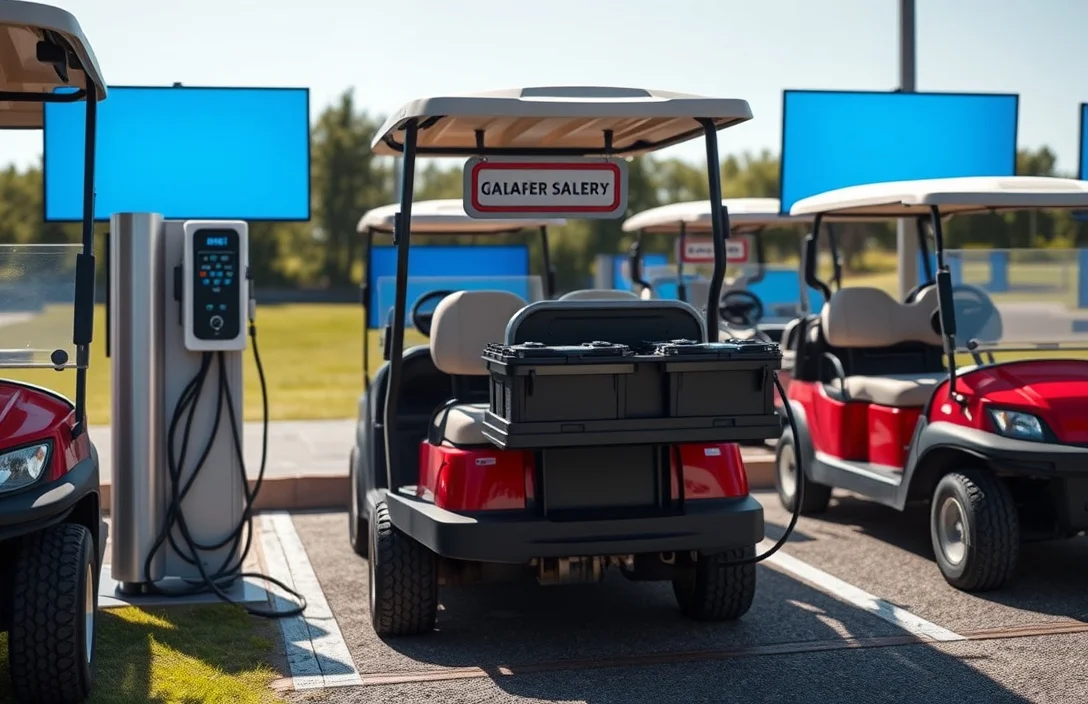
Correct charger compatibility is one of the biggest drivers of your yearly battery cost, because the wrong voltage, charge profile, or connector can permanently shorten cycle life. The charger also affects how much energy you buy from the wall, since charging losses rise when charging is inefficient or repeatedly interrupted.
Supported chemistries and connectors
Golf carts use different battery technologies, and each needs a different charging profile. Flooded lead-acid typically tolerates longer, gentler charging with water management, while AGM needs a profile that avoids excessive venting, and lithium packs require charging voltages and current limits that the battery management system (BMS) expects.
Connector standards add friction and cost because adapters and replacements are easy to underestimate. A charger built for a 36V or 48V pack and a matching plug type is usually mandatory, and using an adapter that “sort of fits” can create loose contacts, higher resistance, and extra heat. Heat at the connector is a real cost leak, it can shorten cables and it can accelerate battery degradation.
Charger wattage and charging time
Charger wattage is the main knob that determines charging time, but it is not a guarantee of lower annual cost. A higher-watt charger can reduce time-on-circuit, yet if it forces the battery into higher stress (for example, higher currents than the chemistry prefers), it can reduce total usable cycles. Charging losses also matter, because wall-to-battery efficiency is rarely perfect and inefficiency shows up as extra electricity and extra heat.
Charging behavior matters as much as charger size. Short, frequent top-ups can be fine when the charger uses a proper profile, but repeated partial charging with an incompatible algorithm can keep the battery in a suboptimal state. Interrupted charging is expensive because the battery may never reach the absorption or balancing stage it needs, which increases time-to-reach full capacity later.
Home electrical requirements
Home electrical setup affects both cost and reliability. If your charger has an undersized circuit, weak wiring, or a long, low-gauge extension cord, the charger may reduce output, run hotter, or fail to maintain the correct current. Those issues can lengthen charge sessions and increase losses, which raises the effective annual cost.
In practice, the safest “cheap fix” is using the charger as the manufacturer intended, with correct outlets and cord sizing, rather than chasing speed with risky workarounds. Swollen batteries, hot charger cases, burning smells, or arcing at connections are stop-charging signs, and continuing to troubleshoot while energized can turn a cost problem into a safety problem.
Battery types and replacement costs
Golf carts commonly run 36 V or 48 V packs, so battery chemistry and longevity drive most of the annual cost. Lead-acid options cost less upfront, while lithium tends to cost more per pack but can reduce replacement frequency. Because pricing swings by brand and capacity, treat the “average annual cost” as a budget range you compute from lifespan and today’s replacement quotes.
Lead-acid golf cart batteries are usually flooded or sealed (AGM and gel are common “sealed” choices), and they wear out faster when cycled deeply or stored discharged. Lithium packs (most often drop-in golf-cart lifepo4 designs with a BMS) tolerate more cycle use, but they still age with high heat and poor charge behavior. The key cost lever is cycle life in real use, not marketing claims, since actual daily depth-of-discharge and charger settings decide when capacity falls.
| Battery chemistry | Typical lifespan (cycles or years) | Replacement cost driver | Budget impact for annual cost |
|---|---|---|---|
| Flooded lead-acid | Often measured in “years” depending on cycling, maintenance, and discharge | Lower pack price, recurring water and corrosion related maintenance | More frequent replacements in heavy use; lower annual spend in light, well-kept use |
| AGM or gel lead-acid | Often longer than flooded under gentle conditions | Higher pack price than flooded; still declines with repeated deep cycling | Moderate replacement intervals; annual cost can look best only if charging is kept strict |
| Lithium (LiFePO4 pack) | Often expressed as higher cycle counts in published specs | Higher upfront pack cost; lower maintenance and longer replacement interval potential | Lowest replacement frequency potential, annual cost often depends on how hard you cycle and heat exposure |
Cycle life ties directly to replacement timing: a pack that reaches “end of life” sooner forces more money into the next replacement year. For lead-acid, repeated deep discharges and inconsistent charging increase sulfation and shorten usable life. For lithium, the BMS limits unsafe conditions, but sustained high temperatures and incorrect charging still shorten capacity over time.
Warranty and what it means for cost-per-year
Battery warranties can change the math, but only if you can meet the warranty conditions and match the correct charger. Look for language tied to usable capacity retention, cycle count limits, and whether time-based coverage differs from usage-based coverage. Replacement cost planning should also include what “support” costs you will still pay, such as any required charger settings changes, batteries cables or busbar inspections, and labor if you do not install yourself.
For budgeting, a practical approach is to take the cheapest reputable replacement quote you can get for your exact voltage and capacity, then divide by a realistic lifespan in your use pattern.
For example, if your current lead-acid pack is failing due to capacity drop after seasonal heavy use, the annual average cost will skew high until you reduce deep discharge or upgrade chemistry. Lithium can lower average annual cost when you cycle hard and consistently charge correctly, but it is still a higher up-front buy.
Safety, heat, swelling, and storage costs

Annual safety and storage costs for golf cart batteries come from proper charging controls, temperature monitoring, and planned disposal. Swelling, overheating, or venting can lead to safety incidents and expedited replacement needs, which raise outlays beyond routine maintenance. Investing in a basic safety setup now reduces the risk of costly failures later.
Costs scale with chemistry and usage. Flooded lead-acid systems require regular watering and terminal care, while lithium options rely on BMS monitoring and protective enclosures. Warmer climates or long idle periods increase the risk of heat buildup and swelling, which in turn pushes up annual safety and storage spend. Even when batteries are in good condition, regional disposal fees can add a predictable line item to your annual budget.
| Cost element | What it covers | Typical annual cost range | Notes |
|---|---|---|---|
| Charging safety equipment | Smart chargers with temperature and current limits, fireproof storage or mats | Low to medium: low tens to hundreds of dollars | Better control reduces thermal risk; cost amortizes over battery life |
| Temperature-controlled storage | Insulated space, thermometers, climate control if needed | Low to medium: tens to a few hundred dollars | Climate helps prevent swelling and corrosion |
| Safety PPE and spill containment | Gloves, goggles, spill kits, corrosion trays | Low: tens of dollars per year | Replace as needed; essential for handling floods |
| Battery maintenance/inspection | Terminals, water levels for flooded types, BMS checks | Low to medium: tens to hundreds | Regular checks extend life and prevent failures |
| Disposal and recycling | End-of-life disposal, recycling fees or pickup | Low to medium: tens of dollars per unit per year when amortized | Costs vary by region and battery chemistry |
| Storage space upgrades | Shelving, trays, leak containment | Low: tens of dollars one-time; annualized small | Reduces spill risk and eases inspection |
Real-world budgeting by usage
Annual ownership costs for golf cart batteries rise with how often you cycle and how long you keep them.
In practice, low-use setups incur light maintenance and less frequent replacements, while high-use fleets see accelerated wear, more frequent replacements, and greater water or electrolyte top-up needs for flooded types. The choice of chemistry matters too, as lithium options generally cost more upfront but offer longer life under heavy use.
Understanding these drivers helps estimate annual costs without exact prices. Water and electrolyte needs for flooded lead-acid add routine labor and occasional refills; sealed chemistries reduce maintenance but still wear out with cycles.
In practice, most golfers face a mix of maintenance, occasional refurbishment, and a replacement cycle that dominates the annual budget on heavier use.
Bottom line: use patterns drive when to expect maintenance and replacement, not just the sticker price. When budgeting, count not only the initial battery cost but also expected cycle life, hydration needs, and replacement timing to compare options realistically.
Quick Summary
The average annual cost of owning golf cart batteries is highly variable and depends on battery type, usage, and maintenance.
Frequently Asked Questions
How does compatibility between battery type and my golf cart affect the average annual cost?
You should align battery chemistry and voltage to your cart; incompatibility can shorten cycle life and raise replacement costs over time. Most carts use a defined voltage like 36V, 48V, or 72V, so matching the correct chemistry is essential.
How does operating temperature and heat impact the average annual cost?
Heat accelerates wear; charging at high temperatures above 40 C can shorten battery life. Keep the charging area cool and vented to reduce premature replacements.
How does runtime and usage influence the average annual cost of golf cart batteries?
Runtime drives how many charge cycles you put on the batteries; 500-1000 charge cycles is typical for lead‑acid packs, with lithium options often lasting longer. More cycles generally raise the chance of needing an earlier replacement, affecting annual costs.
What safety and maintenance steps help minimize the average annual cost?
Safe charging and regular upkeep reduce failures; check water levels monthly for lead‑acid packs and use a charger with automatic shutoff to prevent overcharge. Poor maintenance can shorten life and push up yearly costs.
What are common buying mistakes that raise the average annual cost of owning golf cart batteries?
Avoid buying batteries that are not compatible with your cart; incompatible or undersized batteries can fail early. Always verify the cart’s voltage, capacity, and chemistry before buying and avoid mixing old and new packs in the same system.