Golf Cart Battery Prices At Warehouse Clubs: What To Pay And Verify
Golf cart battery prices at warehouse clubs swing hard by voltage and brand, and the wrong battery choice is the fastest way to waste money. Before you compare stickers, check the system voltage on your cart, then match battery type and terminal layout. In the sections below, you’ll get practical price expectations, charger compatibility checks, and a safety-first checklist for charging, storing, and troubleshooting.
Golf cart battery prices at warehouse clubs usually depend most on the cart’s voltage (commonly 36V or 48V), battery type (lead-acid vs lithium), and warranty length, not the store aisle. Expect to pay more for lithium and longer warranties, while lead-acid is often cheaper upfront but needs more routine care and correct charger settings.
golf cart battery prices at warehouse clubs

Common golf cart batteries at clubs
Lead-acid options dominate club shelves in 6V and 8V configurations. Flooded varieties remain the standard due to low upfront price, while sealed AGM options appear for shoppers who want maintenance-free performance. These two families cover most golf cart batteries you’ll encounter in warehouse clubs, with clear trade-offs in cost, upkeep, and reliability.
AGM and flooded distinctions matter because they drive maintenance needs and installation considerations. Flooded batteries require periodic water top-ups and venting, while AGM cells are sealed and spill-proof, making them safer for storage and easier to swap into compact spaces.
In practice, club stores mainly stock flooded 6V and 8V packs, with a growing but smaller selection of AGM versions.
Common configurations you’ll see include six 8V batteries for 48V carts or eight 6V packs for similar voltage, plus older 36V carts that use six 6V or four 12V units. Matching the voltage and group size is essential because wrong combinations can underperform or damage the charger and controller.
Table shows quick contrasts between flooded and AGM options commonly found in clubs.
| Battery type | Common voltages | Maintenance | Pros | Cons |
|---|---|---|---|---|
| Flooded lead-acid | 6V, 8V | Water top-up required, venting | Low upfront cost, easy to source | Needs regular watering, spills/odor |
| AGM sealed lead-acid | 6V, 8V | No maintenance | Sealed, spill-proof, easier storage | Higher price, heavier |
Buying checks help you avoid misfits when shopping in club aisles.
Bottom line, price at clubs reflects the maintenance burden and the brand, so plan around your cart’s needs and your willingness to perform water top-ups or swap to a sealed AGM when convenient.
Price drivers for club batteries

Golf cart battery pricing at warehouse clubs shifts most with battery chemistry, rated capacity, and how fresh the battery is when you buy it. Brand packaging and bundle choices also change what you are effectively paying for, especially if you get a charger or installation hardware in the box.
Brand and capacity drive the biggest jump in unit cost. Higher capacity (often shown by amp-hour ratings or reserve-type specs on the label) can cost more because it contains more active material and typically gives deeper usable energy before voltage sags under load. Chemistry also matters: flooded lead-acid, AGM, and lithium-ion packs price differently, and the label terms you should compare are the voltage (for example 36V or 48V systems), capacity rating, and intended cycle use.
Age is a quiet price driver because batteries can self-discharge over time, especially when they sit before sale. Warehouse stock turnover varies by season and region, so two batteries with the same label can perform differently if one sat longer or was stored poorly. Check the date code on the case label and treat batteries with older codes as higher risk for lower performance at the start.
Warranty terms and the way the club bundles them also change the checkout total. A longer warranty usually costs more because the seller is pricing in longer expected performance under normal conditions. Bundle deals can look cheap, but the value depends on whether the included items are compatible with your system voltage and whether they are the right charger type for that chemistry.
| Price driver | What changes on the label/pack | How it affects cost | What to verify before buying |
|---|---|---|---|
| Brand and capacity | Voltage (system), capacity rating (Ah or equivalent), chemistry (flooded, AGM, lithium) | More energy and different chemistry usually raise cost | Match your cart’s required voltage and compare capacity ratings, not just “series” names |
| Age | Date code on battery case or end label | Older inventory can sell cheaper, or newer stock costs more | Choose fresher codes and avoid swollen, leaking, or crusty terminals |
| Warranty | Length of coverage and what it excludes | Longer or broader coverage increases price | Confirm the warranty aligns with your use pattern and chemistry |
| Condition | Visual inspection, terminal condition, packaging integrity | Damaged or poorly stored units may be discounted | Inspect for dents, cracks, corrosion, and overheating signs |
Condition decides whether the low price is a bargain or a problem. Look closely for cracked cases, swollen tops, wetness around vents, heavy terminal corrosion, or heat damage, since those can indicate internal issues that may shorten life even if the voltage looks okay. For any discounted unit, assume you are buying risk, and budget time to confirm basic health before you commit to a full install.
Bundle options can change price without improving performance. A “battery plus charger” kit might cost less than buying separately, but it only helps if the charger matches the chemistry and the correct system voltage. For safety and battery longevity, compare the charger output requirements printed on the charger label and ensure the kit is meant for your battery type and voltage.
Warranty and service checks
Cart-battery warranties can be strict about exact voltage, chemistry type, and whether the battery was charged correctly. Many club deals look cheaper upfront, but they can narrow coverage if you cannot document the battery’s maintenance and charger settings.
Warranty length and coverage
Warehouse clubs often sell batteries through multiple channels, so warranty terms can vary by brand, model, and packaging. Before you buy, inspect the label for the warranty period, the warranty start date basis, and what proof is required (receipt, lot number, or serial number). If the paperwork is missing or the serial number is hard to read, assume you will have a harder time with coverage later.
Coverage also depends on what failed. Some warranties cover manufacturing defects but reduce or deny coverage for cases that look like abuse, including chronic undercharging, incorrect charger voltage, or cracked cases from impact. If you see language about “proper use” or “sulfation from neglect,” treat it as a warning that light maintenance records may matter.
Return and exchange policies
Club return windows are often shorter for large battery items, and they may require the battery to be in “like-new” condition with packaging. Batteries also may be treated as hazardous goods for shipping, so returning a defective unit can be more paperwork than you expect. When pricing is tight, a short return window can be the real cost driver.
For example, if a battery fails quickly after delivery, a return may be possible only within a limited timeframe, while a warranty claim could take weeks. If the club offers an exchange instead of a return, an exchange can be faster, but it may require you to meet condition rules and bring the original receipt.
Safety note: If a battery case is swollen, leaks, or smells strongly of chemical fumes, stop handling and do not try to “test it” by charging. Contact the seller for their hazardous returns process.
| What to verify | Why it changes your outcome | Where to find it |
|---|---|---|
| Warranty start basis and term length | Determines how long you have coverage and when it begins | Warranty card, brand site, or in-box paperwork |
| Pro-rated vs non pro-rated coverage | Changes claim value if you replace mid-cycle | Warranty terms page |
| Return window for opened or installed items | Decides whether you can return quickly or must claim later | Warehouse club return policy |
| Exchange process and paperwork | Controls speed if the battery is defective | Customer service policy and receipts rules |
Charger compatibility at clubs
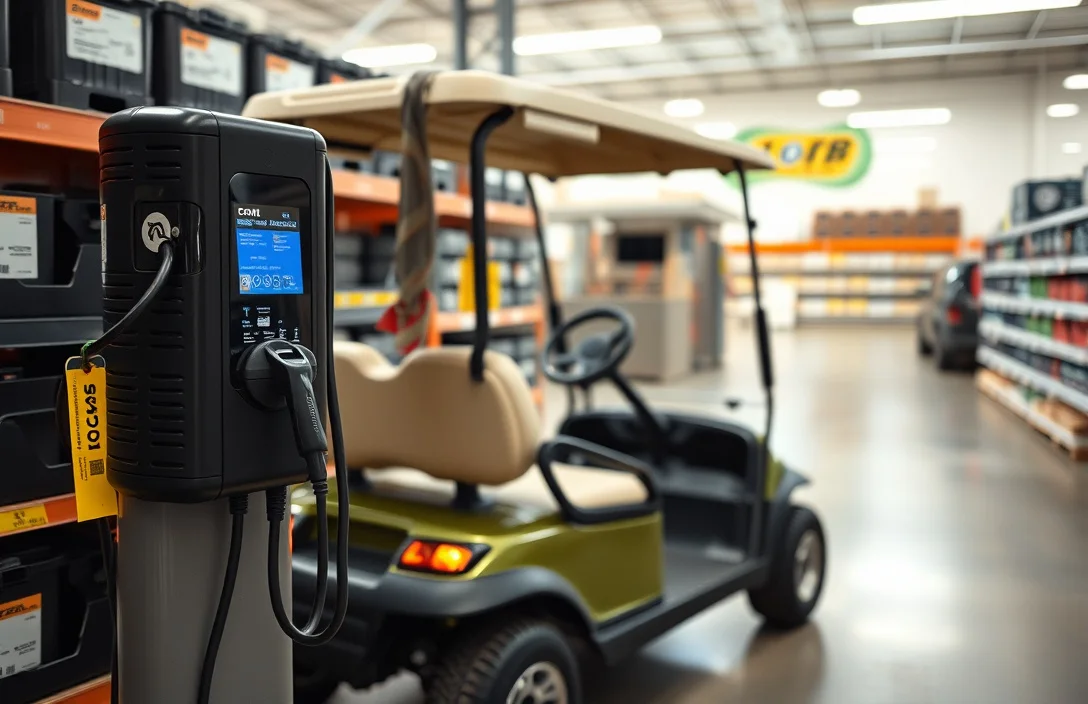
Charger compatibility starts with matching the cart’s battery system voltage and the battery’s chemistry. A charger rated for 36V or 48V must align with the pack, and the charging curve must suit the battery type to avoid under or overcharging. If either spec is off, performance, cycle life, and safety can suffer.
- Practical checks before use. Inspect the charger label for voltage and current ratings, and inspect the battery for swelling or damaged cables. When testing, monitor temperature during a slow, supervised charging session and unplug if you notice anything abnormal or unfamiliar smells.
Smart buying checks
Prices vary widely by region and stock, so confirm the exact configuration and price before buying. Common options at clubs are flooded lead-acid batteries in 6V or 8V sizes and some 48V packs; verify voltage and capacity to match your cart. Check the warranty terms and whether a transfer is possible if you’re buying used or reconditioned.
| Verification item | What to check | Why it matters | How to verify at the club |
|---|---|---|---|
| Voltage | Match your cart specification (6V/8V or 48V) | Wrong voltage prevents proper fit or operation | Read the label or ask the staff to confirm SKU |
| Capacity (Ah) | Label shows Ah rating; compare to OEM spec | Higher capacity can extend run time but may cost more | Check label and compare with cart manual or dealer spec |
| Chemistry | Flooded lead-acid, AGM, or gel | Charging requirements and ventilation differ | Label will state chemistry; ask staff if unsure |
| Age and warranty | Manufacture date and warranty period; transfer rules | Older batteries lose capacity; warranty coverage matters for future replacement | Ask for date code and policy, get it in writing |
Safety note: Do not buy batteries with signs of swelling, leaks, or strong fumes. If in doubt, walk away and seek a fresh unit with clear warranty terms.
Quick Summary
Warehouse clubs offer competitive pricing on golf cart batteries, but price varies by voltage and cart compatibility.
Frequently Asked Questions
How do golf cart battery prices at warehouse clubs vary by voltage and group size, and how do I pick one that fits my cart?
You can start by checking your cart’s label for the required voltage (usually 6V or 8V) and the proper group size. 6V or 8V are common formats at warehouse clubs, and mismatching can lead to charging issues or fit problems.
Do warehouse club golf cart batteries tend to get hot in use, and how does price relate to safety and heat tolerance?
In hot environments, high temperatures can shorten a lead-acid golf cart battery’s life, so avoid leaving batteries in direct sun or a hot trunk. Prices vary by brand and rating, but safety and proper venting should guide your choice over cheapest options.
What affects runtime when buying golf cart batteries at warehouse clubs, and how does price relate to capacity?
The run time depends on the battery’s amp-hour rating and the cart’s load; when you compare options, compare the labeled Ah and ensure it matches your current pack. Ah rating is the best proxy for longer run time, but battery condition and cart efficiency matter too.
What safety issues should I watch for when buying golf cart batteries at warehouse clubs, and can price indicate safety risk?
Look for signs of damage like bulging, cracks, or leaks; bulging or leaking indicates a failed cell and should not be used. Also verify warranty terms and club return policies before purchasing to avoid unsafe units.
What are common buying mistakes at warehouse clubs for golf cart batteries, and how should I time replacement or avoid overpaying?
Avoid mixing old and new batteries in the same pack; if one cell fails, consider replacing the entire 6V or 8V pack to prevent imbalance. replace the entire pack when one cell fails to maintain balance and reliability, and always check the club’s warranty and return policy to avoid overpaying.