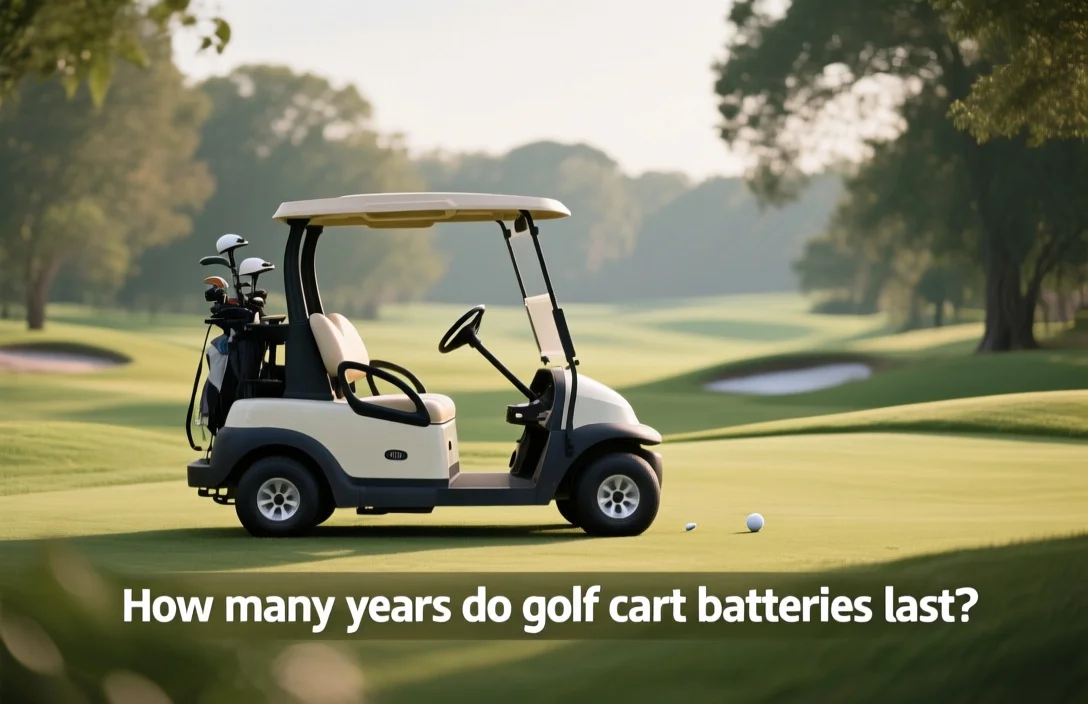
How many years do golf cart batteries last?
Golf cart batteries typically last multiple years, but the single spec that matters most is the battery chemistry and its cycle rating. Many owners make the mistake of using the wrong charger or leaving batteries discharged. First check the battery label for chemistry and nominal voltage, then confirm your charger’s output voltage and charge profile setting.
Golf cart batteries typically last 3 to 6 years for flooded lead-acid, 5 to 8 years for AGM or gel, and about 8 to 12 years for lithium iron phosphate. Actual life depends on cycle depth, charging quality, and temperature management.
Lifespan by battery type
Golf cart battery life depends heavily on chemistry and how the batteries are used: flooded lead acid typically lasts about 3 to 6 years, sealed AGM or gel usually falls in a similar or slightly wider band, and modern lithium iron phosphate cells often last 8 to 15 years or longer. These ranges are typical, not guaranteed, because cycle count, depth of discharge, temperature, and charging habits change real world life substantially.
Flooded lead acid batteries are the classic choice and often show 3 to 6 years of useful service under normal use. Failure modes are usually plate sulfation from chronic undercharging, water loss and exposed plates from overwatering or gassing, and eventual capacity loss; when one cell fails the whole battery string shows reduced range.
Sealed AGM and gel batteries behave similarly to flooded types on capacity but handle maintenance differently, since they recombine gases or are sealed. AGMs tolerate higher charge rates and vibration better, and gels resist deep discharge abuse, but both still lose capacity from repeated deep cycles and high heat, so lifespan commonly overlaps with or slightly exceeds flooded under good care.
Lithium iron phosphate, LiFePO4, is a different class: it can accept many more cycles and usually keeps usable capacity far longer. LiFePO4 packs used in golf carts often reach several thousand cycles and can translate to 8 to 15 years of calendar life in normal conditions, but that depends on battery management system settings, charge current, and operating temperature.
| Chemistry | Typical years | Typical cycle range | Common failure modes |
|---|---|---|---|
| Flooded lead acid | 3 – 6 years | 200 – 1,000 (depends on depth of discharge) | Sulfation, water loss, plate degradation |
| AGM / Gel (sealed) | 3 – 7 years | 300 – 1,200 | Capacity fade from deep cycles, heat-related loss |
| LiFePO4 (lithium) | 8 – 15+ years | 1,000 – 5,000+ | BMS trip, cell imbalance, heat stress |
Real world use usually shortens published numbers: deeper daily discharge, fast charging at high temperatures, poor equalization or lack of watering for flooded cells, and long storage at partial charge all reduce lifespan compared with factory cycle claims.
Safety note: replace any battery that is swollen, overheating, leaking, or shows rapid capacity loss, and verify charger compatibility before switching chemistries. Always confirm cycle life and warranty terms on the manufacturer datasheet when choosing batteries for a golf cart.
What shortens lifespan?
The biggest killers of golf cart battery years are repeated deep discharges, prolonged heat exposure, and poor charging practices; storage at low state of charge and mechanical problems also remove years quickly. Prioritise cooling and correct charging first, then limit deep cycles and avoid mixing batteries to get the most calendar life.
Depth of discharge and frequent deep cycling damage batteries by accelerating plate wear and increasing internal resistance, so batteries that are run to very low voltage every day will fail far sooner than those cycled shallowly. If you need long range every trip you trade calendar life for runtime, but if you can recharge more often you will extend total years of service.
| Cause | Relative impact | How it shortens life | Quick prevention |
|---|---|---|---|
| Deep discharges | High | Accelerates plate wear, raises internal resistance | Charge more often, use higher-capacity or lithium pack |
| Heat & thermal cycling | High | Speeds corrosion, water loss | Shade, ventilation, avoid charging in high temp |
| Poor charging profile | High | Sulfation, overcharge damage | Use correct multi-stage charger, check voltages |
| Low SOC storage | Medium | Permanent sulfation | Store charged, float-charge periodically |
| Mechanical / mixing | Medium | Imbalance, hotspot failures | Tight terminals, replace full banks |
Bottom line: Control temperature, use the right charger and charge strategy, prevent deep daily drains, and avoid mixing batteries; those steps give the largest return on extending service years and reducing surprise failures.
Capacity, cycles, runtime
Estimate years by dividing the battery’s rated cycle life by the number of cycles you plan to do per year, using the pack’s rated amp-hours and nominal voltage to convert to usable energy for each outing. Use usable Wh = nominal volts × Ah × DoD to get runtime, then divide by the average load in watts to get hours per trip.
Ah is a measure of charge, not energy, so you must multiply Ah by the pack’s nominal voltage to get watt-hours. Nominal voltage for golf carts is commonly 36 volts or 48 volts, so a 48 V, 200 Ah pack equals 9,600 Wh total energy. Usable energy depends on depth of discharge, for example 50 percent DoD gives roughly half of the total Wh for each cycle.
For example, a 48 V, 200 Ah pack has 9,600 Wh total; at 50 percent DoD you can expect about 4,800 Wh usable per outing. If your typical outing draws an average of 800 W, expected runtime is 4,800 Wh divided by 800 W, which equals about six hours. Adjust the DoD if you plan deeper or shallower cycling, and remember inverter and accessory losses will reduce usable output.
Cycle life ratings are always tied to a specified DoD, so you cannot compare cycle numbers without matching DoD. If a manufacturer rates 1,000 cycles at 50 percent DoD, and you cycle the pack three times per week, the simple years estimate is 1,000 / (3 × 52) which equals about 6.4 years. Higher DoD will reduce rated cycles, lower DoD can increase them, so pick the rated cycle figure that matches how you use the cart.
Charger compatibility and charging
Charger compatibility and correct charging profiles determine whether your golf cart batteries reach their expected service life or fail early. Properly matched voltage, staged charging, and occasional equalization for flooded lead-acid packs can add years of usable life, while wrong chargers or settings accelerate capacity loss and shorten service life dramatically.
Match the pack voltage to the charger output rating exactly, for example a 36 volt pack needs a charger labeled 36V output. Check the charger nameplate or manual for both voltage and maximum charging current, and make sure the cart’s battery wiring and meter read the same nominal voltage when fully charged.
Bulk, absorption, and float stages matter because they control how batteries accept and finish charge. Bulk delivers most of the amp-hours quickly, absorption holds the pack at a controlled higher voltage to finish charging without overheating, and float maintains a lower voltage to prevent self-discharge and reduce corrosion in lead-acid cells.
Look for charger features that protect battery life: adjustable absorption voltage, automatic float, current limiting, temperature compensation, battery-type selection, timed equalize with limits, and BMS communication ports. When in doubt, consult the battery or cart manufacturer specs; correct charging is one of the highest-impact actions to preserve a golf cart battery’s multi-year life.
Safety, heat, swelling
Golf cart battery life varies with chemistry and care, but failure often shows up long before the pack “dies”: swelling, strong heat, continuous gassing, and rapid capacity loss are clear signs it will not reach another full service life. Flooded lead acid cells commonly show venting and low water levels as they age, while lithium packs most often fail by swelling and overheating when their protection circuitry has been compromised.
Watch for these warning signs and act quickly, because overheating or venting can shorten remaining life by months and create hazardous conditions. Heat and swelling are both operational failures and safety risks, so treat them as immediate problems rather than maintenance items you can delay.
For winter storage, keep batteries at moderate temperature and at a partial state of charge, not fully discharged or fully topped off, and provide periodic maintenance charging per the manufacturer. Long cold exposure plus low charge accelerates sulfation in lead-acid cells and can permanently reduce usable years.
Final warning: if a battery is swollen, smoking, leaking, or very hot, treat it as hazardous and do not store it in living spaces or vehicles where people sleep. Immediate isolation and professional disposal protect people and preserve the remaining batteries in your system.
Troubleshooting and replacement
Most flooded deep cycle golf cart batteries last roughly three to six years with regular maintenance, while newer lithium iron phosphate packs commonly run noticeably longer, often into the high single digits or low double digits of years. Actual life varies with use pattern, depth of discharge, charging habits, temperature, and maintenance, so use measured tests below to decide whether a battery is near end of life.
For example, a 36 volt pack with one flooded cell showing low specific gravity and a 20 percent greater voltage sag under load than the other batteries means the single weak battery is dragging the whole pack down; the practical repair is to replace the weak battery or the whole matched set rather than mix old and new units.
Buying checks and fit
Typical lead-acid golf cart battery packs usually last roughly three to six years with regular watering, correct charging, and moderate use; if you convert to lithium, usable life commonly extends, often into the high single digits of years depending on cycle rating and BMS quality. Lifespan varies strongly with chemistry, charge protocol, depth of discharge, and how well the pack is maintained, so verify manufacturer cycle-life and warranty before buying.
Before you buy replacement batteries or a lithium conversion kit, verify these physical and electrical basics first:
| Item | What to enter | Why it matters |
|---|---|---|
| Price | Your purchase price | Used to calculate annual cost |
| Expected years | Manufacturer cycle-life converted to expected years or conservative estimate | Lower years raise lifetime cost |
| Annual cost | Price ÷ Expected years | Shows real cost of ownership |
Lifecycle cost formula: annual cost = purchase price divided by realistic expected years of service, not the optimistic maximum life.
Safety check: refuse packs with swollen cases, cracked terminals, or missing labels, and do not mix different chemistries or old cells with new ones. If you convert to lithium, install a certified BMS and ensure the charger is set or replaced so it will not apply lead-acid equalization voltages.
For example, when converting one cart I measured tray dimensions, confirmed the pack voltage and Ah matched the motor controller, required a BMS with a contactor, and budgeted the higher upfront cost against the lower annual cost calculated from the vendor cycle-life. That simple checklist prevented fit problems and left the conversion covered by warranty.
Quick Summary
Expect golf cart batteries to last roughly 3 to 8 years, depending on battery chemistry, usage patterns, and maintenance.
Frequently Asked Questions
How many years do golf cart batteries last under normal use?
You can usually expect different chemistries to last different lengths, with flooded lead-acid commonly lasting about 3 to 6 years and lithium packs often lasting about 8 to 12 years, but exact life depends on cycle count and maintenance. Check the manufacturer cycle-life or warranty to set expectations.
How many years do golf cart batteries last in hot climates or if exposed to high heat?
Heat accelerates aging, so batteries stored or used in hot conditions often see life reduced significantly, with some lead-acid packs dropping to around 2 to 3 years in consistently high temperatures. You can extend life by shading the cart, ventilating the battery compartment, and avoiding frequent deep discharges.
How many years do golf cart batteries last if I use the wrong charger or an incompatible charging profile?
Using an incorrect charger or charging profile can permanently shorten life, and chronic overcharging or undercharging can reduce expected lifespan by about 50 percent or more. You should use a charger matched to the battery chemistry, voltage, and recommended charge profile to preserve cycles.
How many years do golf cart batteries last before they become unsafe to use or need replacement?
You should plan to replace batteries when capacity drops below about 50 percent of new capacity, or immediately if you see swelling, leakage, or persistent inability to hold charge, because those are safety and reliability signals. You can confirm capacity loss with a load test or specific gravity check for flooded cells.
How many years do golf cart batteries last if I make common buying mistakes like choosing the cheapest option or wrong chemistry?
Buying the wrong chemistry, undersized capacity, or no-cycle-rating units can cut expected life substantially, often by up to about 50 percent compared with a properly specified, warrantied battery. You should verify chemistry, amp-hour rating, cycle life, and warranty before buying to avoid premature replacement.