
Do Golf Cart Batteries Expire If Not Used?
Power decision, plain and simple: do golf cart batteries expire if not used? Yes, they age even when idle, and the charge level matters most. The spec that matters is the state of charge and voltage. The common mistake is letting a pack sit at a low, unmaintained charge. Start by checking the charger setting for float or maintenance mode.
Do golf cart batteries expire if not used? Yes. Storage without use ages lead-acid packs, mainly through sulfation and self-discharge. A typical 36V pack can show noticeable capacity loss after about 3 months of idle storage. Keep the pack charged and use a proper float charger to slow aging.
Do Golf Cart Batteries Age Without Use?

Batteries age with calendar time even when they sit unused, and their ability to hold a charge gradually declines regardless of use. There is no fixed expiry date, but storage duration together with temperature and state of charge affects how quickly capacity fades.
Aging refers to gradual chemical changes inside the cells that reduce capacity and raise internal resistance. Expiration is a label used by manufacturers to mark a product’s best-use window, but golf cart packs usually lose performance before any formal date passes, driven by time and storage conditions rather than a universal deadline.
Swelling, gas release, overheating during charging, or a strong smell are warning signs that require immediate attention and possible replacement.
Storage Impact on Capacity
Idle storage gradually reduces usable capacity because chemistry slowly ages even when no load is applied. Self-discharge, sulfation in lead-acid cells, and electrolyte stratification accelerate capacity loss during long storage.
In practice, a golf cart pack left idle for weeks will deliver less runtime and may require more time to recharge when you resume use.
Storage conditions determine how fast those losses happen. Higher temperatures speed chemical reactions and water loss in flooded cells, while very low temperatures slow capacity regain. If possible, store the pack in a cool, dry spot and keep the state of charge within a mid-range to slow aging.
Storage monitoring during idle periods includes voltage, surface temperature, and signs of swelling or leaks. A drifting voltage or unusual heat is a sign that aging is accelerating or an imbalance exists that should be addressed before use.
Storage Time vs Degradation
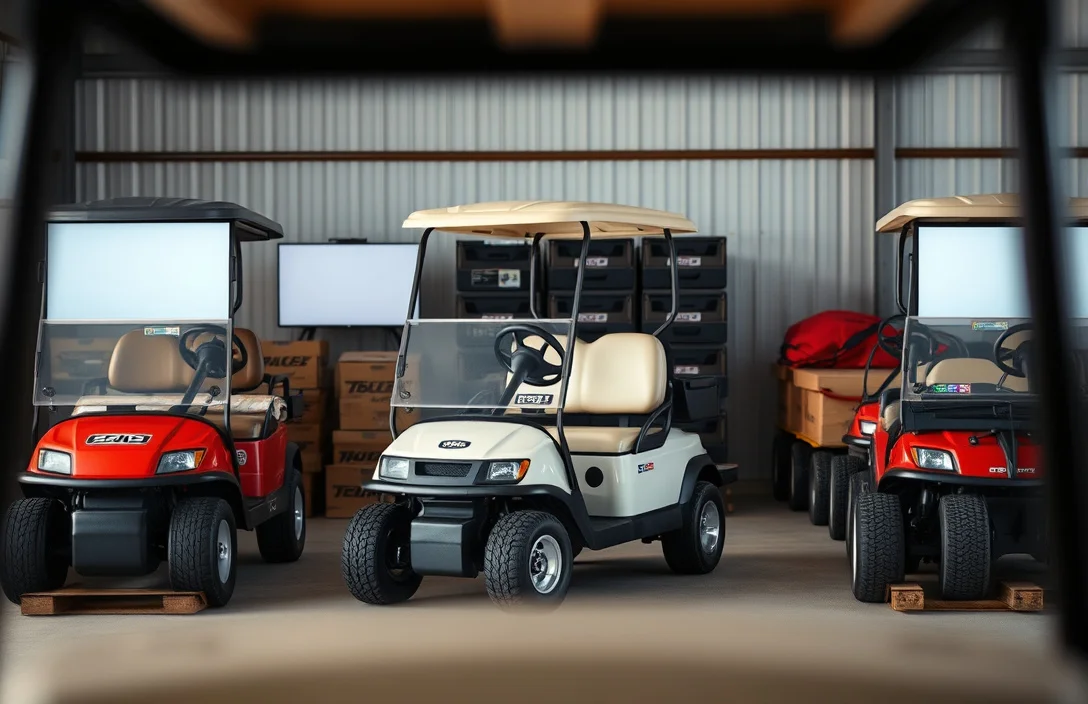
Storage in a cool, dry place matters. Golf cart battery banks age over time even when not in use, and there is no single expiry date. Heat accelerates aging and self-discharge, while cool storage slows wear and helps preserve charge.
Chemistry Impacts Expiry Risk
Lead-acid golf cart batteries lose usable capacity in storage when kept at low SOC because plates sulfate and electrolyte balance shifts, which can be permanent. Flooded cells also lose water and vent more at higher temperatures, while AGM variants slow that water loss but still degrade with long idle periods. Lithium-based packs tolerate longer idle storage because they do not sulfate, but aging continues through SEI growth and electrolyte changes if voltage or temperature drift too far.
Lead-acid behavior in storage centers on keeping the battery near full to minimize sulfation and grid corrosion. Flooded cells need periodic water topping and careful venting, while AGM batteries reduce water loss but can still degrade if stored long at elevated temperatures.
Lithium-based golf cart packs age mainly through SEI layer growth and electrolyte aging, but they tolerate idle storage much better than lead acids. Best practice is to store them at a mid-range state of charge, and in a cool environment, to limit capacity fade.
| Chemistry | Recommended Storage SOC | Typical Idle Self-Discharge | Temperature Sensitivity | Main Expiry Risk in Idle | Notes |
|---|---|---|---|---|---|
| Flooded Lead-Acid | Near full to full; avoid deep discharge | Moderate; increases with heat | High | Sulfation, water loss, grid corrosion | Requires venting and occasional electrolyte checks |
| AGM Lead-Acid | Near full to full | Moderate; less water loss than flooded | Medium | Sulfation if stored discharged; potential drying if venting | Less prone to spillage; still temperature sensitive |
| Lithium-ion / LiFePO4 | Mid-range 40 – 60% SOC | Low | Moderate to high | SEI growth and electrolyte aging | Storage voltage matters; BMS stability helps |
In practice, this means that for long idle periods, traditional lead-acid carts should stay near full charge and be kept in a cool, dry place, with periodic checks to prevent water loss in flooded versions. Modern lithium packs tolerate longer idle times and should be stored at mid SOC and cool temperatures to maximize calendar life. If a cart will sit unused for months, tailor the storage routine to its chemistry to avoid premature expiry.
Replacement Triggers in Idle Carts

Even without regular use, golf cart battery banks can degrade. Clear triggers to replace them include visible swelling and a clear drop in stored capacity or resting voltage that persists after a full charge.
| Trigger / Sign | What it Indicates | Replacement Guidance |
|---|---|---|
| Visible swelling or case deformation | Internal gas buildup or physical damage | Replace immediately |
| Hard sulfation signs (high impedance, charge denial) | Cells resist charging and hold charge poorly | Replace bank or individual cells if feasible |
| Significant capacity loss | Bank delivers far less usable energy than labeled | Replace bank |
| Resting or under-load voltage drift | Degraded cells cannot sustain voltage | Replace bank |
In practice, a simple sanity check helps avoid surprises. After a full charge, let the bank rest for several hours and measure the resting voltage. Compare to the nominal value for the chemistry; a drop that seems large for the bank’s age usually signals replacement is prudent. If a single cell string drags down the entire bank, replacement of the whole pack or the failed string is often more cost-effective than chasing intermittent fixes.
Bottom line: aging, swelling, or substantial capacity loss in idle golf cart batteries is a reliable sign that replacement should be planned rather than postponed.
Storage and Charging Practices
Idle golf cart batteries age due to chemistry even when not used. The rate of loss depends on storage conditions and charge level, keeping them at a partial state of charge in a cool, dry environment slows sulfation and capacity loss, while extremes of heat or full discharge accelerate degradation. Overall, they don’t expire on a calendar, but poor storage will shorten usable life much more than regular cycling would.
Best state of charge for idle storage is typically around half to a little above half. Flooded lead-acid golf cart batteries prefer about 50 to 60 percent, while lithium options tolerate 40 to 60 percent; staying in this range slows self-discharge and reduces sulfation risk. Do not store the packs fully charged or fully discharged for long periods.
Quick Summary
Yes, golf cart batteries can degrade when unused; store them with a maintained charge and periodic recharging to minimize sulfation.
Frequently Asked Questions
Do golf cart batteries expire if not used, and can the charger you choose matter for storage?
Yes, golf cart batteries age over time even when not used. Use a charger rated for your system voltage (36V or 48V) and store them in a cool, dry place to slow aging.
Does heat during storage affect expiration, and how should you store them safely?
High heat accelerates aging in lead-acid batteries. Keep storage at 60-70°F (15-21°C) and do not exceed 90°F (32°C).
If golf cart batteries sit unused for months, will runtime be reduced when you finally use them?
Yes, unused storage will gradually reduce usable capacity through self-discharge. Check and recharge every 3 to 6 months to maintain maximum runtime.
Are there safety risks with unused golf cart batteries aging in storage, such as off-gassing or swelling?
Lead-acid batteries can emit hydrogen gas if overcharged; ensure ventilation. Ventilate the storage area and avoid charging in sealed spaces to reduce hydrogen build-up.
What buying mistakes should you avoid when replacing batteries that have sat unused, and how do you determine replacement timing?
Avoid buying based on price without checking manufacture date and warranty. Always verify the manufacture date and warranty when buying unused or refurbished batteries.