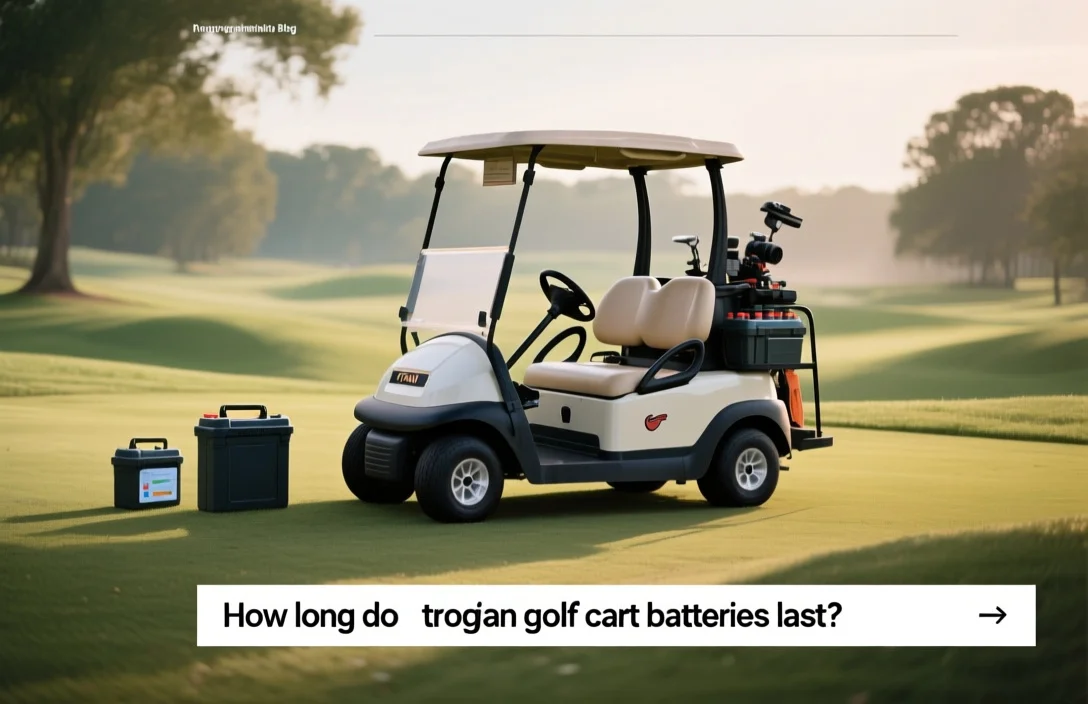
How Long Can You Expect Trojan Golf Cart Batteries to Last?
Many Trojan golf cart batteries last about 3 to 6 years in normal use, though load and maintenance change that. The most important spec is cycle life and amp-hour capacity, because depth of discharge determines how many useful cycles you’ll get. A common mistake is running batteries below 50 percent state of charge, so first check the battery voltage label (6V or 8V) and your charger chemistry setting, and confirm the charger matches the manufacturer’s voltage.
Trojan golf cart batteries typically last about 3 to 6 years with normal use and basic maintenance, and with careful charging and limited depth of discharge some can reach 5 to 8 years; heavy cycling, deep discharges or poor charging can shorten life to under 3 years.
Trojan lifespan by model
Trojan golf cart batteries can last from only a few years up to around ten years, depending on the specific model, battery chemistry, how deeply and often the battery is discharged, charging quality, and operating temperature. The company gives cycle-life curves and warranty terms per model, and those published specs are the best starting point for realistic lifespan expectations.
Chemistry and model differences
Flooded lead-acid, AGM, and gel Trojan lines are built for different tradeoffs. Flooded batteries require regular watering and are more tolerant of heavy discharge but need maintenance to reach their published life; AGM and gel are sealed, maintenance-free, and handle shallower daily cycling better in many cases.
Cycle life listed by Trojan is measured under specific conditions, usually at a stated temperature and depth of discharge, so two batteries with the same amp-hour rating can wear out at very different rates if one sees deeper discharges or poor charging. Climate matters: high heat accelerates capacity loss, and cold reduces usable capacity, both shortening real-world life compared with lab numbers.
| Chemistry | Maintenance | Typical lifespan drivers | What to check on datasheet |
|---|---|---|---|
| Flooded (wet) | Periodic watering, equalizing charge | Depth of discharge, watering routine, charger set-up | Cycle-life @ stated DoD, watering instructions, recommended charger voltage |
| AGM (VRLA) | Maintenance-free, sealed | Charge algorithm, DoD, temperature | Cycle-life curve, float voltage, warranty coverage |
| Gel (VRLA) | Maintenance-free, sensitive to overcharge | Charging profile accuracy, DoD, heat | Recommended charge profile, cycle-life at specific DoD |
Manufacturer cycle-life is a lab figure measured at a specific depth of discharge and temperature; expect shorter service life if you run deeper cycles, skip maintenance, or operate in hot conditions.
Cycle life versus warranty: Cycle life is a performance spec showing how many charge/discharge cycles a battery will deliver under test conditions, usually expressed at a given percent depth of discharge. Warranties are legal agreements that name a time period and often require correct charging, maintenance, and proof of purchase to be honored, so a long warranty can still be voided by misuse.
Capacity, wattage, runtime
Runtime for a Trojan golf cart battery bank is essentially the battery bank voltage multiplied by amp‑hours, converted to watt‑hours, then divided by the motor’s average watt draw, adjusted for the fraction of capacity you actually use. Depth of discharge and motor power typically change runtime far more than the Ah number printed on a single battery.
Voltage and amp‑hours are the two nameplate numbers that matter. Voltage tells you the system potential, for example 36 or 48 volts for most carts, while amp‑hours (Ah) tell you how many amps the battery can supply for one hour at that voltage.
For example, a 48 V pack rated 200 Ah has 48 times 200, or 9600 watt‑hours total. If you choose a conservative 50 percent depth of discharge, usable energy is 4800 Wh; a motor averaging 1200 W would run about four hours in that scenario, ignoring controller and wiring losses.
| Item | Formula | Example |
|---|---|---|
| Total energy | Volts × Ah = Wh | 48 V × 200 Ah = 9600 Wh |
| Usable energy | Total Wh × DOD | 9600 Wh × 0.5 = 4800 Wh |
| Estimated runtime | Usable Wh ÷ motor W (minus losses) | 4800 ÷ 1200 ≈ 4 h (less losses) |
Charging and compatibility
Correct charging and a matched charger are the single biggest factors that determine how long Trojan golf cart batteries last, because proper voltage, current, and regular equalization prevent sulfation and plate damage. A charger that is the wrong bank voltage, that never reaches absorption, or that floats at too-high or too-low voltage will shorten life quickly.
Always match the charger’s nominal voltage to the battery bank voltage, meaning the sum of the batteries wired in series. Check the battery label or Trojan’s manual for the bank nominal voltage and recommended charge profile before buying or programming a charger.
For example, if you have two 6 volt Trojans wired in series to make a 12 volt system, use a charger designed and set for a 12 volt lead-acid bank, not a charger intended only for a single 6 volt battery unless the charger and wiring are designed for that configuration.
Charge stages matter for longevity: bulk charges bring the battery up quickly, absorption finishes the charge at a controlled voltage to fully equalize cell state-of-charge, float holds the bank at a maintenance voltage, and periodic equalize cycles correct cell imbalance and reduce stratification. Skipping absorption or equalization, or leaving a flooded battery on a low, trickle-only charger, reduces usable cycle life.
| Charger type | Voltage match | Current sizing guidance | Notes for Trojan batteries |
|---|---|---|---|
| OEM on-board or Trojan-approved | Exactly matches bank voltage | Sized by manufacturer | Best warranty fit, tuned charge algorithm for chemistry and equalize |
| Smart multi-stage aftermarket | Must be set to bank voltage | Common guidance 10% to 20% of amp-hour capacity | Good when configured for flooded deep-cycle and equalize enabled |
| Basic single-stage or float-only | Must match voltage, often poor regulation | Often low current, slow charging | Cheap option, may shorten life if absorption is never reached |
| Solar charge controller (MPPT/REG) | Controller must be configured to bank voltage | Panel output limited; controller sets charge rate | Works well if controller supports multi-stage charge and equalize |
Safety note: improper charging is a leading cause of premature failure. If you cannot find Trojan’s recommended voltages and currents for your specific model, contact Trojan or a qualified dealer before relying on an aftermarket charger.
Heat, swelling, safety
Overheating, swelling, leaking, and heavy sulfation can turn a usable Trojan golf cart battery into an immediate safety and replacement issue, because those failures accelerate capacity loss and can cause acid exposure or electrical shorts. If a battery is hot to the touch after normal charging or shows bulging, cracks, or wet corrosion, stop using it and treat it as hazardous.
Heat shortens life by increasing internal corrosion, speeding water loss in flooded cells, and raising self discharge, all of which reduce capacity and cycle life. Repeated high-temperature operation also warps plates and can rupture separators, so batteries exposed to persistently high ambient or charging temperatures often fail years earlier than otherwise expected.
For example, a cart left in direct sun while charging or parked inside an enclosed hot garage will experience faster electrolyte evaporation and plate degradation, which can cut usable life and create off-gassing that forces battery retirement sooner than planned.
Warning: continued use of a swollen, leaking, or overheating Trojan battery risks acid injury and fire. When in doubt, treat the battery as hazardous and contact a qualified service provider or your local battery recycler for safe handling and disposal instructions.
Maintenance to extend life
Regular, correct maintenance can add several years to a Trojan golf cart battery’s usable life, while neglect accelerates capacity loss and shortens service life. The highest-return tasks are keeping electrolyte levels correct, running scheduled equalization charges, preventing corrosion, and avoiding extreme temperatures and chronic undercharge.
Watering and electrolyte care protect plate area and prevent internal shorts. Use only distilled or deionized water, add it after charging so acid has settled, and fill to the bottom of the fill well or manufacturer mark, never above the plates. Wear eye protection and gloves, and never add acid to the cell, only water.
For example, batteries that see daily deep discharge in hot seasons should be inspected weekly for water loss, while lightly used carts may be checked monthly. If any cell shows low level, top it up and note the cell for closer monitoring; repeated low cells can indicate a failing plate or a bad cell.
Equalize and charging schedule must match use and the charger capability. Follow Trojan’s manual for charger setpoints and equalization intervals; if you cannot find a manual, plan to equalize after a series of deep discharges or roughly once per month during heavy use periods, and less often when idle. Use a charger that provides a proper multi-stage charge and avoid leaving batteries chronically undercharged, since sulfation from long low-state-of-charge rest shortens life.
| Task | Frequency | What to do | Priority |
|---|---|---|---|
| Water level check | Weekly to monthly | Top with distilled water after charging to fill line | High |
| Equalization charge | Monthly in heavy use, otherwise every 1-3 months (see manual) | Run equalize cycle until cells equalize voltage/specific gravity | High |
| Daily charging | After each use | Use correct multi-stage charger, charge to full before storage | High |
| Corrosion and connections | Monthly | Clean terminals, tighten hardware, apply protective grease | Medium |
| Storage checks | Monthly | Recharge to full, check water, keep voltage up | High |
| Temperature monitoring | Seasonal / continuous if possible | Avoid sustained high heat, insulate or ventilate enclosure | High |
Buying and replacement checks
Trojan golf cart batteries do not have a single fixed lifespan; practical life ranges from several years for heavily used fleets to longer when cycling is light and charging is correct. To protect expected life when buying or replacing, always verify the manufacture date code, warranty terms, and that any replacement matches the original bank in chemistry and capacity.
For example, when replacing a 36 volt bank made of six 6 volt flooded Trojans, buy six new, identical 6 volt units from an authorized dealer and register each serial number under warranty; replacing only one or two will cause cycling imbalance and reduce the life of the whole bank.
Safety note: Never install batteries that are swollen, cracked, hot, or leaking. Wear eye and hand protection when inspecting batteries, and verify replacements through an authorized Trojan dealer to protect warranty and expected lifespan.
Troubleshooting steps
Trojan golf cart batteries commonly last several years, but actual life depends heavily on model, depth of discharge, charging quality, maintenance, and climate. Use the diagnostics below to decide if a battery pack still has useful life or if a repair or replacement is needed.
When to contact a technician
Call a qualified battery technician when you encounter internal shorts, multiple cells with low specific gravity, persistent overheating, swelling, or if controlled equalization and a proper charger do not restore balance and capacity. A professional has load-testing equipment, can measure internal resistance, and can safely perform high-current tests that are risky for hobby tools. If you lack a hydrometer, reliable digital multimeter, or a known-good charger, a technician will avoid misdiagnosis that leads to premature replacement. Also contact a technician for suspected charger faults, for cells that vent hydrogen during charging, or when the pack shows rapid capacity loss despite correct maintenance and charging procedures.
Quick Summary
Trojan golf cart battery lifespan varies with model and care, typically spanning several years but exact life depends on usage and maintenance.
Frequently Asked Questions
How long do Trojan golf cart batteries typically last before needing replacement?
You can expect about 3 to 6 years with regular watering, proper charging, and moderate use, although heavy daily use or poor maintenance can shorten that range.
How long do Trojan golf cart batteries last if they are exposed to high heat?
You can expect accelerated degradation if batteries run hot; sustained temperatures above 80 F (27 C) increase water loss and corrosion, so keep batteries shaded, ventilated, and out of direct sun.
How long do Trojan golf cart batteries last on a single charge, in hours?
You can estimate runtime by dividing the battery bank amp-hour rating by the cart current draw, for example a 225 Ah battery supplying a 50 A draw gives roughly 4.5 hours before reaching full discharge, but usable time depends on your chosen depth of discharge.
How long do Trojan golf cart batteries last if I use an incompatible charger, are they compatible with fast chargers?
You can damage lifespan by using the wrong charger, so match the charger to the battery bank voltage and lead-acid charge profile, for example a 48 V bank needs a 48 V, multi-stage lead-acid charger; avoid lithium-only chargers.
How long do Trojan golf cart batteries last, and what common buying mistakes shorten that lifespan?
You can avoid shortened life by buying batteries with a clear recent manufacture date and a reasonable warranty, and treat any warranty under 12 months or visible corrosion and swelling as a red flag when purchasing used or discounted units.