
How Long Can Golf Cart Batteries Sit Unused?
How long can golf cart batteries sit unused? comes down to matching the advice to your situation instead of following a generic checklist. I will focus on the main decision points, the tradeoffs that matter most, and the practical next steps you can use before spending time or money.
Storage Time for Golf Cart Batteries
Storage Time for Golf Cart Batteries depends on chemistry and the storage voltage you choose. Flooded lead-acid and AGM batteries tolerate idle periods best when kept near a full state of charge and checked every 1 – 3 months to prevent sulfation. Lithium-based packs can sit longer, often many months, if the pack is kept at a defined storage voltage per cell and managed by the battery’s BMS.
Battery types and chemistry determine how quickly capacity fades when idle. Flooded and AGM lead-acid packs self-discharge faster than lithium-based packs, so storage cadence differs. LiFePO4 and other lithium chemistries tolerate longer idle periods when kept within the recommended storage window and protected from extreme temperatures.
Storage Temperature Effects
Storage Temperature Effects. Cool, dry storage between roughly 10°C and 25°C (50°F to 77°F) helps preserve golf cart battery capacity when idle. Within this window chemical activity is minimized, reducing sulfation and water loss, while avoiding extreme swings that stress plates. Avoid high heat and freezing conditions to protect electrolyte and terminals.
Storage Temperature Effects. Extreme heat accelerates aging by speeding water loss and plate corrosion, while cold slows reactions but can raise resistance and increase condensation risk when you return to use. Humidity matters because high moisture can corrode terminals and vent paths on vented flooded batteries. Plan storage in a dry, ventilated area to keep gassing and corrosion in check.
Risks of Long Inactivity

Sulfation risk for lead-acid batteries increases with inactivity as lead sulfate crystals form on the plates, reducing capacity and hindering recovery. If a golf cart pack sits discharged or unused for weeks to months, the sulfation can become effectively irreversible after aging, especially with repeated charging. This leads to noticeable performance drop and shorter overall cycle life when the pack is finally put back to work.
Sulfation impact with idle storage grows when temperature fluctuates, and time passes without a full state of charge. After recharging, confirm that the battery can sustain a load, and beware that a diminished ability to hold voltage indicates aging that won’t fully reverse.
Cell balance and monitoring needs become evident when a pack has rested for weeks or months. A drift in individual cell readings means the pack is aging unevenly, which can shorten usable life and create unpredictable performance under load.
Gas buildup and safety cues can appear during slow rest or charging, especially in vented designs. Swelling, venting, hissing, or electrolyte leakage require stopping any charge and assessing whether rehab or replacement is safe.
Best Storage Practices
For idle golf cart packs, target a mid-range state of charge and a cool, stable environment. Keep flooded lead-acid at roughly 50% charge and lithium packs around 40-60% per manufacturer guidance, then monitor voltage and top off as needed with the correct charger. Avoid leaving fully charged or fully discharged for extended periods, which accelerates degradation.
Charger Setup for Storage
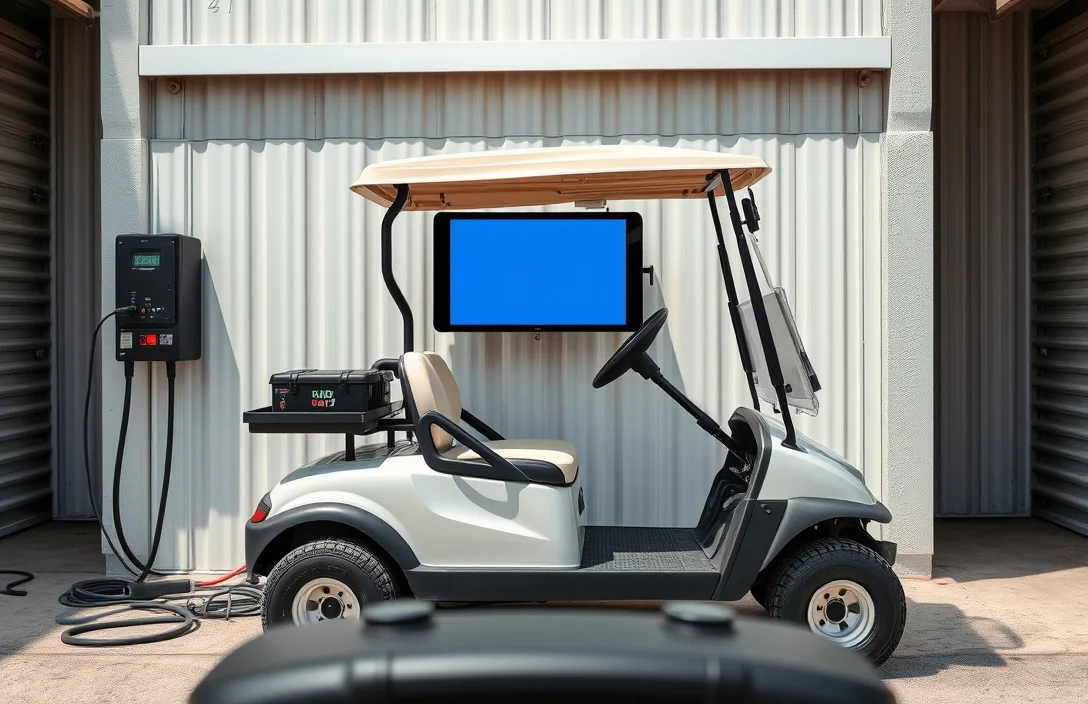
Keep the golf cart battery bank on a float or maintenance charger with temperature compensation to preserve charge during long storage. A smart charger that automatically holds a safe resting voltage, rather than a simple constant trickle, minimizes sulfation and overcharge risk. This combination adapts to the storage environment and reduces battery aging while idle.
Safety and Replacement Triggers
Unused golf cart batteries should not be left fully charged or fully discharged. For flooded lead-acid packs, store at about 50% state of charge in a cool, dry place, check electrolyte levels, and recharge every 1 – 3 months to minimize sulfation and capacity loss.
Signs of trouble appear plainly: swelling, leaks, or a strong sulfur odor indicate internal damage and risk. If you detect any of these, isolate the bank, ventilate the area, and arrange testing or replacement from a qualified service provider.
Safe handling during storage centers on containment and ventilation. Wear eye protection and gloves when inspecting, keep vents unobstructed, and avoid open flames or sparks near stored packs. Work in a well ventilated area, and never topple or stack batteries in a way that could spill electrolyte or sever wiring.
Replacement timing depends on chemistry and use, and warranty terms vary by brand. If capacity has dropped noticeably, internal resistance rises, or performance under load worsens, plan replacement rather than extended storage. Read the specific warranty for maintenance requirements, coverage duration, and pro‑rating rules, and document purchase dates and serial numbers for claims.
| Chemistry | Storage SOC | Recharge interval | Replacement cue | Warranty notes |
|---|---|---|---|---|
| Flooded lead‑acid | About 50% | 1 – 3 months | Significant capacity loss or frequent failure to start | Terms vary; follow maintenance guidelines to keep coverage |
| AGM | About 50% | 1 – 3 months | Excessive sulfation or capacity drop | Terms vary; check brand specifics |
| Li‑ion (where used in carts) | 40 – 60% | 6 – 12 months | Notable degradation under load or safety fault | Warranty terms differ; verify with manufacturer |
If any sign of damage appears, treat the pack as compromised and consult a qualified technician. Do not attempt to repair damaged cells yourself.
Troubleshooting and Checks
Unused golf cart battery packs slowly lose charge even when idle. A long storage period can lead to sulfation on lead-acid cells and reduced capacity, especially at higher temperatures. Before reuse, verify the pack’s resting state and plan a measured recharge to restore balance.
SOC verification methods for typical packs include resting voltage checks, electrolyte tests for flooded cells, and battery monitoring readings where available. Use a calm, methodical approach and record readings to track balance across the pack.
| Method | What it checks | What to look for | Notes |
|---|---|---|---|
| Resting voltage | State of charge | Pack voltage aligns with chemistry expectations | Wait 1 – 2 hours after disconnecting load |
| Electrolyte test | Cell health (flooded) | Consistent gravity across cells | Disparities indicate a bad cell |
| Visual/terminal | Condition and connections | Clean terminals, no swelling | Address corrosion before charging |
Visual and terminal checks catch early failure signs that chargers cannot fix. Swollen cases, leaks, corroded posts, loose cables, or cracked housings require action before any recharging. Clean and tighten connections with proper protective equipment.
After a long storage interval, plan a staged recharge and balance. Start with a low-current charge and monitor temperature and voltage. If available, run an equalization or balancing cycle as recommended by the supplier, then recheck resting voltage before load use.
Important safety note: if you observe swelling, hissing, or venting gas, stop charging and disconnect the pack. Do not attempt aggressive balancing under unsafe conditions.
Quick Storage Summary
Lead-acid golf cart packs should be recharged about every 4 weeks when stored idle to avoid sulfation. Lithium-based packs tolerate longer gaps, but a mid storage check and a top‑up every 3 – 6 months is wise. Store in a cool, dry place and inspect for swelling or corrosion before reuse.
Quick Summary
Golf cart batteries last best when stored with a low to moderate charge and periodic maintenance checks.
Frequently Asked Questions
Can golf cart batteries sit unused for a long time if the charger or battery type is not compatible?
Yes, incompatibility can cause rapid discharge or sulfation during storage. Use a charger that matches your battery type (flooded, AGM, or gel) and supports float/maintenance mode to protect stored cells.
How does heat affect golf cart batteries during long storage and what is a safe temperature range?
Heat speeds aging and self-discharge, reducing usable capacity. Store batteries in a cool place around 10-24°C (50-75°F) and avoid temperatures above 32°C (90°F).
How long can golf cart batteries sit unused before you should recharge or take action?
At room temperature, a typical lead-acid bank self-discharges about 3-5% per month; after several months you should recheck and recharge to full before use. Check and recharge every 3 months during storage to prevent sulfation.
When should you replace golf cart batteries after a period of storage?
If a battery cannot hold a charge after proper recharging or shows sulfation that cannot be revived, plan replacement. Resting voltage that stays below about 12.0-12.4V on a full string indicates degraded capacity.
What common buying mistakes should you avoid when preparing for long-term storage of golf cart batteries?
Avoid buying wrong chemistry or group size and skipping a compatible charger, which leads to storage problems. Always verify battery group size (6V vs 8V), chemistry, and charger compatibility.