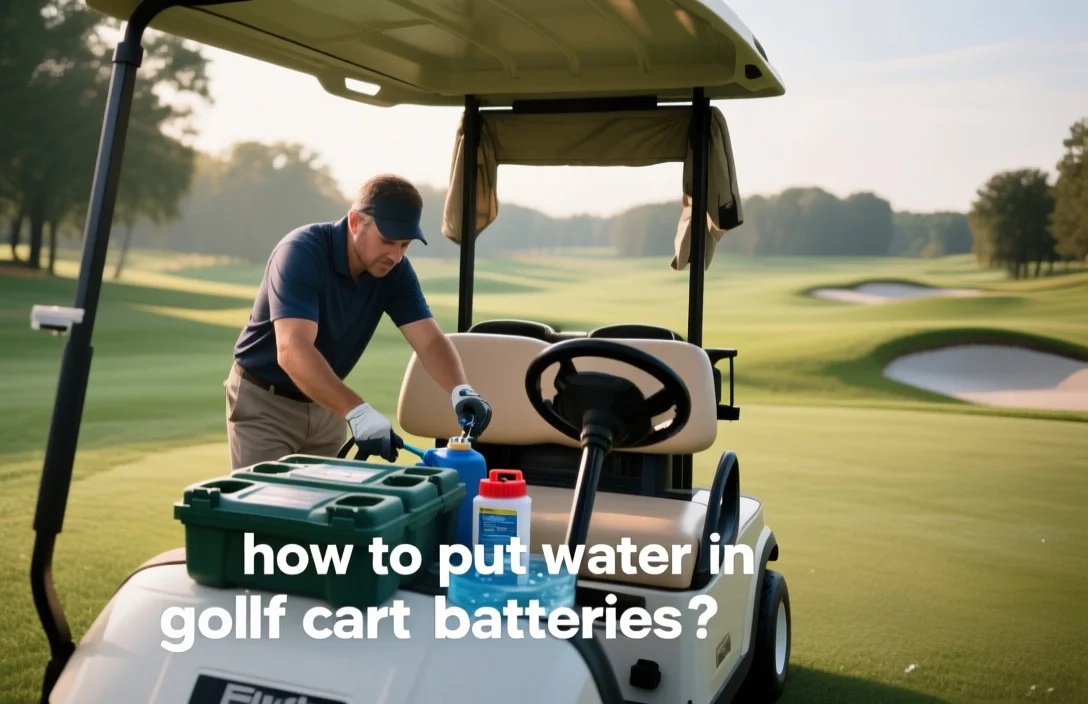
How to put water in golf cart batteries?
Manufacturer fill level is the single specification that matters most when adding water to flooded golf cart batteries, so check it before you open any cells. A common mistake is using tap water instead of distilled, which causes mineral buildup and shortens battery life. First check the battery top for removable vent caps or an “AGM/sealed” label, sealed batteries must never be opened.
Golf cart batteries should be topped with distilled water only, after a full charge and any cooling period, filling each flooded cell to the manufacturer fill level or the bottom of the vent well, typically about 1/8 to 1/4 inch above the plates, then replace caps and wipe down.
Quick TL;DR
Use distilled water and only top flooded (removable-vent) cells after the battery is fully charged; fill to the manufacturer’s level, typically at the bottom of the vent well or about 1/8 to 1/4 inch above the plates. Estimated total time for a multi-battery golf cart bank is 20 to 45 minutes; skill level is basic DIY with proper PPE and ventilation, follow safety steps exactly.
Bring distilled water, a clean battery watering bottle or syringe, eye protection, acid-resistant gloves, and rags. Have the charger off and the cart in a ventilated area; do not smoke or create sparks near the batteries.
| Item | Why | Time |
|---|---|---|
| Distilled water | Prevents mineral buildup | Instant |
| Watering bottle or syringe | Controlled fill, reduces spills | Per battery: 1 – 3 minutes |
| PPE (goggles, gloves) | Acid protection | Always |
If a cell needs frequent topping, that indicates repeated gassing, overcharging, a bad cell, or a leaking case. For persistent problems, test specific gravity with a hydrometer or have the pack load-tested by a shop before topping repeatedly.
Critical: topping must be done only on flooded cells after charging; improper filling or using tap water can shorten battery life and void warranties.
Identify flooded vs sealed
If each cell on the battery top has a removable cap or a recessed vent well, the battery is a flooded, serviceable lead-acid type that can be topped with distilled water. If the top is smooth, the caps are glued or absent, or the label says AGM, sealed, VRLA, gel, or maintenance-free, the battery is sealed and must not be opened.
Look at the battery top closely for these physical clues: twist-off caps, small plastic plugs, or circular wells above each cell. Many common 6 volt deep-cycle golf cart batteries have three large cells across the top, each with its own cap or vent well; 12 volt units typically have six smaller cells in a row.
| Feature | Flooded (refillable) | Sealed (AGM/Gel/VRLA) |
|---|---|---|
| Cell caps | Removable twist or plug caps | No removable caps, smooth or glued top |
| Label | “Flooded”, “Wet”, “Serviceable” | “AGM”, “Gel”, “Sealed”, “Maintenance-free” |
| Safe to open | Yes, for distilled water only | No, opening will damage battery and void warranty |
Safety note: Do not force or drill into sealed batteries; sealed chemistries use immobilized or recombining electrolytes, and opening them can release acid, ruin internal separators, and void warranties.
Quick checklist: visible caps, label says flooded, three large cells on 6V units, no glued caps. Typical inspection takes 5 to 10 minutes and requires only basic observation; if anything is unclear, consult the battery manual before attempting to add water.
Tools and supplies
To add water to flooded golf cart batteries you need only distilled water and a safe way to deliver it, plus basic personal protective equipment and cleanup items. Required items are a long-nozzle watering bottle or battery watering kit, goggles, acid-resistant gloves, a rag, baking soda for neutralizing spills, a small flashlight, a terminal brush, and basic hand tools to access the battery compartment. Optional but useful diagnostics include a handheld hydrometer, a digital voltmeter or multimeter, and a multi-cell watering system for faster servicing of multiple batteries.
Use distilled water only, because it contains no dissolved minerals or ions that remain in the electrolyte and that can accelerate corrosion or change specific gravity. Avoid any product labeled “purified”, “mineral”, or simply “water” without the word distilled on the container.
| Item | Amount / Specification | Notes |
|---|---|---|
| Distilled water | Sealed jug(s), 1+ liters depending on bank size | Buy sealed jugs from grocery, pharmacy, or auto parts stores. Battery-shop jugs are convenient and pre-labeled. |
| Watering bottle / squeeze bottle | Long rigid nozzle, 12 – 32 oz typical | Single-squeeze bottle for occasional use, or spill-proof battery watering bottle for control. Look for clear bottles with visible flow. |
| Battery watering kit (optional) | Multi-valve for multi-cell banks | Saves time on multi-battery carts or fleets. More expensive but reduces splashes and overfill risk. |
| Protective goggles | Acid splash rated | Over-the-eye goggles are required when working with electrolyte or vent caps. |
| Acid-resistant gloves | Neoprene or nitrile, elbow length preferred | Protects skin from sulfuric acid. Disposable gloves are not enough for repeated use. |
| Small flashlight | Handheld LED | Helps inspect cell wells and vent caps in tight compartments. |
| Rag and baking soda | Cloth, 1 cup baking soda | Baking soda neutralizes small acid spills; rags clean up residue and dry surfaces. |
| Terminal brush and basic tools | Wire brush, wrench set | Clean terminals and remove hold-downs or brackets to access caps safely. |
| Hydrometer / refractometer (optional) | Handheld hydrometer or refractometer | Hydrometer measures individual cell specific gravity; refractometer is shop-grade and faster. |
| Digital voltmeter / multimeter (optional) | Auto-range recommended | Quick voltage checks before and after topping help spot weak cells. |
For example, a homeowner with one cart can buy a single-squeeze watering bottle and a sealed distilled jug; a shop or community course should invest in a multi-valve watering kit and refractometer for speed and repeatable results. The trade-off is cost versus time and accuracy: single bottles are cheap but slower and more prone to spills, while multi-valve systems cost more but reduce labor and overfill risk.
Step-by-step watering
Top up flooded lead-acid golf cart batteries only after they have been fully charged, using distilled water and proper personal protective equipment. Add water slowly to each cell until it reaches the manufacturer specified fill level, and never use tap water or add acid.
If cells need repeated topping between charges, stop topping and have the battery and charger tested, since repeated low electrolyte usually means overcharging, bad cells, or a leaking case. You can use a hydrometer to check specific gravity if you are trained, or have a shop perform a load and specific gravity test.
Estimated time and skill: allow 20 to 45 minutes for a typical six battery golf cart for someone with basic mechanical aptitude, and exercise extreme caution with acid exposure and ventilation. Always follow the battery manufacturer and cart manual for warranty and safety requirements.
Correct fill level
Fill each flooded golf-cart battery cell to the bottom of the vent well or to the manufacturer’s specified mark; if there is no mark, aim for about 1/8 to 1/4 inch (3 to 6 mm) above the top of the plates when the battery is fully charged. Under-filling exposes plate tops and speeds sulfation, while overfilling lets electrolyte spill during charging and corrodes terminals and trays.
Correct level is a narrow band, not a generous topping. Plates should be just covered so that you see liquid over the plate tops, but the electrolyte should not touch the inner edge of the vent well or sit high enough to bubble out under charge.
Visual reference: include a close-up annotated photo or simple diagram of a 6V cell top showing the vent well, plate tops, and the correct fill line. Provide three side-by-side annotated images labeled “plates exposed”, “correct”, and “overfilled” so users can instantly compare.
When to check and water
Top up flooded golf cart batteries after they reach a full charge, and inspect water levels every 1 to 3 months under normal use. Check monthly during heavy use or hot weather, and immediately after long deep-discharge cycles or any time the electrolyte level falls rapidly.
Summer and heat make batteries lose water faster because charging and gassing rates increase, so inspect more often during prolonged warm spells or when you run long, frequent rides. For winter storage, give the batteries a fresh full charge, top to the correct level if needed, then check again just before putting the cart away for the season.
Routine maintenance schedule example
Inspect more often when ambient temperature is high or when charging is aggressive, and always top up after the charger has completed a full charge so the plates are expanded and level measurements are accurate.
Use the printable log below to track checks and actions; keep copies in the cart or shop binder so any operator can record water additions and next check dates. A simple log reduces missed maintenance and protects warranty coverage when manuals require documented care.
Quick checklist before watering: wear goggles and acid-resistant gloves, work in a ventilated area, only add distilled water, never add water to a hot or actively charging battery, and follow the cart maker’s service intervals. If you see repeated low-water in the same cell, stop and investigate battery health rather than simply adding more water.
Troubleshooting, diagnostics, warranty & disposal
Repeat low-water in flooded golf cart batteries most often comes from excessive gassing due to overcharging or from a physical leak in the case or vent seal. Test each cell with a hydrometer and by measuring per-cell voltages to find whether the battery, the charger, or a single bad cell is the root cause.
Recycling and disposal rules: damaged or leaking batteries are hazardous waste and must be taken to a battery recycler, retailer that accepts old batteries, or your municipal hazardous-waste program. Do not dispose of lead-acid batteries in household trash, and keep them upright and covered during transport to the recycler.
Quick Summary
Properly filling golf cart batteries with water is essential for maintaining battery performance and longevity.
Frequently Asked Questions
How often should I add water to my golf cart batteries?
You should check the water levels in your golf cart batteries every month, especially during heavy usage. Ideally, maintain the water level about 1/2 inch above the plates to ensure proper operation.
What type of water should I use for golf cart batteries?
Always use distilled water when filling your golf cart batteries, as tap water can contain minerals that may damage the battery over time. This helps prevent corrosion and maintains battery efficiency.
Is it safe to add water to batteries while they are charging?
It is recommended to add water only when the battery is fully charged and cool. Adding water while charging can lead to overflow and potential acid spills, which are hazardous.
What happens if I overfill my golf cart batteries with water?
Overfilling can cause the battery acid to spill out and corrode connections, leading to damage and potentially affecting performance. Always leave some space to allow for expansion during charging.
Can I use tap water in my golf cart batteries?
Using tap water is not advisable as it contains minerals and chemicals that can harm the battery’s internal components. Stick with distilled water for optimal battery maintenance.