
Reconditioned Golf Cart Battery Cost: What To Expect And Pay
Voltage and battery type are the two numbers that decide reconditioned golf cart battery cost in practice. A wrong voltage turns a cheap buy into a useless paperweight. The common mistake is buying by price alone without checking the label for voltage, Ah, and chemistry. Start by reading the battery label to confirm voltage and capacity, then compare refurb options against your cart’s spec.
Prices for reconditioned golf cart batteries vary by voltage, capacity, and refurbisher. No official price data is consistently published, so check current listings from reputable sellers and compare warranty and tested capacity. Expect a wide range depending on 6V or 8V packs and condition.
How much do reconditioned golf cart batteries cost

Reconditioned golf cart battery pricing is highly variable, and exact current numbers were not found in live research. Most shoppers should expect reconditioned packs to cost less than new, but the discount depends on the battery type, how many cells were replaced, and whether the seller offers any warranty. For an accurate total, verify the exact pack size (or number of batteries per cart) and pricing from local listings or refurbishers.
Cost changes most with battery type. Lead-acid reconditioned units (flooded or sometimes AGM depending on what is being sold) usually come with the widest spread between “fully rebuilt” and “tested and reconditioned,” which is why two listings can look similar but price very differently. Lithium reconditioned packs exist in some markets, but they often price closer to new because the battery management system and safety testing are hard to replicate cheaply.
What drives the price up or down
Brand is one of the first swing factors because rebuilders may use different internal parts, and some brands are easier to source for replacement cells. Age and history matter too, since a pack that has been heavily sulfated or overheated can cost more to restore and may be priced higher for the same stated “reconditioned” label.
Warranty coverage is a big divider. A longer warranty (even if it is shorter than new) usually means the seller has more confidence in the pack, and that risk cost typically shows up in the price. Condition details also matter, for example, whether the pack has damaged cables, mismatched cells, or visible corrosion that requires extra labor.
| Price driver | What to check on the listing | How it usually affects cost |
|---|---|---|
| Battery type | Flooded lead-acid, AGM, lithium, or “unknown” | Often lowest for basic lead-acid, higher for lithium |
| Brand and model | Manufacturer name, part number, series | Known brands can cost more |
| Age / build history | How many years used, what was replaced | More rebuild work usually costs more |
| Warranty | Months of coverage, return terms | Warranty tends to raise price |
| Physical condition | Cracked cases, corrosion, cable damage | Visible damage can mean discounts or no warranty |
| Seller reputation | Test notes, grading terms, documentation | Reliable testing can cost more |
Cost is also a “per battery vs full-cart” issue. Some listings price each battery individually, while others sell a complete pack matched for the cart. A single cart can require multiple batteries, so you can see big differences in total cost even when unit prices look close.
For example, a “reconditioned” lot priced per unit can look inexpensive until you multiply by the number of batteries the cart needs, and discover that the seller did not include the charger, wiring, or any return coverage. Price swings show up most in local marketplace listings, where grading terms vary and photos may not reflect cell-by-cell replacement or test results.
Because current exact pricing was not located, the most practical approach is to collect a few listings with the same chemistry and warranty terms, then compare totals for the complete cart configuration. If you share your cart’s battery system voltage (for example, 36V or 48V) and how many cells or batteries it uses, I can help you compute a like-for-like comparison checklist for those offers.
Capacity, voltage, and total cost
Golf cart battery price tracks most strongly to pack voltage and usable capacity. Two packs can list the same “reconditioned” label yet differ in how many amp-hours they actually deliver, which changes how long the cart runs between charges.
Voltage is the first filter because a 36V cart system cannot use a 48V pack safely. Voltage also determines which charger models are compatible, and mismatched chargers can overcharge or undercharge cells, driving down performance and shortening service life.
What specs you should compare
Capacity is usually listed in amp-hours (Ah), but “reconditioned” packs can show lower usable capacity after testing and refurbishing. Shoppers often compare sticker numbers and ignore that some capacity is not accessible in real use, especially if the pack’s internal resistance is higher.
Battery chemistry impacts pricing because rebuild approaches differ. Lead-acid (flooded, AGM, and gel) pricing is often more sensitive to core condition and the amount of cell replacement, while lithium packs depend on whether the reconditioner is restoring a tested BMS and matching cells to the original configuration.
| Specification | How it affects cost | How it affects real-world use |
|---|---|---|
| Nominal voltage | Drives pack construction and charger compatibility | Determines whether the system and charger are a safe match |
| Capacity (Ah) | Higher restored capacity typically costs more | Longer runtime, less voltage sag under load |
| Chemistry | Rebuild method and parts availability change pricing | Charge behavior, wear pattern, and how “reconditioned” is performed |
For example, a lower-Ah 48V pack may cost less up front, yet you can end up paying more in labor, downtime, and eventual replacement if it does not meet your hill climbing or speed needs. Shoppers get tripped up when they compare only voltage and total brand names, then discover later that usable capacity and internal condition are what determine runtime and overall value.
Safety note: If a pack shows swelling, strong heat during charging, cracked case, or a chemical odor, stop using it and do not attempt further reconditioning. Damaged or overheated packs can fail violently and can also damage controllers and chargers.
Charger compatibility and costs
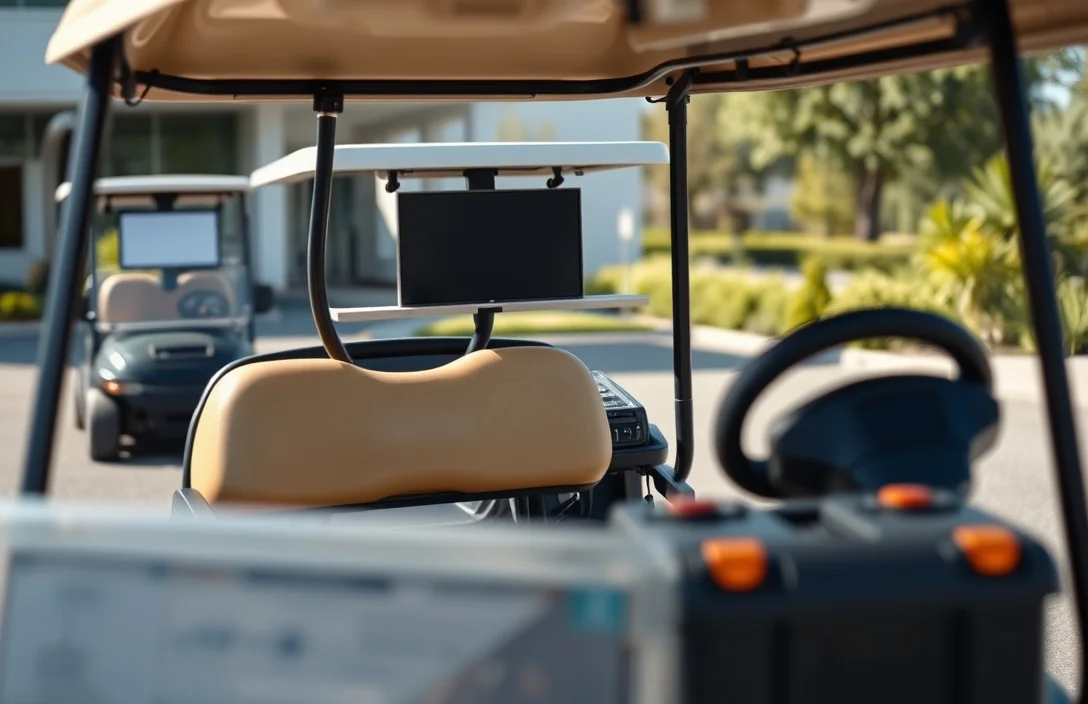
Correct charger voltage and chemistry are non negotiable for reconditioned golf cart batteries. Most packs are 36V or 48V and use lead-acid chemistry, so pick a charger rated for that voltage and lead-acid type. A reliable replacement charger typically costs around $100-$250, with smarter models or higher-current units often reaching $250-$350.
Check the label on the charger and the battery to confirm compatibility. The charger should list the pack voltage, the chemistry, and the recommended charging currents. If the current charger label does not match the pack, plan an upgrade; using the wrong charger can undercharge, overcharge, or heat the cells.
| Category | 36V Lead-Acid | 48V Lead-Acid | Notes |
|---|---|---|---|
| Typical charger voltage range (absorption/float) | Absorption 42 – 44 V; Float 41 – 42 V | Absorption 58 – 58.4 V; Float 54.4 – 54.6 V | Match to pack voltage and chemistry; ranges are guidance |
| Common connector type | Clamp or built-in heavy-duty lugs | Clamp or lugs; check polarity | Verify compatibility with cart wiring or cable ends |
| Current rating (amps) | 2 – 8 A typical for standard charging | 2 – 10 A typical for faster charging | Higher current charges faster but adds heat may affect cycle life |
| Cost add-ons (cables/adapters) | Often needs new cables or ring terminals | Adapters or new cables may be required | Budget roughly $20 – 60 for accessories |
In practice, pairing the charger to the pack and budgeting for any necessary cables or adapters keeps the reconditioned setup safe and ready. If you need to upgrade, plan for the charger price plus potential add-ons, which commonly adds a modest sum to the total investment. Always confirm the label specifications and warranty terms before buying a replacement charger.
Battery safety checks before buying
Reconditioned golf cart batteries carry higher failure risk, so perform visible and performance checks before buying. Look for heat, swelling, or a damaged case, which signal internal plate damage or gas buildup and can lead to safety hazards when charged. A clean, intact housing with tight lids and no electrolyte leaks is the baseline expectation.
Leakage or crusting is especially telling, because it points to electrolyte escape or degraded seal integrity. Crust buildup can insulate terminals and cause poor connections, which raises resistance and heat during operation. Do not ignore these visuals; they predict premature failure or a hazardous condition in service.
Odor and abnormal corrosion checks: a sharp chemical odor or burnt-plastic smell signals electrolyte release or overheating. Connector terminals that are heavily corroded, pitted, or discolored show degraded connections and potential short risks under load. If you notice either, treat the unit as unsafe to use or transport.
Verify basic condition with a proper test: request full test documentation or perform simple checks yourself. Resting voltage should align with the expected range for the chemistry, and a noticeable drop under light load suggests capacity loss. For flooded configurations, verify electrolyte levels and, if permitted, use a hydrometer to check specific gravity; avoid batteries that refuse a stable reading or show large variance between cells. A formal load test or capacity confirmation is ideal when available.
Warning: any red flag you cannot satisfactorily explain should stop the purchase. Safer to choose a unit with clear, documented testing and a clean physical condition.
| Red flag | What it signals | Recommended action |
|---|---|---|
| Excessive heat or visible swelling | Internal damage or gas buildup | Do not buy; seek a different unit or new battery |
| Electrolyte leakage or crust around caps | Degraded seals or compromised containment | Reject |
| Strong chemical odor | Electrolyte release or overheating | Reject |
| Heavy terminal corrosion | Poor connections and possible short risk | Reject |
Charging limits and reconditioning reality

Charging limits and reconditioning reality: Prices for reconditioned golf cart batteries vary widely and there is no standard price. The total cost often includes refurbishment, testing, and any minor replacements, plus a warranty when offered. Availability and local demand can swing the final quote, so compare several sellers and ask for a written scope of work.
Troubleshooting bad purchases
Symptoms of a failing pack include low range, rapid sag under load, and uneven voltages across segments. If you see these signs, test the pack and the wiring to separate battery problems from charger or cable issues. Because prices for reconditioned units vary widely, diagnosing correctly saves money by avoiding a buy that won’t meet performance expectations.
Symptoms of a failing pack details
Measurements help distinguish sources
Connections and physical condition
Charger behavior checks
| Symptom or issue | Likely source | What to test or do | Cost impact (note) |
|---|---|---|---|
| Low range under full charge | Degraded pack capacity or bad cell | Measure pack voltage, test individual cells if accessible; compare to spec | Cost varies by battery chemistry and replacement needed; no fixed value here |
| Rapid sag under load | High internal resistance or aging cells | Load-test the pack; check cell balance | Replacement may be required; price depends on chem and capacity |
| Uneven voltages across cells | Cell imbalance or failing cell | Measure individual cell voltages; identify outliers | Repair may be possible if balancing; otherwise replacement; cost varies |
| Loose connections or corrosion | Wiring or lug condition | Inspect/clean tighten lugs; replace damaged cables | Typically low cost if simple; higher if harnesses need replacement |
| Charger does not reach target voltage | Charger or heavy draw from the pack | Test charger output; swap with a known good charger | Charger replacement is usually cheaper than a full battery; varies by model |
When replacement is the smart move
Golf cart battery replacement is the right call when tests show the pack cannot hold voltage under load or when damage signs point to unsafe operation. Reconditioning can restore performance when a battery is mostly healthy, but repeated capacity loss is a cycle-life reality that usually comes back faster than the downtime savings justify.
For example, a common failure pattern is “charges fine, drives poorly.” If the voltage recovers at rest but drops quickly when you engage the motor, the pack has high internal resistance or failing cells, and replacement is usually the lowest-risk fix.
| Test outcome | Likely action | Why it matters for downtime and safety |
|---|---|---|
| Load voltage collapses early | Replace | Internal resistance or failing cells keep causing rapid shutdown or stress during charging |
| One battery drifts while others track | Replace the affected unit or the full matched set | Mixing ages worsens imbalance and can heat terminals |
| Signs of swelling, leaks, hot terminals | Replace immediately, stop use | Unsafe condition can escalate even if charging looks normal |
| Clean charge, stable load test, no safety flags | Continue targeted troubleshooting | The system problem may be wiring, connections, or controller behavior |
Quick decision rule: If you cannot pass a load test or you find physical damage, keep the money you would spend on another recovery cycle and move to a replacement plan. If you can pass load and charging checks cleanly, investigate connections and single-cell drift before buying again.
Quick Summary
Reconditioned golf cart battery prices vary a lot by voltage and capacity, so confirm your pack specs and safe charging setup first.
Frequently Asked Questions
How does compatibility affect the cost of reconditioned golf cart batteries and what should I verify before buying?
Exact price data was not found from reliable sources. Prices vary by chemistry and capacity, and you must match voltage and physical size to your cart to avoid waste. Verify the cart voltage (for example 36V or 48V) and connector type before buying.
Do reconditioned golf cart batteries run hot and does heat influence cost or value?
Exact price data was not found from reliable sources. Heat is a safety and performance concern that can shorten a battery’s life and reduce value. Look for signs of overheating, swelling, or venting, and buy from a seller who provides testing results.
How long can I expect a reconditioned golf cart battery to last per charge, and what factors affect runtime?
Exact price data was not found from reliable sources. Runtime is driven by capacity (Ah), state of health, and how heavy the load is. A higher capacity battery will typically deliver more miles between charges than an older, lower-capacity pack.
What safety concerns should I consider when buying reconditioned golf cart batteries, and how can I assess risk?
Exact price data was not found from reliable sources. Choose units with a clear safety test history and a warranty to reduce risk. Ask for documentation that the pack has been tested for shorts, proper electrolyte sealing, and safe charging behavior.
What are common buying mistakes when purchasing reconditioned golf cart batteries and how should I time a replacement?
Exact price data was not found from reliable sources. Avoid buying without verifying compatibility, age, and warranty, and plan replacement before the pack fails during use. Check the age or cycle count if available and request a written warranty to guide timing.