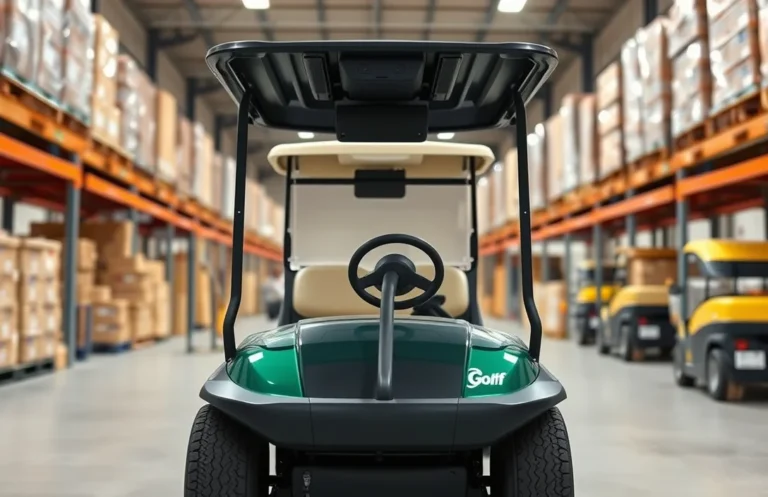

Golf Cart Battery Labor Cost
Golf cart battery “labor cost” is often the hidden part of the bill, because the pack swap is usually quick, but the prep and safety work takes time. The spec that matters most is the battery pack voltage (36V vs 48V), since mismatches can turn a routine replacement into expensive troubleshooting. A common mistake is assuming the charger is set correctly for your pack.
Golf cart battery labor cost is mainly the technician’s time to disconnect the pack, disconnect power, remove old batteries, install the correct 36V or 48V pack, and verify the charger setting and wiring. If you already have the right batteries and cables, labor is often less than the parts; if voltage is wrong, troubleshooting adds hours.
golf cart battery labor cost basics

Golf cart battery service labor usually covers inspection, safe handling, testing, installation work, and disposal or recycling prep. Labor charges vary because techs spend time diagnosing a charging problem, handling heavy battery packs, and dealing with corrosion or wiring issues.
Labor on golf cart batteries typically includes a visual inspection of the battery case, terminals, and wiring harness, plus electrical checks such as voltage measurements and basic charge-system verification. Labor also covers cleaning and neutralizing corrosion when needed, tightening or replacing terminal hardware, and confirming the pack is mechanically secure before you leave. If the job includes replacement, labor generally includes removing the old pack, installing the new one, and verifying that connections and polarity are correct.
Diagnostic vs. hands-on work
Diagnostic labor is time spent figuring out what is wrong before turning wrenches. A service shop may test the battery pack under load, verify charger output, and check for abnormal voltage differences between cells or blocks, then decide whether the issue is battery age, cable resistance, charger failure, or wiring faults. Diagnostic time can cost less per hour than major replacement work, but it can add up if the problem is intermittent or the cart has multiple contributing issues.
Hands-on labor is the physical work after the diagnosis. Hands-on time includes disconnecting and reconnecting battery cables, applying corrosion protection, routing cables so they do not rub, and tightening hardware to the correct snugness without damaging posts. Replacement jobs also add time for lifting, strap use, battery tray checks, and any minor fitment work, especially if older carts have corroded or mismatched connectors.
What drives labor time (and your bill)
Labor time grows with accessibility and condition. A clean, well-maintained cart with straight cable runs is faster than one with seized hardware, crusty terminals, or a battery compartment full of dust and moisture. Techs also spend extra time on carts with mixed symptoms, like a pack that reads “close” at rest but collapses when the cart is driven or tested.
| Labor item | What it usually includes | Why time can increase |
|---|---|---|
| Visual inspection | Terminals, cable condition, tray condition, signs of heat | Hidden corrosion, tight access, evidence of moisture ingress |
| Electrical checks | Pack voltage checks, charger output checks, imbalance checks | Intermittent faults, unclear readings, needing repeated tests |
| Cleaning and connection work | Terminal cleaning, hardware tightening, corrosion treatment | Stuck bolts, damaged posts, more thorough neutralization |
| Removal and installation | Unhook and secure cables, install pack, confirm polarity | Heavy lifting, fitment, seized connectors, tray modifications |
| Post-service verification | Confirm cart operation and basic charging behavior | Need for short test drive or repeated charge cycles for certainty |
Safety note that affects labor: if a battery is swollen, smells strongly of electrolyte, or shows heat discoloration, the job often takes longer due to extra documentation, safer removal steps, and more cautious testing. Cheap chargers or mismatched replacement parts also create extra work because techs may need to verify correct voltage matching, connector condition, and charging profiles before concluding the repair is complete.
golf cart battery labor cost by region
Regional variation in labor costs for golf cart battery work is wide. Urban areas tend to command higher hourly rates than rural shops, and on-site service adds travel fees that can change the total significantly. Use local quotes to compare options.
golf cart battery labor cost vs parts

Labor for golf cart battery work mainly covers removal, testing, safety checks, and installation, while parts costs cover the battery module, connectors, and any replacement cells.
In practice, parts pricing often drives the total, especially as the pack ages, but a focused repair can be cheaper when the failure is limited to a single component. The balance between labor and parts shifts with battery chemistry, pack size, and the service scope.
In practice, the total bill reflects both the battery type and its age. Lead acid packs often require more labor for safe venting, electrolyte management, and disposal, while lithium packs focus more on BMS, thermal management, and connector integrity. A reputable shop will itemize labor, parts, and any disposal or core charges so you can compare estimates accurately.
To protect warranty and safety, insist on clear communication before any work begins. Ask for a written estimate that breaks out labor hours, hourly rate, and the exact parts needed. If the price seems high, request alternatives such as replacing only the failing section or using OEM compatible modules where available.
golf cart battery service tasks
Golf cart battery service labor is driven by time spent diagnosing the fault, safely disconnecting and inspecting the pack, verifying charge behavior, and documenting test results. Most bills rise when technicians must troubleshoot a charging system problem, remove damaged modules, or re-test under load.
Labor estimates usually follow the scope, so two carts with the same symptom can require very different task time. Battery type affects the steps too, because flooded lead-acid, AGM, and lithium packs each need different checks and handling.
Common service steps that consume labor
Technicians start with a controlled inspection, then move to electrical tests that separate “battery issue” from “charger or wiring issue.” Many shops build time around removing covers, checking cable condition, and verifying proper voltage readings at the battery terminals, controller inputs, and charger output.
In practice, the fastest service is often a clean swap or a simple top-off, while the slowest work is pack-level diagnosis and repeated charging cycles. Expect extra labor when the cart has a history of corrosion, loose terminals, or unknown prior charger use.
Typical time estimates by task (what often changes the bill)
Time estimates vary by shop and by battery configuration (series count, access, and whether the pack is serviceable), but the task list above is consistent. The biggest labor swings usually come from access difficulty, corrosion level, and whether repeated tests are needed to prove the root cause.
For example, a cart that “won’t charge” might require only terminal inspection and charger output verification, or it might require deeper pack testing if the charger checks out. For flooded lead-acid, additional labor can come from measuring cell balance and correcting electrolyte level if the technician is authorized to do so.
| Task | Typical labor drivers | Common time range (shop-dependent) |
|---|---|---|
| Initial inspection and teardown/access | Corrosion, covered batteries, stuck fasteners | 0.5 to 2.0 hours |
| Electrical testing (no repeated cycles) | Good access, clear measurements | 0.5 to 1.5 hours |
| Charger output verification | Hard-to-measure points, damaged connectors | 0.5 to 1.5 hours |
| Charge behavior observation | Need to run a controlled partial/complete cycle | 1 to 4 hours (plus wait time) |
| Pack cleanup and re-termination | Terminal replacement, heavy corrosion | 0.5 to 2.5 hours |
| Repeat test cycle (root cause confirmation) | Unstable readings, borderline results | 1 to 3 hours |
Impact of battery type on labor workload
Battery chemistry changes what a technician must check and how much extra verification time is required. Flooded lead-acid often includes cell-level checks and electrolyte concerns, while AGM may shift labor toward terminal integrity, internal degradation clues, and verifying proper charger profile.
Lithium packs add complexity because safety circuit behavior can mask the underlying cause, and technicians may need additional steps to confirm whether the issue is a battery management system trip, a wiring harness fault, or the charger’s output compatibility. Technicians may also spend more time on documentation because the pack may require manufacturer-specific procedures for diagnostics and reset steps.
Service scope tip: Ask the shop what they are testing and what success criteria they will use (example: “charger output at terminals” and “voltage rise during charge”). Clear test steps usually reduce surprise labor.
golf cart battery safety during service

Swollen batteries, hot cases, or batteries that smell “sweet” or like strong solvent are immediate stop signs during service. Heat and deformation can indicate internal failure, separator breakdown, or overcharging, and those conditions can turn into venting or fire risk.
PPE and handling are the cost-control step, because a single mishap can erase any savings from delaying a replacement. Wear eye protection and chemical-resistant gloves, and keep a clean, dry work surface with good ventilation. Avoid metal jewelry and use insulated tools around live terminals.
Handling damaged batteries is a “slow and contained” job. Carry them by the case (not the posts), keep them upright, and prevent tools or rags from bridging the terminals. If you must move a swollen unit, place it in a nonconductive secondary tray and keep it away from paper, fuels, and other chargers or inverters.
Storage and disposal considerations
Battery storage during a service job should keep the risk low and the condition stable. Store flooded-cell batteries upright and ventilated, AGM batteries sealed but monitored, and any lithium pack treated as hazardous until the manufacturer documentation says otherwise. Keep all batteries off concrete that can trap spilled electrolyte, and avoid stacking packs where a damaged case could contact terminals.
Disposal rules vary by location, but the safe workflow is consistent: contain, label, and hand off to a permitted program. Place leaking or swollen units in a dedicated, labeled container and do not wash the area until you know the electrolyte type and your local guidance for cleanup.
Trade-off: Swapping in a new pack costs labor and parts, but continuing service on a hot or swollen unit can cost far more in downtime and damage if it vents or ignites.
| Service finding | Immediate action | What to document |
|---|---|---|
| Hot case | Stop work, ventilate area, disconnect only if safe | Temperature feel, charger/usage history, photos of the case |
| Swelling | Do not charge further, isolate in nonconductive tray | Location of bulge, post alignment, photos from multiple angles |
| Crust/leak | Isolate, avoid contact with residue, follow local hazardous waste steps | Terminal condition, residue color, battery type label |
golf cart battery charger checks
Charger compatibility controls how long a technician has to troubleshoot before charging works, because wrong voltage, wrong charge mode, or mismatched connector standards can trigger aborted cycles or repeated test-and-reset time. Charger labor cost usually rises when the shop has to identify the system, verify outputs, and confirm the correct port and cable pair.
For example, a charger with the correct voltage but the wrong current can look “working” while still taking much longer to reach full. In that situation, the shop spends extra time measuring battery voltage under charge and verifying the charge stage behavior, which can raise the labor line item even if the parts are fine.
Connector details can drive cost because the fix is sometimes more than “find the right plug.” A shop may need to replace a damaged receptacle, re-terminate a cable, or verify that the cart’s charge control wiring is intact before charging will complete, and each of those checks adds time.
| What to check | Where to find it | What a mismatch usually causes |
|---|---|---|
| Charger type and charge profile | Charger label and manual | Charge won’t complete, abnormal heat, repeated fault codes |
| Pack voltage match | Cart battery pack rating and charger output voltage | Charger refuses to start or charges ineffectively |
| Charge current (amps) | Charger output amps and settings | Much longer charge time or increased heat, extra monitoring |
| Connector and port standard | Charger plug type and cart charge receptacle | Intermittent contact, requires cable or receptacle repair |
Practical labor tip: When a charger fails to behave normally, technicians usually need to rule out compatibility first (type, voltage, amps, connector fit) before they spend time on deeper battery diagnostics. That order of operations is what keeps “mystery charge problems” from turning into long, expensive guesswork.
golf cart battery labor cost quotes
Good quotes for a golf cart battery job are itemized enough to separate labor from parts and batteries, and they spell out exactly what the shop will do before pickup and after completion. Expect the estimate to name the battery type (flooded lead-acid, AGM, or lithium), the quantity of batteries, and the install process scope.
When comparing offers, treat “labor” as a checklist, not a single line. A low number can hide missing steps like terminal prep, torqueing to spec, charging and acceptance testing, or safe disposal and recycling.
For example, two shops can quote similar “install labor” totals while one includes a post-install acceptance charge test and the other only installs and hands the cart back. That difference can matter because recurring problems often trace back to charging behavior or connection quality, not the batteries alone.
| Quote element | What to look for | Common gotcha |
|---|---|---|
| Labor scope | Listed install steps and acceptance checks | Install only, no testing |
| Parts included | Hardware, terminals, and cable decisions stated | Reusable hardware later causes resistance |
| Disposal | Recycling/hazard handling included or clearly excluded | No disposal fee listed, then surprise charges |
| Warranty | Battery coverage plus workmanship/labor coverage | Warranty only covers battery defects |
| Aftercare | Charging and documentation of checks | No notes, difficult troubleshooting later |
Trade-off to accept: a more complete quote can cost more up front, but it reduces the risk of pay-for-fixes cycles if the shop misses connection prep, safe disposal, or acceptance testing.
Quick Summary
Labor costs for golf cart battery work vary, but understanding what to check helps you budget and avoid overcharges.
Frequently Asked Questions
How does golf cart battery labor cost vary with compatibility and battery type?
Labor costs depend on how easily the battery fits and the chemistry. For a straightforward lead-acid swap, expect about 1 to 2 hours of labor; lithium setups with a BMS can take longer, around 2 to 3 hours.
Does heat or swelling in a golf cart battery affect labor cost during replacement?
Yes, heat or swelling requires extra safety steps and cooling time. This can add about 30 minutes to 1 hour of labor in many shops.
How long does it typically take to replace a golf cart battery, and how does that affect labor charges?
Replacement time is usually in the range of 60-120 minutes for a standard swap; the cart runtime does not directly change the labor charge, but more complex packs may cost more.
What safety steps during replacement influence labor costs?
Proper isolation, PPE, and venting checks add steps that commonly add 15-20 minutes to the job.
What common buying mistakes drive higher labor costs when selecting a golf cart battery?
Buying the wrong voltage or cell type leads to rework or a second visit; plan for an extra about 1 hour of labor if a misfit is discovered.